
Two Letters on a Chart That Changed Everything
A silent mistake. A broken system. And consequences that lasted decades.

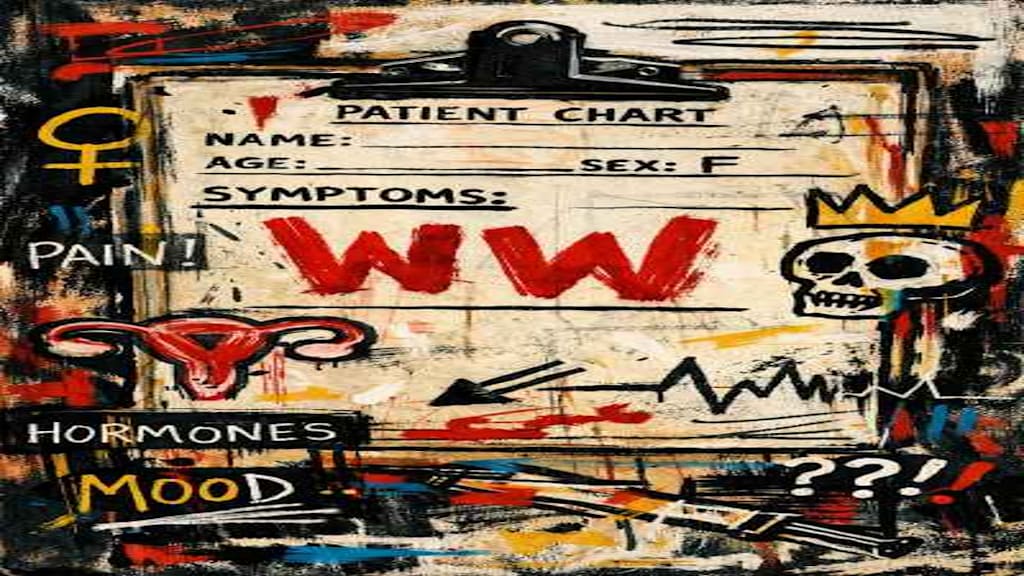
They had written all of this right on the chart
. Two letters. Decades of loss. And a system that had never apologized.
There are moments in history when it does not make itself known through explosions or speeches. Sometimes it hides quietly—in a document, a record, or an ordinary chart. And that was the place where it existed. Two letters. Small, insignificant, almost easily overlooked. But once noticed, they would not leave the mind.
At first glance, it did not seem special. Just an ordinary entry, a system designed to organize, record, and manage information. People would pass by without much thought. But within that structure were two letters that held far more meaning than their size suggested.
They did not make noise. They did not seek attention. But their weight was immense—a weight that became clear only later.We operate on the idea of such a system of order and discipline. Everything is in its place. Everything is recorded. Everything is accounted for. But what happens when what is written is wrong—or worse, is wrong but taken as true?
This is where the problem started.
For years, no one questioned it. That chart existed as if it were a fact. It was referenced, repeated, and decisions were made based on it that affected real lives. Those two letters merged into the background, appeared harmless and ordinary. But habit often hides the most dangerous mistakes.
Because when something is in writing, it gains authority. People accept it not because they understand it, but because it is written. That very confidence becomes the basis for decisions. And when decisions are based on incorrect information, the consequences may not be immediate, but they inevitably occur.
The same happened in this case.
This mistake persisted for years. Decisions kept being made. Policies continued to be formed. Lives kept being affected. And all of this was connected to an entry that no one had paid attention to.
The most concerning thing was not just the mistake itself, but the silence that surrounded it. No correction, no explanation, no accountability. The system did what systems often do—it kept going as if nothing had gone wrong.
And so, the chart remained the same.
It is easy to imagine that maybe someone noticed. Maybe something was done. But noticing and acting are two different things. In large systems, responsibility gets scattered. One person assumes another will fix it. Another assumes it must have already been corrected. And in that gap, mistakes survive.
Over time, these mistakes become invisible.
The human mind adapts through repetition. If something is seen repeatedly, it starts to seem normal—no matter how wrong it is. In the same way, those two letters remained unchallenged for years. Not because they were hidden, but because no one ever questioned them.
Years passed, quietly.
Then one day the truth began to emerge. Slowly. Perhaps someone looked at the chart again, perhaps there was an audit, or maybe it was just coincidence. But what came to light shook the entire system.
Two letters. Still the same. Still wrong.
And suddenly the foundation on which everything stood began to appear unstable.
When the fundamental information is questioned, everything built upon it has to be reconsidered. It is not easy. It is painful. It forces institutions to think not just about one mistake, but also that there might be other mistakes as well.
And this is the fear that scares systems the most—not a single mistake, but the possibility of mistakes spreading.
After that, there was no immediate correction, but hesitation. Because correcting the chart meant acknowledging that the decisions made based on it could also be wrong. And that acknowledgment is not easy.
So there was silence for a while.
But once the truth comes out, it does not hide again.
Those two letters were no longer just a single entry. They had become a symbol of how fragile systems can be when continuity is valued over accuracy. They showed how easily reality can depend on what is written and what is taken for granted without question.
Eventually, it was corrected. But by then the damage had been done—not because of the mistake, but because of the delay.
And that is what remains.
Not the mistake, but the time it was allowed to persist.
In the end, the chart was corrected. The two letters were either removed or fixed. But the real lesson was not in the correction, it was in the silence that preceded it.
Because what was written on the chart was not just about two letters.
It was about trust. About systems. And about how truth remains weak until someone takes the trouble to look at it carefully.
About the Creator
Mohib Ullah
I write about crime, justice, and political affairs, focusing on real cases and current events. My goal is to deliver clear, research-based content that informs readers about law, society, and government systems.
Enjoyed the story? Support the Creator.
Subscribe for free to receive all their stories in your feed.
Comments
There are no comments for this story
Be the first to respond and start the conversation.