
Transforming Mumbai’s Waste Management with Business Analytics
Transforming Mumbai’s Waste Management with Business Analytics
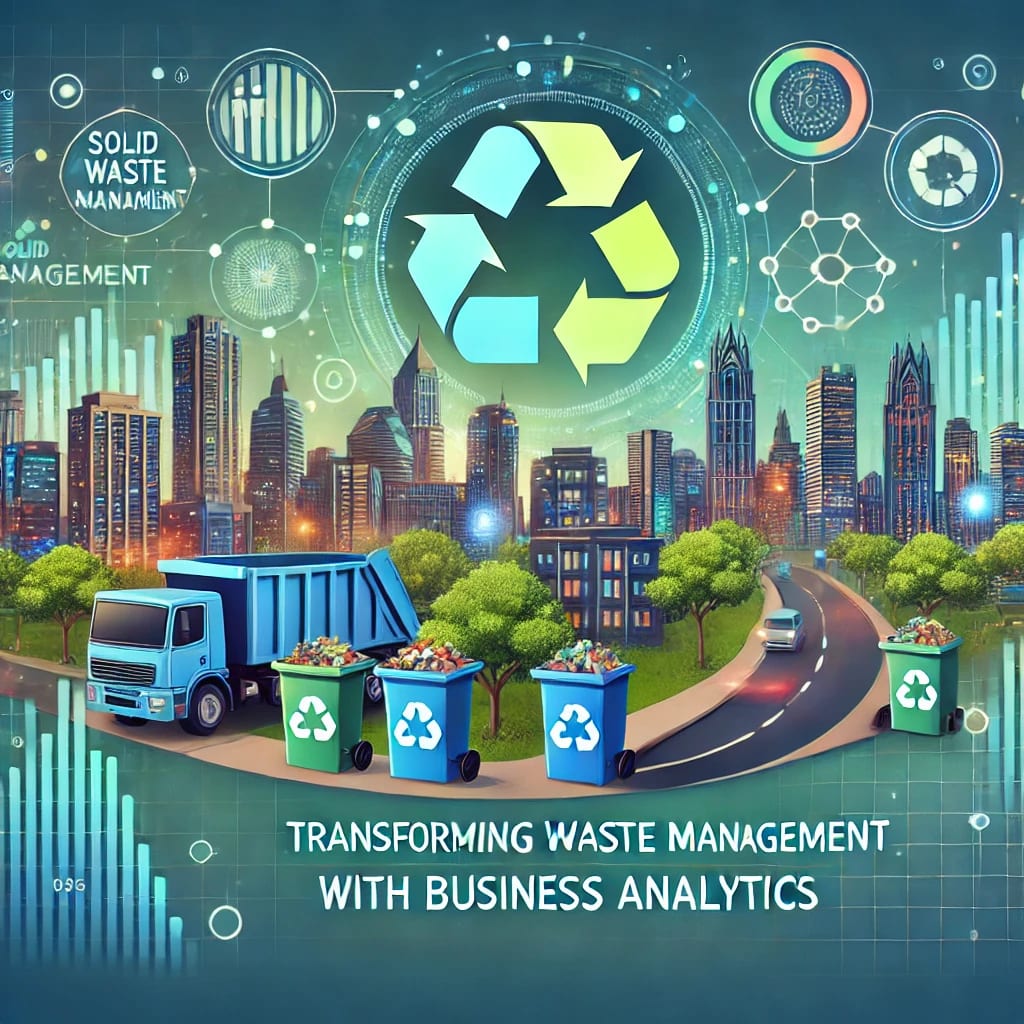
Introduction
Mumbai alone produces more than two thousand tons of mainly solid urban waste every single day and is often referred to as India’s financial capital. Issues arising from the handling of a considerable amount of garbage include disadvantages in collection and proper disposal approaches. Therefore, there is a lot that Mumbai can do to improve the city's waste management using business analytics. This article focuses on the success factors of business analytics for better SWM, which has made Mumbai iconic for sustainable cities.
Challenges in Mumbai’s Solid Waste Management
Mumbai’s dense population and urban sprawl create unique obstacles in waste management:
Collection Inefficiency: Delayed or missed garbage collections in many localities.
Overflowing Landfills: Limited landfill capacity exacerbates waste disposal problems.
Recycling Gaps: An underdeveloped recycling infrastructure results in low resource recovery rates.
Cost Management: High operational costs strain municipal budgets.
Solving these concerns can be best done by an organised and systematic view – this is where business analytics come into play.
Role of Business Analytics in Solid Waste Management
Waste management concepts involve the collection, analysis, and use of models and other instruments in undertaking analytics within the business environment. The following are key areas where it can make a significant difference:
1. Route Optimization
Optimal routes for collections will reduce fuel consumption and expenses. Facilities like GPS systems, traffic patterns, and garbage generation trends all help analytical tools to get a strategic route map for garbage collection vehicles.
2. Predictive Analytics for Waste Generation
Forecasting models allow for the prediction of amounts of waste depending on the population density, specific events, and seasons. This makes it possible for waste management authorities to budget appropriately in ways that avoid congestion and plan resourcefully to avoid occasional delays in the collection of waste.
3. Enhancing Recycling Efficiency
The waste management operation can be divided by business analytics into recycle, compost, and landfill fractions. These algorithms can process data obtained from recycling plants to look for areas that are particularly weak links, and such data can enhance efficient schemes.
4. Cost Reduction
Moving forward, the usage of data will assist in the division of the budget and general cost control. For instance, it is possible to note those contractors who do not perform efficiently or discover that a particular resource is used unwisely, thus causing a lot of wastage.
5. Monitoring and Reporting
The use of business analytics real-time dashboards displays performance indicators such as collection, landfill availability, and recycling efficacy. It enables public accountability to be observed since members of the public know how their funds are being used.
Benefits of Implementing Business Analytics in Mumbai
Integrating business analytics into Mumbai’s solid waste management system offers numerous advantages:
Environmental Benefits
Minimising landfill usage extends the lifespan of the identified centre.
Increased recycling rates minimise the environmental footprint.
Economic Benefits
Increased revenue is due to an increase in customer traffic through more efficient and effective routes.
Development of extra income sources based on rising recycling activities.
Social Benefits
Less littered communities lead to the prosperity of public health and their well-being.
Policies derived from research assist in achieving distributive fairness of waste collection across all parts of the city.
Real-Life Examples of Analytics in Waste Management
Cities worldwide have successfully utilised business analytics for waste management, providing valuable lessons for Mumbai:
Singapore: The Smart Waste Management System leverages IoT sensors and analytics to program collections that decrease fuel usage by 30%.
San Francisco: Huge benefits from the adoption of advanced analytics include attaining a high 80% waste diversion rate coupled with recycling and composting.
Bengaluru: Dry waste segregation system has become effective in Bengaluru, India where data influence segregation rates.
That is why many of these strategies can be easily altered and grown to fit Mumbai’s specifics, referring to local professionals and solutions.
Importance of Business Analytics Education for Implementation
Therefore, business analytics involves the use of professional personnel with the ability to describe data and provide recommendations for business operations. Training and certifications also go a long way in establishing this sort of expertise.
Key Programs to Consider
Business Analytics Course in Mumbai: This undergraduate program provides extensive training on analytical tools and their applicability in urban systems management.
Business Analyst Certification Course in Mumbai: Develops industry-specific scenarios so that professionals learn practical things within the specified field.
Business Analyst Institute in Mumbai: Allows team members to consult with subject area specialists and obtain improved study materials.
Business Analyst Training Institute in Mumbai: This program will greatly benefit students in practice, as it will include several workshops and real-life assignments that are desirable for an analyst.
Thus, Mumbai can efficiently use analytics to address its problems in waste management with the help of skilled personnel.
Future of Waste Management in Mumbai
Since Mumbai will proliferate in the future, the problem of hotel waste management needs new and effective technologies. Business analytics teamed up with artificial intelligence and the Internet of Things technology will define the future of waste management. Potential developments include:
Smart bins equipped with sensors to monitor fill levels.
Blockchain for transparent waste tracking and reporting.
AI-driven sorting systems to enhance recycling efficiency.
These will enhance waste management and, at the same time, provide a benchmark for other cities that have similar problems.
Final Thoughts
The problems of Mumbai’s solid waste management need innovative and comprehensive approaches. Business analytics can help make pertinent changes in organisations by giving tools that assist in control and efficiency and lead to positive environmental results. Hence, by promoting education programs that include a Business Analytics Course in Mumbai or the Business Analyst Training Institute in Mumbai, the city could produce a competent force that will put these revolutionary measures into operation.
Sustainable Mumbai is within the grasp of its population, and the use of business analytics is central to this agenda. Therefore, for the sustainable future of the city and its residents, solutions supported by data need to be devised.
About the Creator
Enjoyed the story? Support the Creator.
Subscribe for free to receive all their stories in your feed.
Comments
There are no comments for this story
Be the first to respond and start the conversation.