
Top AI/ML Trends to Watch
Emerging innovations reshaping AI and ML across industries in 2025.

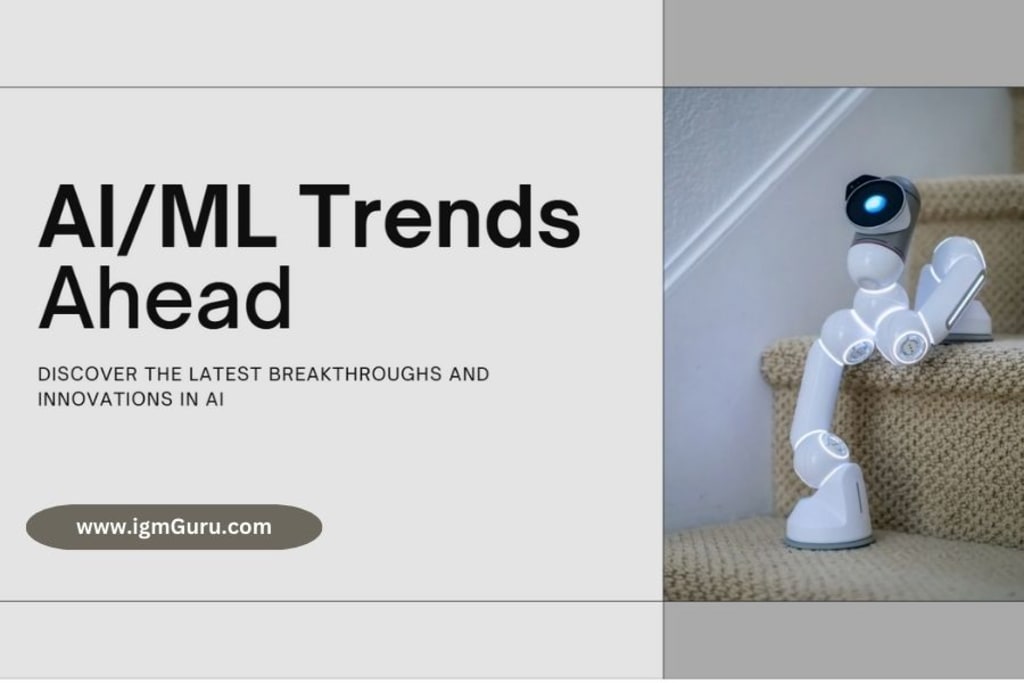
Artificial Intelligence and Machine Learning have quickly evolved from buzzwords into business necessities, with 2025 now underway bringing rapid change. If you are interested in tech, business leadership or simply keeping abreast of future developments then keeping an eye on AI/ML trends should become increasingly crucial.
1. Generative AI Enters the Mainstream
At this point, most of us are familiar with what ChatGPT and DALL*E can do -- writing essays, creating art pieces and even writing music composition. But in 2025, generative AI has gone far beyond content creation - it can now be applied in areas such as:
- Code Generation for Software Development
- Pharmaceutical drug discovery processes.
- Synthetic Data Creation for Building more effective AI Models
With greater regulation and model refinement, generative AI is becoming safer, more effective, and integrated more into daily workflows.
2. AI-Powered Personalization at Scale
In 2025, personalized experiences go far beyond basic product recommendations. Using real-time data and machine learning algorithms, platforms are tailoring everything from shopping experiences and news feeds to financial advice—ensuring every interaction is as intelligent and unique as possible. This also includes health-related insights and behavioral predictions.
If you're looking to gain a better understanding of these systems, especially for professionals and enthusiasts, Machine Learning training online is becoming a go-to resource to stay ahead of the curve.
AI systems are increasingly using behavioral patterns, predictive analytics, and intent detection to deliver truly personalized user journeys that not only increase satisfaction but also conversion rates across industries.
3. Edge AI refers to AI computation occurring directly on devices
Edge AI refers to AI computation happening directly on local devices (like smartphones, IoT devices, or cameras) instead of in centralized data centers.
Why does Edge AI matter in 2025?
- Low latency responses enable faster decisions-making processes.
- Better data protection (data stays on-device).
- Lower Bandwidth Usage
Today we are seeing Edge AI used to power smart appliances, autonomous vehicles and security systems; enabling these devices to make real-time decisions without depending on cloud services for information.
4. Explainable AI (XAI) Seizes Center Stage
AI models can be powerful tools, yet often operate like black boxes -- providing results without explanation. By 2025, however, transparency must become standard practice.
Regulations in both Europe and America are driving explainable AI (XAI) models which can justify their predictions or decisions, making this particularly essential in healthcare applications such as diagnosis and treatment.
This has become particularly crucial in:
- Healthcare (diagnosis and treatment
- Finance (credit scoring and loan approval)
- Legal tech and recruitment of legal tech talent
XAI fosters trust and accountability between businesses and users by helping both understand the purpose and use of artificial intelligence (AI).
5. AI Ethics and Governance Get Real
It’s not just about what AI can do — but what it should do. In 2025, ethical AI is becoming part of core business strategy.
From data privacy and algorithmic bias to transparency and consent, organizations are being held accountable for how they use AI.
Expect to see:
- More AI audits
- Dedicated “AI ethics” officers
- Stronger compliance with frameworks like the EU AI Act
Ethical AI is not just good PR; it is now necessary for legal compliance and consumer trust.
6. Multimodal AI Systems
Multimodal AI systems can interpret multiple forms of input - like text, image, audio and video -- simultaneously.
Think of an AI assistant that can:
- Understand your spoken question
- Read your calendar
- Look at a document you show it
- Respond with a spoken and visual answer
Tools such as GPT-4 and Google's Gemini have already begun exploring this approach, with wider use expected in 2025 across areas like customer support, education and content creation.
7. AI in Cybersecurity: Smarter Defense Mechanisms
As cyber threats evolve, so too do their defense mechanisms utilizing Artificial Intelligence. By 2025, AI systems were being utilized to.
- Detect threats in real time
- Predict vulnerabilities
- Automate incident responses
- Analyze user behavior for anomalies
Machine learning (ML) models can utilize vast amounts of security data to detect threats that traditional security tools miss. As ransomware attacks and data breaches become more frequent, AI in cybersecurity is no longer just a luxury - it has become an imperative.
8. Human-AI Collaboration on the Rise
Instead of replacing humans, AI is increasingly serving as a collaborative partner in design, writing, decision making, coding and more - augmenting human capabilities rather than replacing them.
Consider this example.
- Designers utilizing artificial intelligence to quickly prototype ideas.
- Writers using AI to generate content ideas.
- Analysts quickly gain access to predictive insights.
2025 will see teams that successfully integrate AI tools into their workflow as the top performers.
Wrapping Up
AI and machine learning (ML) in 2025 are no longer considered futuristic; they've become fundamental. From generative creativity to device intelligence and ethical regulations to collaborative systems, the trends defining this year are leading us towards an intelligent, responsive, ethical digital world.
About the Creator
babita rawat
I am a software engineer and I am always stay informed with the latest in edtech and technology. Explore EdTech updates, tech news and IT insights that shape the future of education.
Enjoyed the story? Support the Creator.
Subscribe for free to receive all their stories in your feed.
Comments
There are no comments for this story
Be the first to respond and start the conversation.