
The Water Bug And His Friends
Into the world of Insecta

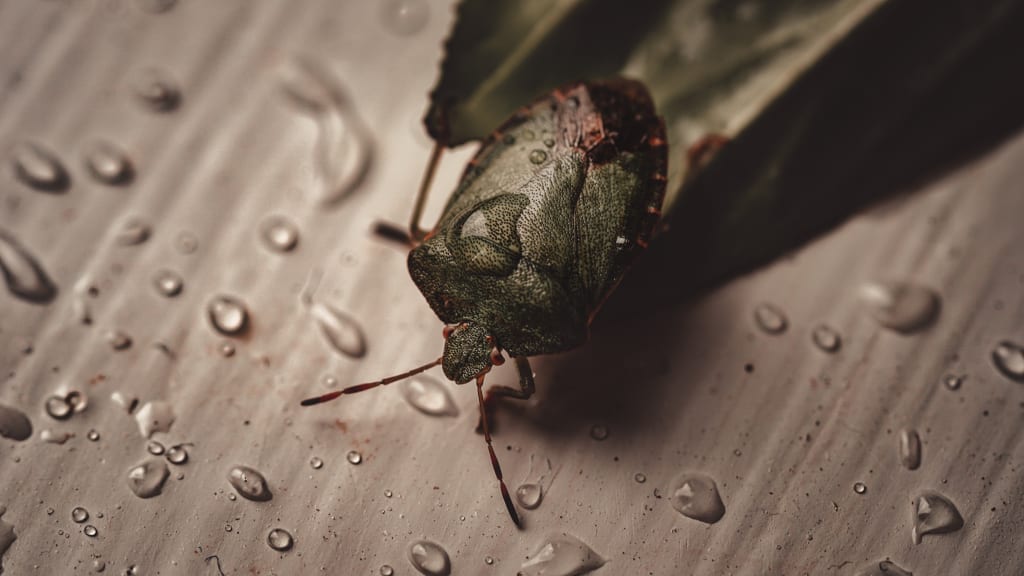
THE WATER BUG
Why wouldn't you want to wade into a cool pond on a piping hot summer day. You dip into the refreshing water and enjoy the breeze. Everything's perfect until a dark shadow drifts by under the surface. You think it must be a leaf based on its size, so you don't pay it any mind until it bites you right on your big toe. After running out of the water, you realize you've been the subject of a giant water bug strike. You've had the unfortunate chance to meet a toe biter or sometimes it's called an alligator tick. You'll survive this monster's bite but it will be unpleasant because giant water bugs are found worldwide in freshwater habitats. Their bites are more common than any of us would like. Be on the lookout next time. Here's what you need to know to spot them. The giant water bug grows to be more than 4 inches long. According to guinness world records that makes it the largest aquatic insect on earth. A nip from one of them is said to be some of the most painful injuries a human can suffer from bugs although they can be found around the world, they're especially common in North America. They blend into the landscape. Their dark brown body mimics the leaves of the wetlands. No wonder you didn't spot it. They're predatory by nature, usually they are after small fish, tadpoles and other insects but they've also been known to take down bigger prey like snakes and even turtles. Good thing, you're much bigger than a turtle. In some species, female toe biters lay their eggs on the male's back, he then carries them wherever he goes as sweet as that sounds the sight of a male toe biter carrying his eggs is unfortunately super unpleasant and will send shivers down your spine and what's worse ? Even though they're called water bugs they can fly, so don't just watch out below because they can come from the sky.
THE BOT FLY
As you catch your breath on the shore, something lands on your shoulder, quick-swatted away, it's a bot fly. Bot flies are vicious, tiny insects that lay their eggs like mosquitoes, injecting those eggs into humans. Your warm body temperature creates the perfect incubation environment. When they hatch, they start their lives with a grueling task of eating their way out. Lovely you're most likely to find them in Central and South America but it's not implausible for you to have an unlikely encounter with these small creatures in florida.
THE HAMMER-HEAD WORM
The name hammerhead worm calls to mind nothing good. It sounds like an impossible cross between a hammer-head shark and an earthworm. Looking at one that's not far off, multiple sightings of this strange creature were reported across Georgia. They live up to their name with a distinct crescent moon-shaped head. Well, their mouth is halfway down their bodies. Their appearance is off-putting for a reason. They are poisonous. They produce tetradotoxin, the same as puffer fish. Scientists aren't yet sure how it uses the toxin but the best bet is that it's a tool to catch its prey. We also don't know how much of it would hurt a human but experts say one should stay away, no matter what. Don't harm it because it has the spectacular ability to reform itself out of cut sections of its body like the myth of the hydra. Someone with a great sense of humor nicknamed these grubs lanchovis which sounds much less scary than hammerhead worm.
THE GIANT SILKWORM CATERPILLAR
The giant silkworm caterpillar looks as intimidating as it should. Its potent venom is no joke. The larvae are sheathed in tiny sphere-like bristles which release a highly poisonous anti-coagulant toxin. So, getting pricked by one of these isn't ideal but they make it even worse by gathering in bunches. So, it's common to accidentally brush up against multiple caterpillars at the same time. Most people who are stung don't feel it. That's good, right ? Well no, it means they have no idea what's going on when symptoms appear and there's no visible mark left where they've been stung. One of the strangest things about this caterpillar is that it's super tiny compared to the damage it can cause. Usually around 2 inches, they're commonly found in the rainforests of South America including in Uruguay, Argentina and Brazil but plot twist, this creepy crawlie doesn't just come in one form. The caterpillar is only in the first stage of its life. Yeah, that's what it looked like as a baby. Once it reaches adulthood, it takes on an entirely different shape as the giant silkworm moth but don't be fooled into thinking it's harmless now because it's lost its vicious spikes. It's still venomous and now it can fly. You can take comfort in knowing that it only lives for a few weeks in this form though because once it metamorphises, it no longer has a mouth to eat with.
About the Creator
Enjoyed the story? Support the Creator.
Subscribe for free to receive all their stories in your feed.
Comments
There are no comments for this story
Be the first to respond and start the conversation.