
The Unfulfilled Promise: A Call for the Right to Self-Determination in Kashmir
January 5th is a day of profound significance for the people of Indian-Occupied Jammu and Kashmir (IIOJK), known as the Right to Self-Determination Day.
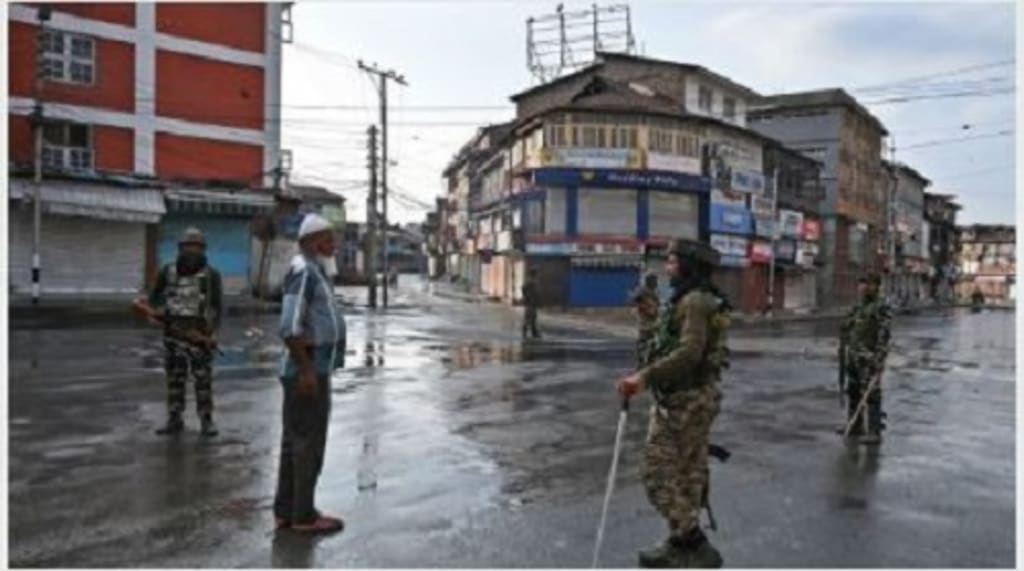
January 5th is a day of profound significance for the people of Indian-Occupied Jammu and Kashmir (IIOJK), known as the Right to Self-Determination Day. On this day in 1949, the United Nations Commission for India and Pakistan (UNCIP) adopted a resolution that promised the people of Kashmir the right to choose their future through a free and fair plebiscite. Yet, 75 years later, that promise remains unfulfilled, and the people of Kashmir continue to endure immense suffering under Indian occupation.
The commemoration of January 5th serves as a stark reminder to the international community that the promises made to Kashmiris cannot be forgotten. The global community has a responsibility to ensure that the principles enshrined in international law, particularly the right to self-determination, are respected. Despite this, India’s actions over the past decades have consistently sought to undermine the very foundation of this right.
Kashmir, once a region of strategic importance and beauty, has become the world’s most militarized zone, with Indian forces occupying the territory under a constant state of emergency. India’s policies have subjected the Kashmiri people to collective punishment, with arbitrary detentions, enforced disappearances, and extrajudicial killings becoming routine. The Indian government has deployed a series of draconian laws, such as the Disturbed Areas Act, the Armed Forces Special Powers Act, and the Public Safety Act, to justify these human rights violations. These laws not only grant impunity to the occupying forces but also allow them to act with total disregard for international law and human decency. The result is a society under siege, where basic freedoms such as the right to life, health, and expression are systematically denied.
The situation in IIOJK has deteriorated further since August 5, 2019, when India, under Prime Minister Narendra Modi’s government, took unprecedented and illegal steps to alter the region’s status. The revocation of Article 370 of the Indian Constitution, which had granted Kashmir a special autonomous status, was followed by a brutal lockdown, widespread communication blackouts, and the deployment of tens of thousands of additional troops. This attempt to forcibly integrate Kashmir into India, and its aftermath, has created an atmosphere of fear and repression. The international community, despite its vocal condemnation of these actions, has failed to take significant steps to hold India accountable.
This continued suppression is not just a violation of Kashmir’s right to self-determination but also a grave breach of international law. The United Nations Charter recognizes the right to self-determination as an inalienable human right, and this right is affirmed in the Universal Declaration of Human Rights and various international covenants. To deny the Kashmiri people this right is to deny them their basic dignity, and it is a denial of human freedom itself. The world can no longer ignore this injustice.
Despite the heavy-handed tactics employed by India, the Kashmiri people have shown remarkable resilience. They have continued to raise their voices against their oppression, striving to achieve justice and freedom. The international community must stand with them, not only because of its moral obligation but also due to the legal commitments made by the United Nations over 75 years ago. The UN Security Council resolutions, which called for a free and fair plebiscite to determine the future of Kashmir, remain unimplemented. The failure to uphold these resolutions is not just a failure of the United Nations, but a failure of global governance.
In recent years, international human rights organizations and the global community have increasingly recognized the injustices faced by the Kashmiri people. The actions of the Indian government have been widely condemned, yet the responses have often been insufficient, characterized by diplomatic statements rather than concrete actions. The international community must recognize that this is not just an issue of regional geopolitics but a matter of fundamental human rights.
The recent resolution adopted by the United Nations General Assembly, sponsored by Pakistan, reaffirmed the universal right to self-determination and received widespread support. This resolution highlights the global consensus on the need to ensure the realization of Kashmiris' right to choose their future. Yet, words alone will not bring justice to the people of IIOJK. The promises made to them must be fulfilled, and the international community must take decisive action to ensure that Kashmiris are given the opportunity to determine their future through a free and fair plebiscite.
As the world marks the 75th anniversary of the UNCIP resolution, it is imperative that the United Nations upholds its commitments to the people of Kashmir. This is not just a question of justice for one region; it is a question of respecting the principles of human dignity and self-determination that are foundational to the international system. Pakistan, as a neighbor and steadfast advocate for the Kashmiri people, will continue to provide political, diplomatic, and moral support to their just cause. But the responsibility to act lies with the global community.
The time has come for the United Nations to fulfill its promise and ensure that the Kashmiri people are granted the right to determine their future in a peaceful, fair, and democratic manner. The struggle for self-determination is not just a regional issue—it is a global imperative, one that calls upon the conscience of the world.
About the Creator
Enjoyed the story? Support the Creator.
Subscribe for free to receive all their stories in your feed.
Comments
There are no comments for this story
Be the first to respond and start the conversation.