
The Uncredentialed Professor
Three self‑taught outsiders made it onto university faculties. Their paths reveal a beautiful, brutal truth about academia.
Prologue
In the summer of 2023, Xiong Yuno, twenty years old, signed an associate‑professor contract at Hubei Polytechnic University.
He had no high school diploma. He never took the national college entrance exam. He had never enrolled in any university. On his résumé, under “Education,” the only honest entry would be “dropped out after middle school.” The university’s automated hiring system would have discarded his application in 0.1 seconds as “unqualified.”
But he got in. Not through the normal process – through a special channel called poge (exceptional admission). That channel requires three things: exceptional ability, verifiable results, and a senior scholar willing to risk their reputation to recommend you. Missing any one, the channel stays closed.
That same year, at Liaoning University, Associate Professor Cai Wei taught a class on ancient Chinese script. He wrote an oracle‑bone character on the blackboard. “What does this mean?” he asked. No one knew. He said, “Twenty years ago, when I was peddling a tricycle in Jinzhou, I didn't know either.”
Cai Wei finished high school and never went to college. Before 2009, he delivered goods on a three‑wheeled cart – handlebars too hot to touch in summer, fingers too stiff to turn pages in winter. But he turned pages anyway, for twenty years.
These two got inside. But their footprints do not mark a path that others can follow.
Part I: The Law Leaves a Small Opening, but the Opening Is Narrow
Article 46 of China’s Higher Education Law says something most people overlook:
“Citizens who do not hold a graduate or undergraduate degree, but who are highly accomplished in a field, may obtain a higher‑education teaching qualification after passing the national teacher certification examination and receiving approval.”
In plain words: you can get a university teaching certificate without a degree. The law did not close that door.
But between holding that certificate and actually standing in front of a classroom, you have to pass through four gates: the human‑resources office, the academic committee, the promotion board, and the party committee. Any one of them can say, “The candidate does not meet our minimum requirements.”
The de facto minimum for a lecturer position is now a PhD. Ministry of Education data for 2023 shows that over 42% of full‑time university faculty hold doctorates. At top‑tier 985 institutions, in some departments the figure exceeds 90%.
Without a PhD, no one even opens your application email.
So that legal opening effectively serves only one kind of person: someone already recognised within the academic community, with a senior scholar willing to vouch for them personally. Xiong Yuno’s father is a professor at Hubei Polytechnic. Cai Wei’s referee was Qiu Xigui – the leading figure in Chinese palaeography, still active.
Without that level of backing, the opening is a dead end.
Part II‑1: Cai Wei – From Tricycle Deliverer to Associate Professor
The most revealing part of Cai Wei’s story is not the “rags‑to‑riches” label. It is what he did every single day for twenty years.
While running a street stall in Jinzhou, the vegetable seller next to him counted her change at the end of each day. He pulled out a battered copy of Shuowen Jiezi – the oldest Chinese character dictionary – and studied it. When pages tore, he mended them with transparent tape. On days too cold for selling, he went to the public library, arriving at opening time and leaving at closing. The librarian eventually knew him and left a lamp on for him.
He had no formal training. But palaeography scholars started noticing his name because he published papers in academic journals – not by submitting through the usual system, but by mailing letters. He sent a textual analysis of an obscure oracle‑bone character to a journal editor. The editor did not understand it and passed it to a peer reviewer. The reviewer did understand it and wrote back: “This person’s foundation is not shallow.”
That was how Professor Qiu Xigui first took notice. Qiu later said that Cai’s interpretation of one character was more accurate than that of his own doctoral students.
In 2009, Qiu and two other senior scholars jointly petitioned the Ministry of Education to allow Cai to apply directly to a doctoral programme at Fudan University. The Ministry approved.
Cai, then 38, entered Fudan. He took six years to finish his PhD – the normal time is three to four. What he caught up on was not knowledge, but academic conventions: how to format footnotes, write literature reviews, and prepare for defences – the procedural rules that trained scholars absorb without thinking, but which were a foreign system for him.
After graduation, he first worked at the Anshun College library, then moved to Liaoning University, where he is now an associate professor in the Chinese Language and Literature department, supervising graduate students.
The conditions for this path are extremely demanding:
Twenty years of daily self‑study, without a long break.
Publication of peer‑reviewed papers in core journals.
Endorsement by the leading specialists in the field.
A joint guarantee by three scholars.
Special approval from the Ministry of Education.
Completion of a PhD.
A university willing to hire him.
Miss any one step, and the final picture would be “Cai the tricycle peddler,” not “Professor Cai.”
Part II‑2: Tang Yonggang – How a Painter Became a Visiting Professor
Tang Yonggang took a different route.
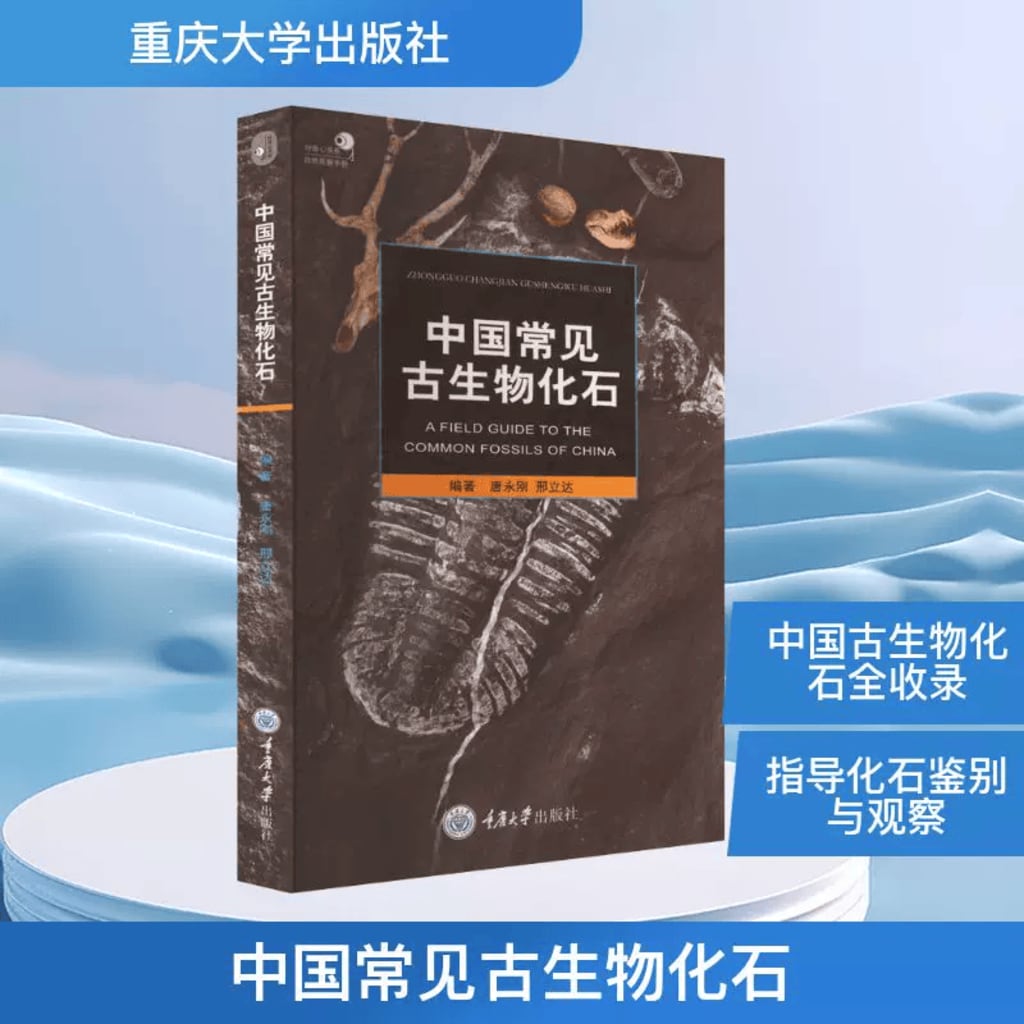
He was a professional painter. He made enough money to buy fossils – trilobites, dinosaur tracks, ancient fish. He collected many, some from auctions, some by breaking rocks in the field.
After more than ten years, he started writing academic papers – not because he wanted to join academia, but because he had discovered track fossils that no one else had recorded. He photographed, measured, and described them, and submitted the work to palaeontology journals. The papers were accepted.
He went on to publish descriptions of several new species. The rule in palaeontology is: the first person to describe and publish a new species gets the naming right. Tang now holds naming rights.
When Linyi University’s Institute of Geology and Palaeontology approached him, they offered a visiting professorship.
The difference between visiting and full‑time: no tenure, no promotion track, no graduate students, no research grants. He can teach and join projects, but his status is “external expert,” not a regular faculty member.
Why did Linyi University hire him? Because his practical skills are what in‑house professors lack. He can identify dinosaur track genera from a single rock and take students into the field for real‑time identification. That kind of skill does not come from a PhD – it comes from years of turning over stones in the wild.
But a visiting professor is not truly “inside” the faculty. One foot is through the door; the other remains outside.
Part II‑3: Xiong Yuno – The 20‑Year‑Old Dropout Who Became an Associate Professor
Xiong Yuno is the most unusual of the three.
He dropped out not because of poverty, but because he found school too slow. His father is a physics professor at Hubei Polytechnic. He grew up in his father’s study. After middle school, he moved on to quantum‑mechanics textbooks from his father’s shelf.
After a few years of self‑study, his father pointed him toward a specific problem: the Fermion sign problem – a core challenge in quantum many‑body theory. With his father’s guidance, he spent two years producing a research paper. How significant that paper is, outsiders cannot judge precisely, but Hubei Polytechnic’s academic committee deemed it “sufficient to meet the standard for associate professorship.”
In 2023, at age twenty, he was appointed associate professor at Hubei Polytechnic.
This path is unrepeatable for three reasons.
First, his “self‑study” was never isolated. His mentor lived in the next room – available for questions, discussion, and correction at any time. That is essentially one‑on‑one elite tutoring, just without a diploma.
Second, his research focus was extremely narrow and verifiable – not a broad interest like “I love palaeontology,” but a mathematical physics problem that can be tested, published, and objectively evaluated.
Third, the hiring university was his father’s home institution. Not through back‑door favouritism, but because the academic committee had full visibility into his research process – and that visibility was possible only because his father was already a member of that circle.
Part III: Three Uncrossable Rivers – Why You Cannot Swim Across
After reading these three cases, if you think “maybe I could try too,” look at these three rivers.
River One: Academic conventions are a foreign language.
Cai Wei needed six years for his PhD. Tang Yonggang still lacks a doctorate, so he remains “visiting.” Xiong Yuno’s breakthrough was possible only because his father could coach him in the tacit rules of writing, referencing, and defending.
A self‑learner may read the most difficult texts, but cannot produce a journal‑ready paper. That is not an intelligence problem – it is a training problem. Academic publishing is a precise production process. Without training, even if you have gold in your hands, you cannot cast it into bars.
River Two: Academia is a closed network.
Why did Qiu Xigui vouch for Cai Wei? Because he had read Cai’s work and knew it was solid. But how did Qiu read Cai’s work? Cai mailed it to him.
Today, a self‑taught person who submits a paper to a core journal will likely be desk‑rejected – not because the quality is lacking, but because a paper without an institutional affiliation and academic rank is automatically treated as “non‑academic.”
No supervisor means no alumni network. No alumni network means no insider information about job openings. And by the time a posting is public, the application deadline has usually passed.
River Three: The tenure system is an iron bucket.
University HR systems run keyword filters on first review. Keywords include: PhD, overseas experience, number of core‑journal papers. Without these, your résumé is dead.
Cai Wei got through because of a ministerial waiver – a manual override. But that override is not a self‑service kiosk. Someone has to press the button. And the person who presses it takes responsibility for recommending a candidate with no formal credentials. Most people will not press it.
Deep Water: Visiting Professorships – Prestige with Empty Shelves
For the uncredentialed self‑learner, the most likely title to obtain is visiting professor or guest lecturer.
Universities like to give visiting professorships to three types of people:
Well‑known entrepreneurs
Intangible‑cultural‑heritage inheritors
Industry experts with public influence
For example, Wu Chengyan – a high‑school graduate who painted village murals for twenty years and received media coverage – was appointed guest lecturer at Shangqiu Normal University. Similarly, some master potters or wood‑carving inheritors are hired by local vocational colleges as “master artisans.”
But these positions do not change the core reality. A visiting professor cannot be promoted to full professor, cannot supervise master’s students, receives no research funding, and is not on the permanent payroll. Strictly speaking, this is a branding arrangement, not absorption into the academic faculty.
Tang Yonggang remains a visiting professor. He has not been converted to permanent status, because that would require a PhD – and so far, no one has broken that rule for him.
Epilogue: That One Gesture Is the Real Proof
On his first day teaching at Liaoning University, Cai Wei wrote an oracle‑bone character on the blackboard and asked the class if anyone recognised it.
No one did.
He said, “Twenty years ago, when I first saw this character on my tricycle in Jinzhou, I didn’t recognise it either. Later I looked through seven books before I found its original meaning. You can look it up in about seven seconds now.”
He then filled the entire blackboard with the character’s evolution and the reasoning behind his decipherment.
That is proof through action – no self‑pity, no grand declaration about how hard the journey was, just a plain display of the gap between “turning seven books” and “filling a blackboard.”
And those who actually stand on the lectern do not write “exceptional admission” or “inspirational story” on their CVs. Their education column quietly says “high school” – but everyone who knows them understands what those two words rest on.
The door is not completely closed. But the gap is wide enough for only one person at a time, and that person must be carrying something in their hands – either a paper that makes a leading scholar nod, or a new species no one has ever seen, or a mathematical proof that leaves an academic committee with no grounds for refusal.
Everyone else walks through the front gate.
It is longer. But it is wide enough for many.
About the Creator
Jin
Writer of reamstories
https://reamstories.com/jin
Enjoyed the story? Support the Creator.
Subscribe for free to receive all their stories in your feed. You could also become a paid subscriber, letting them know you appreciate their work.
Comments
There are no comments for this story
Be the first to respond and start the conversation.