
The Two Books We Carry
A Teacher’s Lesson on Knowledge Beyond the Classroom


The room was filled with the sound of pens scratching on paper as I stood at the front of the class, watching my students diligently transcribe everything I had written on the board. But something was missing. There they were, heads down, eyes fixed on their books, filling page after page. Yet, were they truly learning, or were they merely collecting words on paper?
In that moment, I paused, took a deep breath, and then spoke. “Please, stop writing.”
The sudden quiet that fell over the room was immediate and intense. The students looked up, surprised, eyes filled with a mixture of curiosity and confusion. I let the silence hang for a moment, then continued, “I’m not here for you to just copy down my notes. I want you to understand what we’re learning today.”
The students shifted, glancing at each other as if to confirm they’d all heard the same thing. A few looked at their books, visibly uncertain. That’s when I decided to throw a question to the class, one that I hoped would open a new door for them.
“How many types of books do we have?” I asked.
Their blank expressions were telling. A couple of students furrowed their brows, while others simply stared, puzzled. I could see they were wondering if this was a trick question or perhaps some peculiar riddle.
I smiled. “Believe it or not,” I said, “we have two types of books.”
Their eyes lit up, and I could sense their curiosity peaking. They were eager to hear something unexpected.
“The first type is obvious,” I continued. “It’s the book right in front of you, the physical book. That’s the one you’re writing in, the one you carry to class. It’s where you take notes for study and revision. This book has its time and place, and it’s invaluable for preserving knowledge you’ll come back to later.”
The students nodded, visibly relieved that they’d gotten at least half of the answer right. But now they leaned forward, sensing there was more to come.
“And then,” I said, leaning in as if sharing a secret, “we have the second type of book. But this one doesn’t fit in your backpack, nor can you leave it at home. I call it the book of the brain.”
The room fell silent again, this time with the kind of hush that only deep thought can bring. The “book of the brain” had clearly intrigued them, even if they had no idea what it meant.

“The book of the brain is an imaginary book,” I explained. “You can’t touch it, and you won’t find it on a shelf. But this book is perhaps even more important than the one you’re writing in. It’s the knowledge you carry with you, knowledge that doesn’t rely on physical notes.”
One of the students raised a hand. “But…how do we write in this book of the brain?”
“That’s a great question,” I said. “You ‘write’ in this book by truly listening. When you’re fully present, understanding what’s being said, that’s when you begin filling up the book of your brain. This is what will help you when you don’t have your notes, like during a test or even years from now when you’ll need to recall something essential.”
I saw a few of them close their physical books, leaning forward with new attentiveness. They were beginning to grasp the concept.
“I’m not telling you not to take notes,” I added. “There’s a time for that. But if you depend only on the physical book, you’ll find yourself lost whenever it’s out of reach. The goal is to carry knowledge within you, so it’s always available, no matter where you are.”
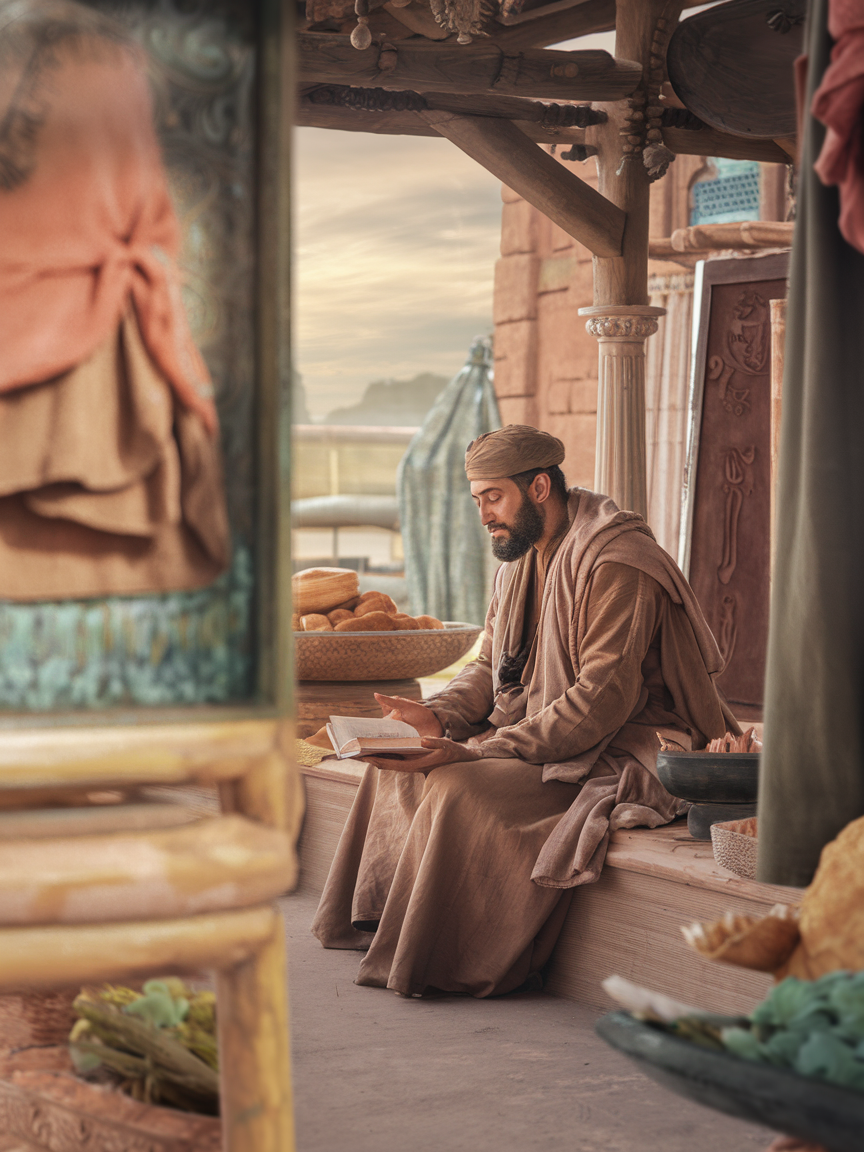
To emphasize my point, I shared a verse from Imam Al-Shafi’s poetry, a wisdom that beautifully captured the essence of the lesson.
عِلمي مَعي حَيثُما يَمَّمتُ يَنفَعُني
ʿIlmi maʿi haythu mā yammamtu yanfaʿunī
“My knowledge benefits me wherever I go.”
قَلبي وِعاءٌ لَهُ لا بَطنُ صُندوقِ
Qalbī wiʿāʾun lahu lā baṭnu ṣundūqī
“My heart holds it, not the belly of a box.”
إِن كُنتُ في البَيتِ كانَ العِلمُ فيهِ مَعي
In kuntu fī al-bayti kāna al-ʿilmu fīhi maʿī
“If I am at home, knowledge is with me there.”
أَو كُنتُ في السوقِ كانَ العِلمُ في السوقِ
Aw kuntu fī al-sūqi kāna al-ʿilmu fī al-sūqi
“Or if I am in the market, knowledge is in the market too.”
As I recited the words, I saw a few students nodding. The idea was starting to sink in.
“What Imam Al-Shafi was saying,” I explained, “is that true knowledge lives within us, beyond the confines of any physical object. Whether he was at home or in the marketplace, his learning was with him. It was part of him, like an inseparable companion. His mind was a vessel, carrying wisdom wherever he went, ready to serve him at any moment.”
The classroom had transformed. My students weren’t just listening. They were absorbing. The weight of Imam Al-Shafi’s words seemed to have a deep effect on them. I could see that some of them were thinking about knowledge in a way they never had before, realizing that it wasn’t just something external to copy down but something internal to understand and carry within.
I continued, “So, while you’re here, don’t just focus on filling up pages. Think of every moment in this room as an opportunity to fill the book of your brain. It’s about understanding and remembering what matters. When you cultivate this, you’re preparing for the times you won’t have those notes in front of you, whether during an exam or in life’s unexpected tests.”
One student raised his hand. “But what if we forget? Even the book in our brain can fade over time, right?”
I nodded. “Good question. That’s where practice comes in. Like any skill, the more you revisit knowledge, the stronger it becomes. But instead of merely re-reading notes, try recalling what you’ve learned. Discuss it with friends, teach it to someone else, or apply it practically. Each time you do this, you’re reinforcing what’s in that mental book. It’s like sharpening a tool so it’s ready when you need it.”
They were with me now, each one reflecting on what this might mean for them beyond just the classroom. A few more questions followed, thoughtful and probing, showing me that the concept had found fertile ground in their minds.
“Remember,” I concluded, “the physical book is here to help you. But never rely on it alone. Build up your internal book, the book of the brain, so that knowledge is with you wherever you go. Like Imam Al-Shafi said, let your heart be the container for your learning, not just the pages of a notebook.”
As the bell rang, the students gathered their things more thoughtfully than usual. Some glanced back at me with a look that seemed to say they understood this was more than a lesson in note-taking. It was a lesson in living, in carrying knowledge forward as a part of who they are.
At that moment, I knew the two books would stay with them, just as the lesson had stayed with me all those years ago when personal reflection opened my eyes to the same truth. I could only hope they would continue filling both books, making their minds as rich as the words on paper, carrying knowledge like a companion, ready to walk with them through every challenge and opportunity life would bring.
About the Creator
Malik Muhammed
I’m not here as a writer and I’m not even one, just someone capturing moments and thoughts in my own way. If you’re up for exploring unfiltered ideas and reflections, I’d love for you to join me. You might find something that resonates.
Enjoyed the story? Support the Creator.
Subscribe for free to receive all their stories in your feed.
Comments
There are no comments for this story
Be the first to respond and start the conversation.