
The Role of Data Science in the Healthcare Industry
Data Science in Healthcare Industry
The Role of Data Science in the Healthcare Industry
As a data science expert in healthcare, I interpret medical information using data analysis and machine learning techniques. Let me explain how this works: By analyzing patient records, clinical data, and information from wearable devices, I help healthcare providers make informed decisions, improve patient care, and streamline operations. This data-driven approach leads to better health outcomes and more efficient healthcare systems.
What is data science in healthcare?
Data science in healthcare refers to using advanced data analytics, machine learning, artificial intelligence, and statistical methods to process and interpret large volumes of medical data. This data can range from patient records and clinical trials to health data generated by wearable devices. Through data science courses, professionals can gain the necessary skills to analyze complex datasets, uncover valuable insights, and help healthcare providers make data-driven decisions to improve patient care and streamline operations.
Data scientists in healthcare can use these insights to detect patterns that might otherwise go unnoticed, such as trends in disease progression, treatment outcomes, and patient behavior, allowing for more proactive healthcare strategies.
Enhancing Patient Care with Predictive Analytics
- Predictive Analytics in Healthcare: One of the most promising applications of data science in healthcare is predictive analytics.
- Historical Data Analysis: By analyzing historical health data, healthcare providers can predict future medical conditions.
- Early Intervention: Predictive models help enable early intervention, allowing more personalized care.
- Forecasting Readmission: Predictive models can forecast the likelihood of a patient being readmitted to the hospital.
- Identifying Risks: These models can help identify individuals at risk of developing chronic conditions like diabetes or heart disease.
- Improved patient outcomes: Implementing predictive models can ultimately improve patient outcomes.
- Reducing Healthcare Strain: By anticipating potential health issues, predictive analytics helps reduce the strain on healthcare systems.
- Leveraging Skills from Data Science Courses: Healthcare professionals can develop and implement these predictive models by leveraging the skills gained from data science courses.
Improving Operational Efficiency and Cost Reduction
Streamlining Healthcare Operations: Data science plays a crucial role in streamlining healthcare operations, in addition to improving patient care.
Identifying Inefficiencies: Machine learning algorithms and data analytics can identify inefficiencies within healthcare organizations, such as:
- Overstaffing
- Underutilized resources
- Bottlenecks in patient flow
Real-Time Data Analysis: By analyzing real-time data, healthcare providers can:
- Optimize scheduling
- Predict patient demand
- Manage medical supplies more efficiently
- Predictive Models for Resource Allocation: Predictive models help hospitals allocate resources more effectively, especially during peak periods.
- Cost Reduction and Quality Care: These models not only reduce costs but also ensure high-quality patient care.
- Training for Healthcare Analytics: Enrolling in data science courses provides the necessary knowledge for those pursuing careers in healthcare analytics, enabling them to contribute to cost-effective, data-driven solutions.
Advancing Medical Research and Drug Development
Data science is also revolutionizing medical research, especially in drug development. By analyzing large datasets from clinical trials, patient records, and genomic information, data science enables researchers to identify new drug compounds, predict the efficacy of treatments, and discover personalized therapies for patients based on their genetic makeup. Machine learning algorithms are used to sift through massive datasets to uncover hidden relationships between drugs and diseases, leading to faster and more accurate drug discovery.
For aspiring healthcare researchers, data science courses offer a deep dive into the tools and techniques that power this research, making it easier for professionals to contribute to life-saving medical advancements.
Enhancing Medical Imaging and Diagnostics
- Transformative Effect on Medical Imaging: In the field of medical imaging, data science is having a transformative effect.
- Machine Learning and Computer Vision: Machine learning algorithms and computer vision techniques are being applied to analyze medical images (e.g., X-rays, MRIs, CT scans).
- Speed and Accuracy: These technologies analyze images with greater speed and accuracy than human doctors.
- Detecting Abnormalities: The systems can detect abnormalities, such as tumors or fractures, with remarkable precision.
- Better Diagnostic Support: This provides radiologists with enhanced diagnostic support, improving overall accuracy.
- Reducing Misdiagnosis: As data science improves diagnostic accuracy, it reduces the likelihood of misdiagnosis.
- Faster Treatment Process: The use of these tools speeds up the diagnosis and treatment process.
- Learning Through Data Science Courses: Healthcare professionals and technologists can learn these techniques through data science courses, equipping them with the necessary tools to work with medical imaging technologies and improve patient care.
Improving Public Health and Disease Prevention
On a larger scale, data science is essential in public health, especially in preventing disease outbreaks and monitoring population health. Through data analysis, researchers can track trends in disease spread, identify high-risk areas, and develop early warning systems for potential health crises. This is particularly useful in the management of infectious diseases, where real-time data is crucial for decision-making.
Public health agencies also use data-driven models to optimize vaccination campaigns and manage health resources during outbreaks. For professionals interested in public health and epidemiology, data science courses can provide the necessary training to analyze large datasets and contribute to effective disease prevention and health promotion efforts.
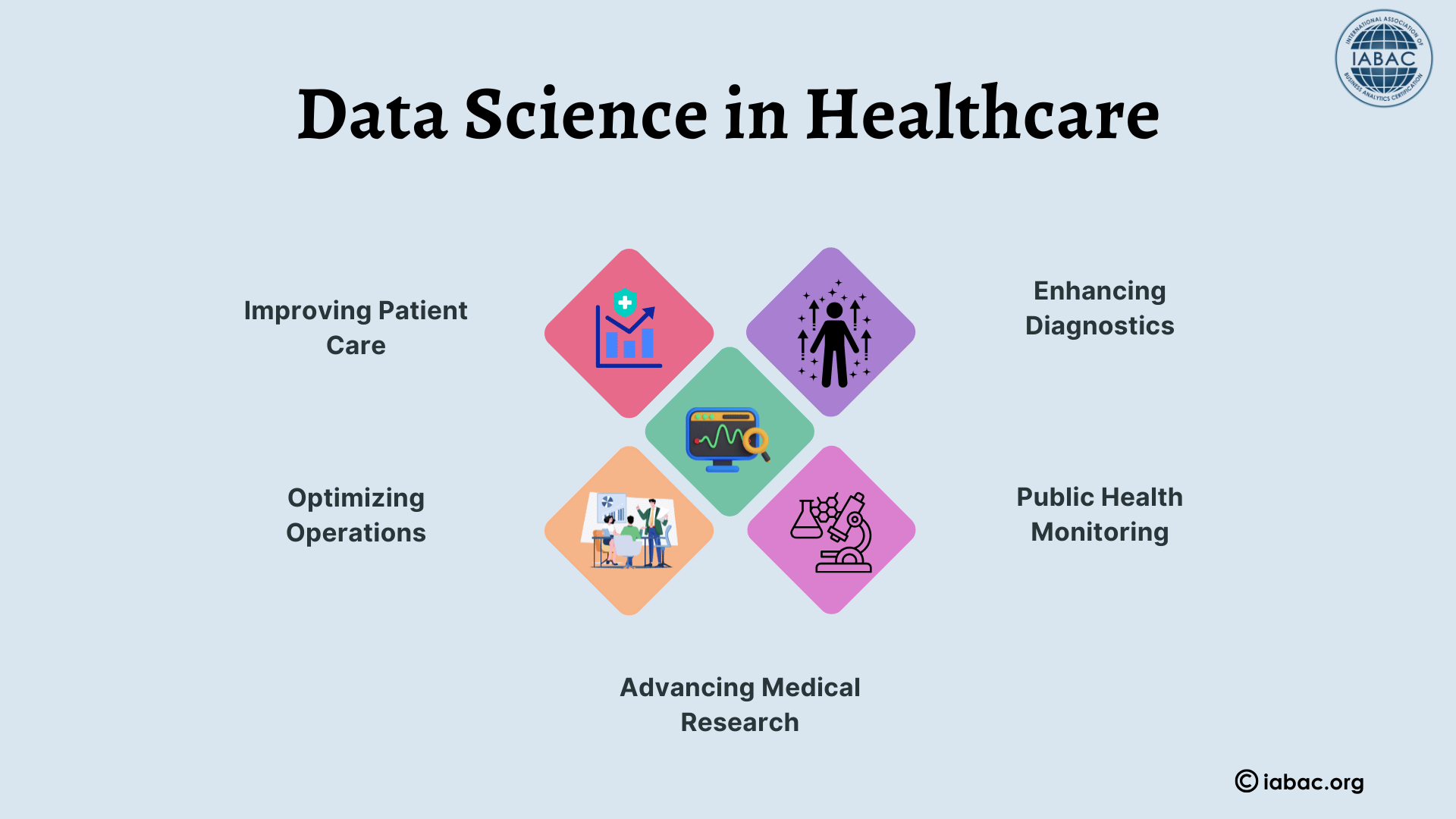
The Growing Demand for Data Science Professionals in Healthcare
Rising Demand for Data Science Professionals: The healthcare industry’s increasing reliance on data-driven insights has led to a growing demand for skilled data scientists professionals.
Expertise Needed: Healthcare organizations require experts who can:
- Analyze large datasets
- Develop predictive models
- Create innovative solutions that improve patient outcomes and reduce operational costs.
Importance of Data Science Courses: This growing demand makes data science courses an essential investment for anyone seeking a career in healthcare technology.
Opportunity for Healthcare Professionals: For those with healthcare backgrounds, data science courses offer an opportunity to integrate data science into their existing skills.
Path for Newcomers: For individuals new to healthcare, these courses provide a pathway to enter an exciting and rapidly evolving field
Data science is transforming healthcare by improving care, efficiency, and research. With growing demand for skilled professionals, IABAC data science certification is a key investment. It equips you with the skills needed to make an impact in this evolving field.
About the Creator
Enjoyed the story? Support the Creator.
Subscribe for free to receive all their stories in your feed.
Comments
There are no comments for this story
Be the first to respond and start the conversation.