
The Power of Flash Cards in the Digital Age: Why Simple Cards Still Outperform Screens for Young Children
How analog tools like beautifully designed flash cards support cognitive development, attention span, and parent-child bonding — even in a world dominated by tablets and apps.

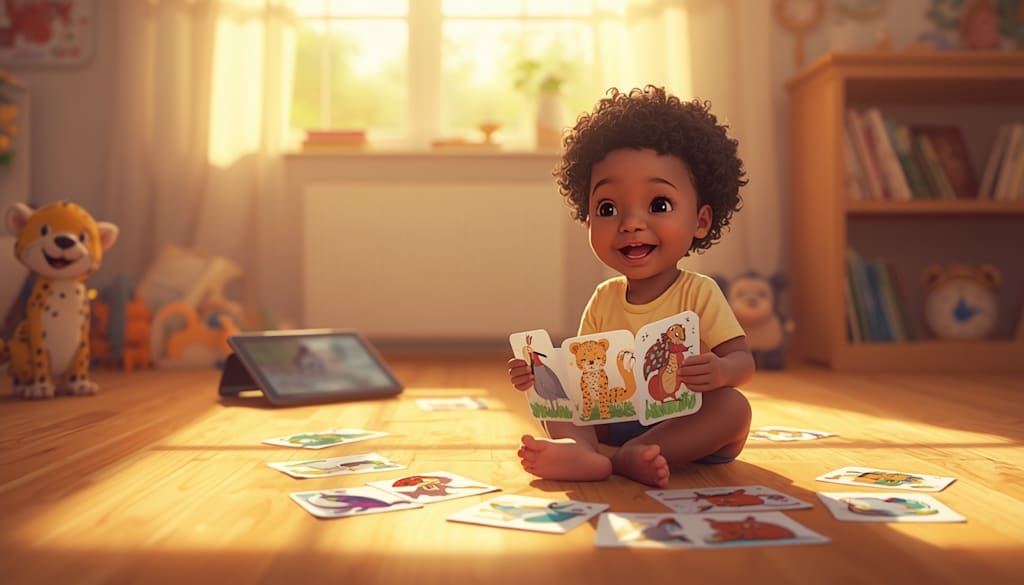
In the bustling landscape of modern parenting, where tablets, smartphones, and educational apps compete fiercely for our children’s limited attention, one deceptively simple tool continues to stand the test of time: the humble flash card.
At Noor Kids Academy, we specialize in creating both digital and physical learning resources for children aged 2–8. Over the years, we have observed something remarkable — well-designed physical flash cards often deliver superior results in key developmental areas compared to many digital alternatives. This article explores the science, psychology, and practical benefits of flash cards, and why they remain an essential tool for parents who want the best for their children.
The Cognitive Science Behind Flash Cards
Flash cards leverage two of the most well-established principles in cognitive psychology: active recall and spaced repetition. When a child actively retrieves information — for example, seeing a picture of a cheetah and saying “the fastest land animal” — they strengthen neural pathways far more effectively than when they passively watch animations or swipe through apps.
Studies from cognitive scientists show that children aged 3–7 who regularly use physical flash cards demonstrate significant improvements in:
Vocabulary depth and retention
Categorization and conceptual thinking
Sustained attention span
Memory consolidation
Unlike screens, which often provide instant gratification and frequent distractions, flash cards encourage deliberate focus and mental effort — skills that are foundational for long-term academic success.
Why Physical Flash Cards Beat Digital Screens for Young Brains
Multisensory Engagement Physical cards engage touch, sight, and sometimes sound. A child can hold the card, trace the letters, flip it, and sort it with others. This tactile experience creates richer memory encoding than purely visual digital content.
Reduced Screen Time and Blue Light Exposure Excessive screen exposure is linked to sleep problems, eye strain, and shorter attention spans. Flash cards provide high-quality learning without any of these risks.
Stronger Parent-Child Interaction Flash cards naturally invite conversation. Parents can ask open-ended questions like “Where do you think the squirrel lives?” or “What would you do if you could run as fast as a cheetah?” These moments build emotional connection and language skills simultaneously.
Development of Focus and Self-Regulation In an age of constant notifications and endless scrolling, the simplicity of one card at a time helps train the brain’s ability to focus — a skill many children are losing due to overstimulation.
Freedom from Algorithms Digital apps are designed to keep children engaged as long as possible. Flash cards put the parent and child in control of the learning pace and content.
Practical Recommendations for Parents and Educators
Start Early and Keep Sessions Short: For children aged 2–4, begin with 5–8 cards for 5–10 minutes. Gradually increase duration and difficulty.
Turn Learning into Play: Create games such as memory matching, sorting by habitat (jungle, ocean, farm), or storytelling using several cards together.
Use Spaced Repetition: Review old cards regularly while introducing new ones. This technique dramatically improves long-term retention.
Connect Learning to Real Life: After learning about animals, take a nature walk, visit a zoo, or watch a short documentary together.
Combine with Movement: Let children act out the animals — jump like a kangaroo, fly like a dragonfly, or run like a cheetah. This kinesthetic approach boosts memory.
Create a Dedicated Learning Corner: Keep flash cards in an accessible, attractive box to encourage independent play.
What Makes an Excellent Flash Card Set?
The most effective flash cards share these characteristics:
High-quality, clear, and engaging illustrations
Large, easy-to-read text
Interesting facts on the back of each card
Durable, thick material suitable for small hands
Logical categorization (animals, colors, shapes, emotions, etc.)
Our animal flash card collection at Noor Kids Academy was designed with all these principles in mind — combining beauty, educational value, and pure joy.
Finding Balance in the Digital Age
We are not anti-technology. Digital tools have tremendous value for interactive storytelling, personalized learning, and global access to knowledge. However, for young children (especially under 6), the healthiest approach is intentional balance.
The American Academy of Pediatrics and many child development experts recommend limiting recreational screen time and prioritizing hands-on, social, and physical activities. Flash cards perfectly complement technology by providing focused, screen-free learning moments.
Parents who successfully combine both worlds often report:
Better language development
Improved attention and listening skills
Stronger emotional bonds with their children
More confident and curious learners
Final Thought
In our rush toward ever more sophisticated technology, we must not overlook the quiet, proven power of simple tools. Flash cards may appear old-fashioned in 2026, but they speak directly to how young children’s brains are naturally wired to learn — through touch, repetition, imagination, human connection, and wonder.
The most advanced learning doesn’t always require the most advanced technology. Sometimes, it only requires a caring adult, a curious child, and a beautifully designed piece of cardstock.
At Noor Kids Academy, we believe every child deserves this timeless advantage. Whether you choose our physical flash cards or our digital resources, the goal remains the same: nurturing curious, focused, and emotionally intelligent children who love learning.
Ready to give your child this powerful gift?
Explore our carefully designed flash card collections and rediscover the joy of hands-on learning in the digital age.
About the Creator
Noor Kids Academy
Writer exploring childhood, education, fitrah, and the philosophy of learning. Practical insights for parents, teachers, and curious minds.
Enjoyed the story? Support the Creator.
Subscribe for free to receive all their stories in your feed.
Comments
There are no comments for this story
Be the first to respond and start the conversation.