
The most difficult language in the world can save millions
Humans can't survive without photosynthesis
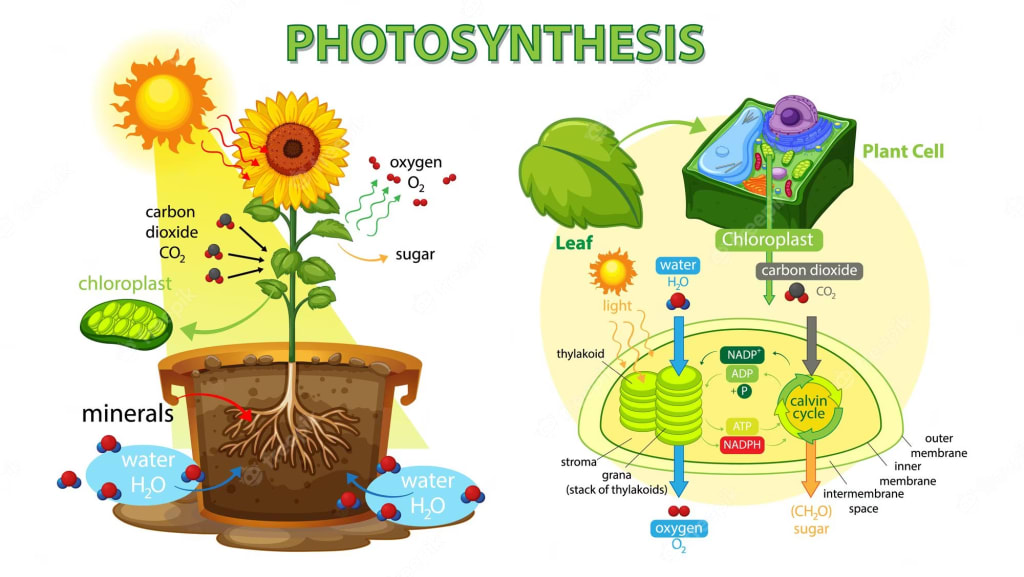
It turns out that understanding this process in detail could help find a cure for cancer. For a long time, scientists have been trying to figure out how plants start the process of turning sunlight into sugar through photosynthesis, but now some researchers have finally decoded those tricky signals that plants use to start the process. Photosynthesis can save millions of human lives. But how? We have known for ages that plants create energy out of sunlight, water, and carbon dioxide (CO2).
Botanists have known for a long time that the nucleus in a plant cell act as the boss, giving orders to other parts of the cell through the creation of proteins; if those proteins are missing, the plant won't be able to grow or turn green. However, because the nucleus contains hundreds of different proteins, identifying the ones that instruct the plant to begin photosynthesis has been extremely difficult; it is been like trying to find a needle.
however, four of those proteins were discovered by Professor Ming chin and his team, and the entire procedure was unambiguously explained. In order for plants to begin the process of photosynthesis, which converts sunlight into energy for growth, Chen.
These proteins facilitate communication between the various plant parts so they can cooperate to produce energy as part of a complicated process that takes place in two different rooms in the cell.
Chen compares this process to a symphony where the conductors are the proteins in the nucleus. These conductors are known as photoreceptors, which suggests that they react to light and activate genes that begin photosynthesis. However, they must communicate with other parts of the cell that are distant, like musicians playing in different rooms, and this is where the four recently discovered proteins come in. They aid the conductors in sending messages to the other parts of the cell.
Because of some similarities between the mitochondria, which produce chemical energy in human cells, and the chloroplasts, which are plant cell components responsible for photosynthesis.
When the tiny organelles inside a cell, known as organelles, experience a problem, they send a message to the nucleus, which serves as the cell's command center, according to research on internal communication processes in cells.
However, nothing is known about how the nucleus communicates with the organelles. According to Chen, by examining how the nucleus interacts with the chloroplasts, we can discover how it also regulates the mitochondrial genes in plants in a manner that is comparable to how it does in animals. We could learn to regulate these processes in order to prevent these genes from malfunctioning and causing harmful diseases like cancer and perhaps discover strategies to stop the progression of cancer.
Understanding how photosynthesis is regulated is crucial because it could be used to Beyond just studying diseases, for instance, if we ever live on another planet, we will need to develop a way to grow food indoors and ensure that plants receive enough light to grow. Additionally, climate change is making it more difficult for farmers to grow crops. By understanding how plants grow, we can find ways to help them survive and keep us fed.
The ability of plants to perform photosynthesis is what allows us to live on this planet, according to Chen. If we can control plant growth, we can also control how much food we produce, which will undoubtedly help us solve many of our problems in the future.
This research was funded by the National Institutes of Health in the hopes that it could aid in the discovery of a cancer cure and solution for other problems.
About the Creator
Enjoyed the story? Support the Creator.
Subscribe for free to receive all their stories in your feed.
Comments
There are no comments for this story
Be the first to respond and start the conversation.