
: "The Invisible Graduation: How a Sudden Policy Shift Shattered Thousands of Dreams"
Trump Administration Revokes Visas of Over 1,000 Foreign Students, Sparking Legal Battles and Campus Protests
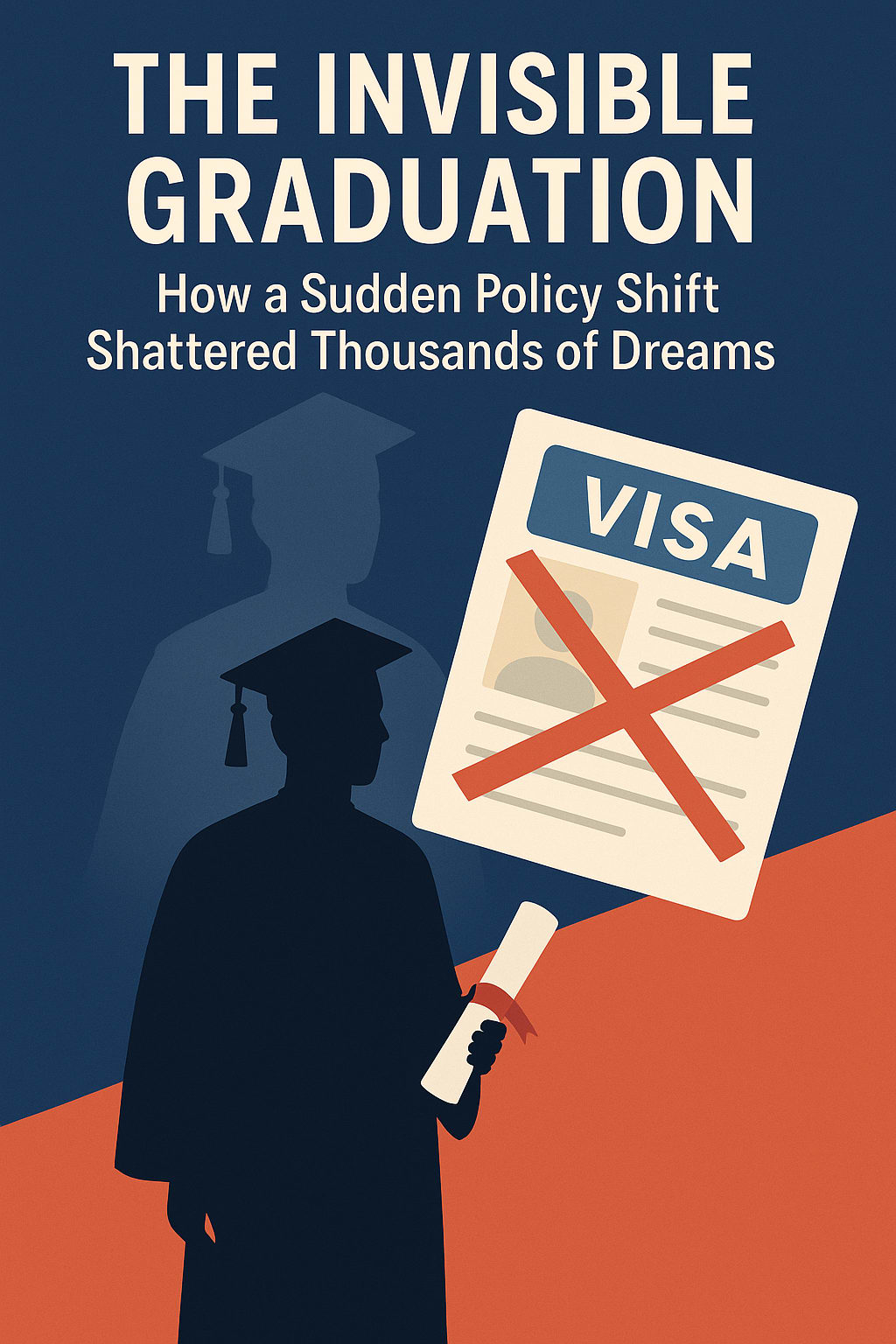
Ravi Mehta had just submitted his final project for his Master's program in Artificial Intelligence when he received the email. Subject: URGENT: Change in Visa Status The body of the message was brief and cold. Due to a shift in federal policy, his F-1 visa had been revoked. No explanation. No next steps. Just a notice and a warning to "depart the country immediately" or risk legal consequences. His first reaction was confusion—maybe a glitch in the university system. Then came panic, then disbelief. But Ravi wasn’t alone. Across the United States, more than a thousand international students faced the same crushing news. Their legal statuses had been terminated without warning. Some had just begun their studies. Others, like Ravi, were weeks away from graduation. They had spent years building lives, relationships, and careers—all now reduced to a few lines in a government database. The official reason? National security, allegedly. But students and universities alike struggled to understand how scholars pursuing degrees in fields like medicine, engineering, and environmental science posed any kind of threat. For many, it felt less like a targeted operation and more like collateral damage in a war on immigration. International students have long been the quiet engine of innovation in America’s universities. They pay full tuition, often without access to scholarships or financial aid. They contribute to research, teach undergraduate classes, and fill critical roles in STEM fields. And they bring cultural diversity that enriches the entire academic experience. But suddenly, those contributions didn’t seem to matter. The impact was immediate and widespread. Some students were detained while boarding flights. Others were barred from re-entering the U.S. after brief trips home. A few were even told, wrongly, that they had violated immigration laws, leading to panicked calls to lawyers and consulates. Ravi, with no family in the U.S. and only a few weeks left on his lease, found himself sleeping on a friend’s couch, unsure if he’d be able to attend his virtual graduation or even retrieve his diploma. His job offer from a startup in Boston was rescinded, citing "visa uncertainty." He wasn’t angry—yet. He was heartbroken. Protests erupted on campuses across the country. Students, both domestic and international, held candlelight vigils, shared testimonies online, and demanded answers. University officials released carefully worded statements calling for compassion, but behind the scenes, they were scrambling—trying to decode the vague directives, file emergency visa extensions, and calm a storm they didn’t create. In some states, lawsuits were filed. Civil rights groups joined forces with universities to challenge the sudden cancellations. A few won temporary injunctions, but for many students, it was too late. Their flights were booked. Their leases ended. Their lives uprooted. The most painful part? The silence. There was no national address, no press conference, no official apology. For those affected, it felt like being erased—like their presence had never mattered. Months later, as Ravi sat in his childhood bedroom in Mumbai, the time difference made it hard to catch up with his friends back in the U.S. His dream job now belonged to someone else. His diploma arrived by mail, folded and creased. But he wasn’t giving up. He started applying to universities in Canada, Europe, Australia—anywhere that still believed education should transcend borders. What haunted him most wasn’t the loss of opportunity, but the realization that in a country he had grown to love, his presence was always conditional. For every Ravi, there were hundreds more. Each with their own dreams, their own sacrifices, their own invisible graduations. And though they left quietly, their stories continue—echoing through courtrooms, classrooms, and conversations, reminding us all that policies have human consequences.
About the Creator
Enjoyed the story? Support the Creator.
Subscribe for free to receive all their stories in your feed.
Comments
There are no comments for this story
Be the first to respond and start the conversation.