
The Importance of a STEAM Curriculum for Elementary School Education
STEAM Curriculum for Elementary School
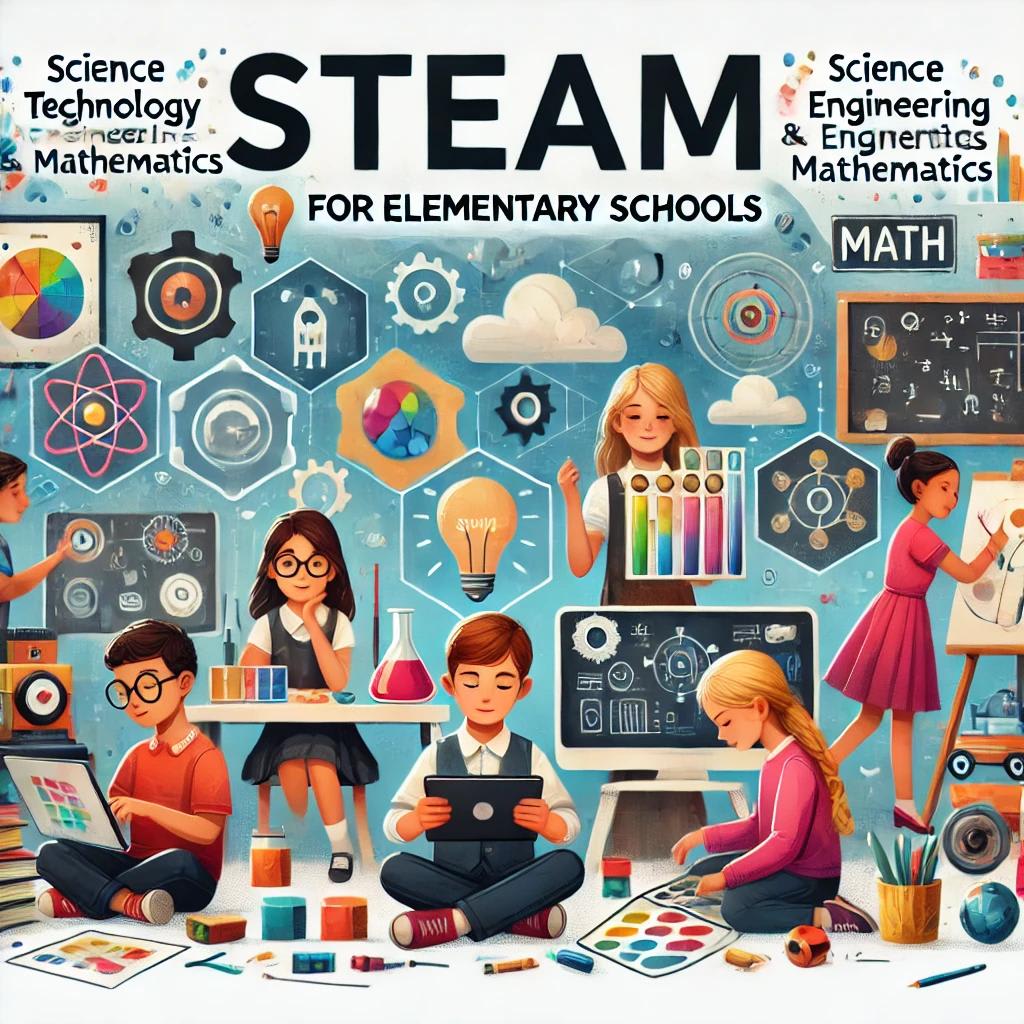
In the evolving landscape of education, the incorporation of STEAM—Science, Technology, Engineering, Arts, and Mathematics—has become a vital approach to equipping young learners with the skills necessary for the 21st century. STEAM education fosters creativity, critical thinking, and collaboration, making it a comprehensive framework for preparing elementary school students for future challenges. This article delves into the benefits, implementation strategies, and practical examples of STEAM curriculum for elementary school.
What is STEAM Education?
STEAM stands for Science, Technology, Engineering, Arts, and Mathematics. It expands on the traditional STEM model by incorporating the arts, acknowledging the importance of creativity and innovation alongside technical skills. The arts in STEAM include visual arts, design, music, and even literature, bridging the gap between logic and imagination.
STEAM is more than a collection of disciplines—it is an interdisciplinary approach that integrates these fields into cohesive learning experiences. This holistic framework emphasizes problem-solving, experimentation, and inquiry-based learning, helping students develop a deeper understanding of how various subjects connect and interact in real-world contexts.
Benefits of STEAM Education in Elementary Schools
- Fosters Creativity and Innovation - By integrating the arts into STEM, STEAM education nurtures creativity, allowing students to approach problems from multiple perspectives. It encourages out-of-the-box thinking, essential for innovation in any field.
- Enhances Critical Thinking and Problem-Solving Skills - STEAM activities often involve challenges requiring analysis, hypothesis formation, and iterative solutions. These experiences sharpen critical thinking and decision-making skills.
- Encourages Collaboration and Teamwork - Many STEAM projects are collaborative, teaching students to work effectively in teams, share responsibilities, and value diverse ideas.
- Builds Confidence in Technical and Artistic Abilities - Hands-on projects in STEAM provide tangible results, boosting students’ confidence in their skills and inspiring a sense of accomplishment.
- Prepares for Future Careers - By exposing children to disciplines like coding, robotics, design, and engineering, STEAM education provides foundational skills for high-demand careers in science and technology.
- Promotes Inclusivity - The inclusion of the arts makes STEAM accessible to a broader range of learners, ensuring that students with varied interests and talents can find a place in the curriculum.
Implementing a STEAM Curriculum in Elementary Schools
Successful implementation of a STEAM curriculum requires a thoughtful approach that aligns with students' developmental levels and school resources. Below are some strategies for integrating STEAM into elementary education:
1. Project-Based Learning (PBL)
Projects that integrate multiple STEAM disciplines encourage students to apply knowledge creatively. For example, designing a bridge combines physics (science), structural principles (engineering), measurement (math), and artistic design.
2. Interdisciplinary Lesson Plans
Teachers can collaborate across subjects to create interconnected lessons. For instance, a science teacher might coordinate with an art teacher to explore patterns in nature, such as the Fibonacci sequence.
3. Use of Technology and Tools
Providing access to tools like tablets, 3D printers, and robotics kits enables students to explore technology and engineering hands-on. Platforms like Tynker and Scratch teach coding in an engaging way.
4. Teacher Training and Resources
Equipping educators with the skills and resources to teach STEAM effectively is crucial. Professional development workshops and access to STEAM-specific teaching materials can make a significant difference.
5. Community Involvement
Partnering with local businesses, universities, and professionals can bring real-world insights into the classroom. Guest speakers and field trips to science museums or art galleries further enrich the experience.
6. Encouraging Curiosity and Inquiry
Teachers should foster an environment where asking questions is encouraged. Inquiry-based learning leads to exploration and discovery, the cornerstone of STEAM education.
Examples of STEAM Activities for Elementary Students
1. Building a Roller Coaster (Science, Engineering, Math, and Arts)
Students can design and build small roller coasters using everyday materials like cardboard and marbles. They’ll learn about gravity, force, and friction while exploring creative design elements.
2. Coding a Simple Game (Technology and Math)
Using platforms like Scratch, students can code their own simple games. This activity introduces programming logic and mathematical concepts in an engaging way.
3. Creating Weather Diaries (Science, Arts, and Technology)
Students can observe and document daily weather patterns, create artistic representations of their observations, and use technology to track trends.
4. Designing Eco-Friendly Houses (Engineering, Arts, and Science)
Combining principles of environmental science and engineering, students can create models of sustainable homes, incorporating artistic flair into their designs.
5. Exploring Symmetry in Nature (Math and Arts)
Students can study symmetry in natural objects like leaves and flowers, then create symmetrical art pieces inspired by their observations.
Overcoming Challenges in STEAM Education
While the benefits of STEAM education are clear, implementing such a curriculum can present challenges:
Resource Limitations
Not all schools have the budget for advanced tools like 3D printers or robotics kits. However, teachers can use low-cost alternatives, such as recycled materials, to create meaningful projects.
Teacher Preparation
Many teachers may feel unprepared to teach interdisciplinary lessons. Professional development and collaborative planning can help address this.
Curriculum Integration
Aligning STEAM projects with existing curriculum standards can be complex. Schools should identify overlapping areas where STEAM activities naturally fit.
The Future of STEAM Education
As technology and innovation continue to transform society, STEAM education will play an increasingly important role in shaping well-rounded, capable learners. By cultivating skills like creativity, collaboration, and critical thinking from a young age, elementary schools can lay the groundwork for future success in academics and careers.
To make STEAM education even more impactful, schools can explore emerging trends like augmented reality (AR) for immersive learning, AI-driven personalized teaching tools, and cross-cultural STEAM projects that connect students globally.
Conclusion
The integration of a STEAM art curriculum in elementary schools is a transformative step toward fostering a generation of innovators, thinkers, and creators. By combining technical skills with artistic exploration, STEAM education prepares children for the demands of a rapidly changing world while nurturing their curiosity and imagination. Whether through coding, building, designing, or problem-solving, STEAM empowers young minds to dream big and achieve more. Elementary schools embracing this model are not just teaching subjects; they are shaping the future.
About the Creator
Enjoyed the story? Support the Creator.
Subscribe for free to receive all their stories in your feed.
Comments
There are no comments for this story
Be the first to respond and start the conversation.