
"The Impact of Social Media Apps on Modern Communication"
"A Study of Changing Interaction Patterns in the 21st Century"
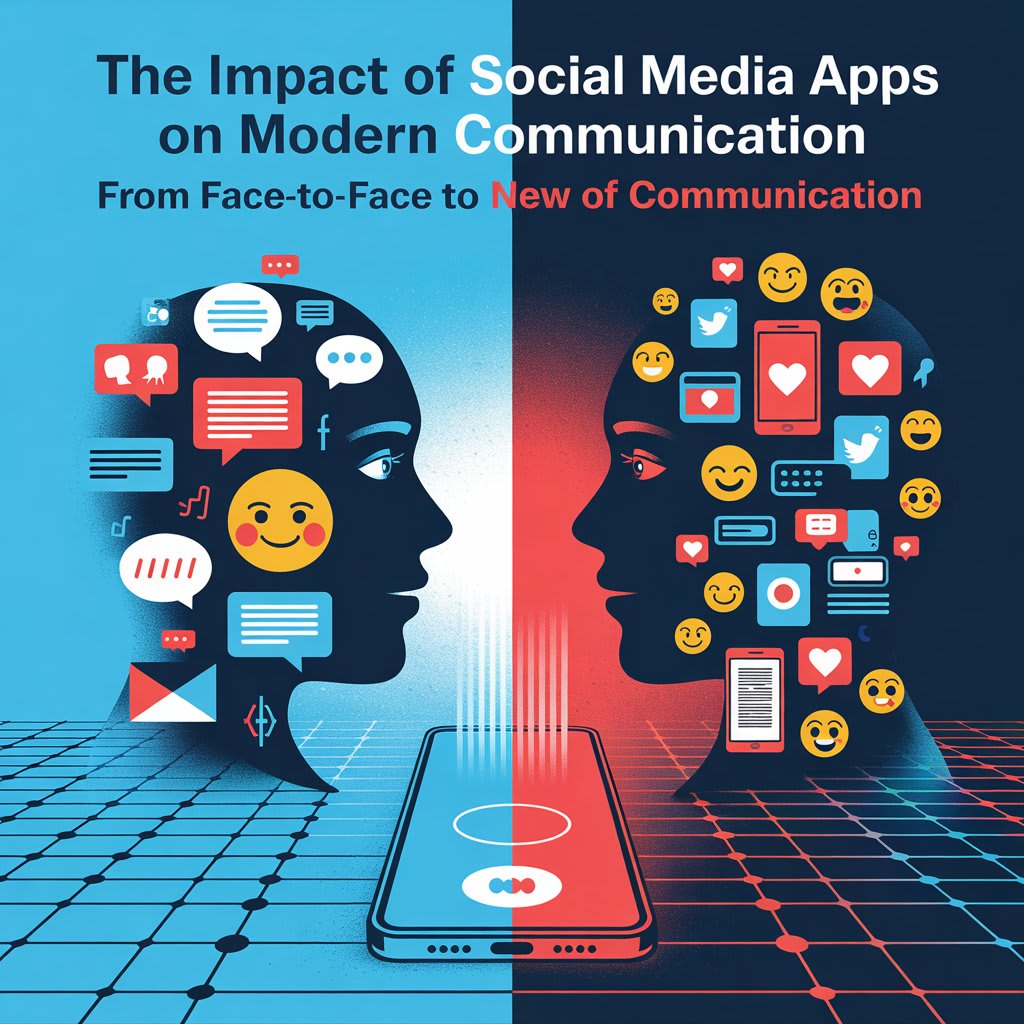
It was a cloudy afternoon when 16-year-old Ayesha sat by her bedroom window, staring at the screen of her smartphone. The notification tone pinged again—another message, another meme, another reel. Just like any other teen, her world revolved around WhatsApp groups, Instagram stories, and endless scrolls through TikTok.
But something felt different today. Her grandmother, who was visiting from the village, watched her quietly from the corner of the room.
"You talk to so many people on that device," Nani said, “but I never hear you actually speak to anyone.”
Ayesha smiled and said, "Nani, I’m talking all the time… look—see, Sana sent a voice note, and Ahmed replied with a GIF. We’re planning a group meet."
Her grandmother chuckled, “Back in our day, if we wanted to talk, we walked to someone’s house and had chai together.”
Ayesha looked at her Nani, puzzled yet intrigued. That simple sentence sparked a curiosity in her. Was the way they used to communicate better… or just different?
A Journey Through Generations
The world has seen a massive shift in communication. From handwritten letters that took days to reach, to instant messages that travel the world in a second—technology has rewired human interaction. And nothing has influenced this transformation more than social media apps.
Platforms like Facebook, Instagram, Snapchat, and TikTok have reshaped how we express emotions, share stories, and stay connected. The question is: has this been a change for the better—or are we losing something valuable in the process?
Ayesha's School Project
The next week, Ayesha was assigned a presentation topic in school: "The Evolution of Communication." The timing was perfect. Inspired by her grandmother’s words, she decided to explore how social media apps have impacted human connection.
She began her project by interviewing her grandmother, who recalled how important it was to make time for people in person. “There was no ‘online’ or ‘offline’,” she laughed, “just real life. When someone cried, you held their hand, not just sent a sad emoji.”
Then Ayesha interviewed her classmates. Their stories were different. For them, video calls had replaced visits, emojis replaced emotions, and filters replaced faces. While most of them acknowledged the convenience, they also admitted feeling lonelier, more distracted, and sometimes disconnected—despite being constantly “connected.”
The Double-Edged Sword
In her research, Ayesha discovered both sides of the social media coin.
On one hand, social media apps have made communication faster and easier than ever. Long-lost friends can reconnect with a click. Family members living on opposite sides of the world can see each other’s daily lives through photos and videos. Activism, news, and education spread rapidly. People can express themselves more freely than ever before.
But on the other hand, the depth of communication has started to fade. Ayesha read studies showing that while people have hundreds of “friends” online, they often struggle with real-world conversations. The dopamine hits from likes and comments sometimes replace genuine validation. Face-to-face communication—once the foundation of relationships—is now often replaced by typing dots and temporary stories.
FaceTime vs. Face-to-Face
As she prepared her final presentation slide, Ayesha reflected on the subtitle of her project: "From Face-to-Face to FaceTime."
She realized that the shift wasn’t just in tools, but in the nature of communication itself. In face-to-face interactions, there’s body language, tone, pauses, and real-time connection. With social media, so much gets lost in translation.
Even video calls, while amazing in technology, can’t fully replicate the feeling of someone being right next to you—offering a hug, sharing a laugh, or simply being silent together.
The Final Presentation
On the day of her presentation, Ayesha walked up to the podium with confidence. She began:
“We live in the most connected generation in history… yet so many of us feel disconnected. Why? Because communication is more than just words—it’s presence. And while social media apps are powerful tools, we must not let them replace what makes us human.”
She ended with a simple quote she had found online:
“Technology connects us across distance, but only presence connects us across hearts.”
The class clapped. Her teacher smiled and nodded in appreciation.
A Balanced Future
That evening, Ayesha sat next to her grandmother and showed her a photo album she had created on her phone. It was a mix of old pictures Nani had brought from the village and new photos of her friends, her school, and her cat.
Nani smiled and said, “Now this is the best of both worlds.”
Ayesha grinned. She had learned something valuable—not just for her project, but for life:
Social media apps are not the enemy. But like all powerful tools, they require balance, boundaries, and wisdom.
The future of communication isn’t just digital or physical—it’s intentional. It's about choosing when to text, when to call, and when to show up in person. Because sometimes, a real smile can say more than a thousand emojis.
About the Creator
Enjoyed the story? Support the Creator.
Subscribe for free to receive all their stories in your feed.
Comments
There are no comments for this story
Be the first to respond and start the conversation.