
THE HUMAN BODY: HOW IT WORKS
Anatomy is all about what our bodies are made of, while physiology is about what they do. When we put them together, we get the science of understanding ourselves.
It's a pretty complex science, I won't lie. It involves other subjects like chemistry and even physics. And get ready to learn lots of new words - some in Latin and some in Greek.
But this course isn't just about memorizing body parts or how pizza gives us energy. It's about why we're alive, how we got here, how diseases affect us, and how our bodies heal from sickness and injuries.
It's about the big things we think about all the time, like breathing, eating, sleeping, and even thinking itself. We can understand all of these processes through anatomy and physiology.
If you pay attention and I do a good job teaching, you'll come out of this course with a better understanding of how your body works. You'll see that your body is more than just a bunch of parts put together.
To understand how living bodies work, we had to study a lot of dead ones. And for a long time, this was a secret thing.
In many societies, dissecting human bodies was considered taboo for centuries. So, the study of anatomy had a long, slow, and sometimes creepy history.
Back in the 2nd century, a Greek physician named Galen learned about the human body by dissecting pigs. Leonardo da Vinci also studied dead bodies to create his detailed drawings, but he had to stop because the pope didn't like it.
It wasn't until the 17th and 18th centuries that certified anatomists were allowed to dissect human bodies, but it became a popular public event. It is divided into systems which are groups of organs that work together to carry out complex functions. The human body has several organ systems, including the circulatory, respiratory, digestive, nervous, muscular, skeletal, reproductive, and others.
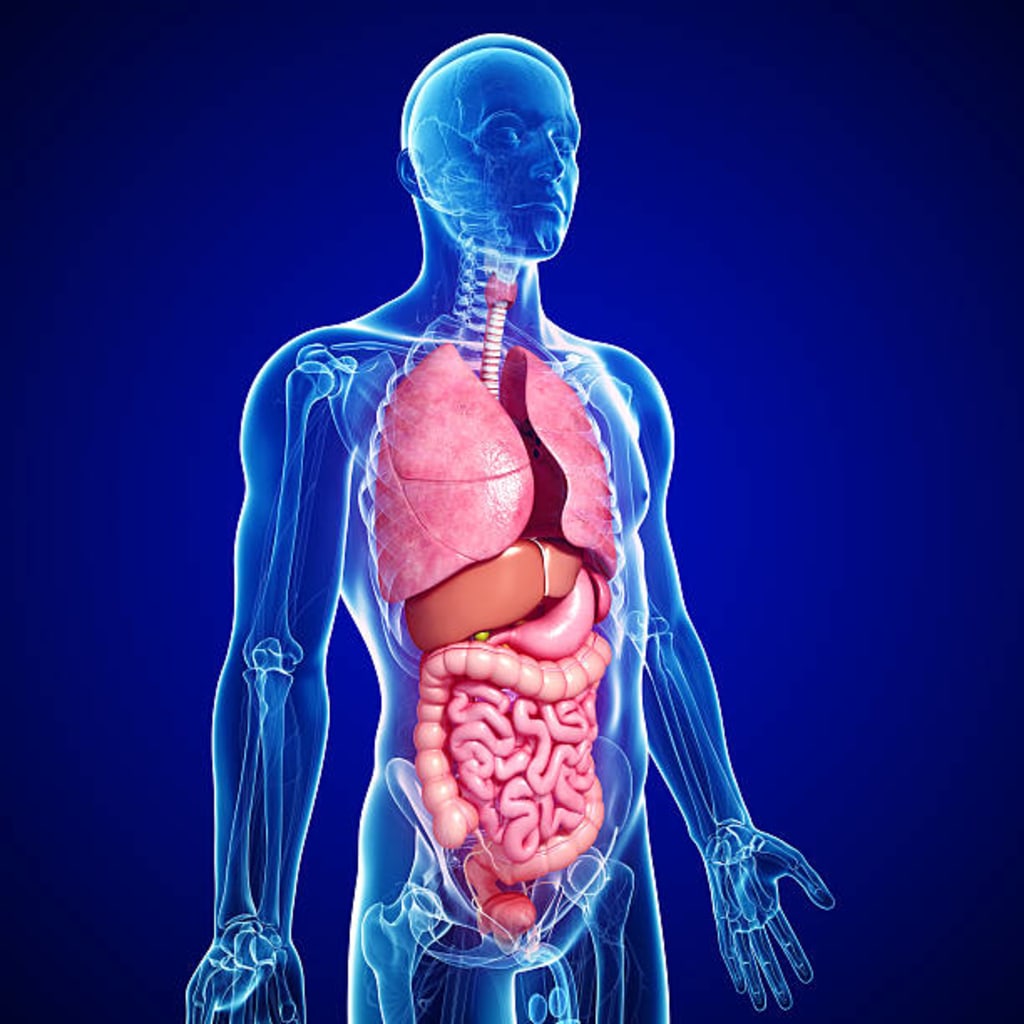
We'll start with the head. When we open it up, we can see the brain, which is made up of the cerebrum and cerebellum. Moving on, we have the nasal cavity and the oral cavity, where we find the tongue. At the back of the throat is the pharynx. Now, let's move down to the neck region. Here, we have the thyroid gland and the trachea, which leads to the lungs. Speaking of lungs, here's the left lung and the right lung. If we remove the lungs, we can see the heart in the center. Let's take the heart out to explore what's underneath. We'll find the esophagus, the right bronchus, and the left bronchus, which lead into the lungs. Now, let's put the heart back and open it up. Inside, we have the right atrium, right ventricle, left atrium, left ventricle, superior vena cava, inferior vena cava, pulmonary trunk, and ascending aorta. Moving on to a really large organ, we have the liver. It has a left lobe and a right lobe. If we take it out, we can see the gallbladder, which is green, and the inferior vena cava, which is blue. The liver also has veins and arteries running through it. Lastly, we have the stomach, which has a top part called the cardia. The stomach is curved and fits back into the body, and the pylorus leads into the intestines.
About the Creator
Enjoyed the story? Support the Creator.
Subscribe for free to receive all their stories in your feed.
Comments
There are no comments for this story
Be the first to respond and start the conversation.