
A dusky-skinned boy, thin and shy, stood silently outside the principal's office. His big eyes, usually sparkling with curiosity, were now clouded with fear. His short nose and messy black hair framed a face weighed down by worry. Behind him, the laughter of his classmates echoed down the hallway, unaware of the storm inside him.
Minutes later, he walked into his classroom with heavy steps. The teacher noticed his downcast face and asked, “Why are you so late?”
But the boy said nothing. He quietly sat down, pretending to listen as the lesson went on, though his mind was elsewhere. His teacher, wise and observant, sensed that something was troubling him. Perhaps, she thought, he just needs a little time.
When the bell rang forty minutes later, the teacher gently wished the students, “Have a nice day, see you all tomorrow.” Yet, the boy’s fearful expression remained unchanged.
The next day, to the surprise of the class, his parents arrived and went straight to the principal’s room. After a while, the teacher noticed the mother leaving, softly scolding the boy while holding a piece of paper — perhaps an apology letter. The teacher chose not to question him, worried it might wound him further.
In the days that followed, the staff room buzzed with gossip. Senior teachers whispered and chuckled about the incident, but no one seemed to notice the boy's shrinking confidence. He wasn’t the best in all subjects, but in Mathematics, he showed unusual curiosity. He often answered questions quickly — sometimes even before being asked. Yet now, that spark seemed to fade.
Some of the younger teachers couldn’t help but feel something was wrong. Finally, the same teacher who first noticed his sadness called him aside and asked softly,
“My dear, is there something serious? Why were you standing outside the principal's office? Why did your parents come? What happened?”
The boy’s lips trembled. His voice, barely audible, stammered, “Ma’am, after Maths period two days ago, the recess bell rang. My friends and I rushed to the restroom. They went inside, but I stayed outside.”
“Why?” the teacher asked gently.
“I was drawing something on the toilet wall…” he confessed. “A senior teacher caught me while I was turning around. Later, the principal shouted at me, saying I had broken the discipline and would be punished. He ordered me to bring my parents the next day. I was scared, ma'am. I didn't tell my parents until the morning. When they asked why, I just said I didn’t know. They were forced to write an apology letter.”
The teacher’s heart softened. She smiled kindly and said, “Oh dear, that’s not something to be so afraid of. Everyone makes mistakes. It’s okay. Just focus on your studies.”
The boy hesitated for a second and then asked softly, “Miss, is it a crime to draw a 2D shape on a wall?”
“No, dear,” the teacher chuckled. “Which shape did you draw?”
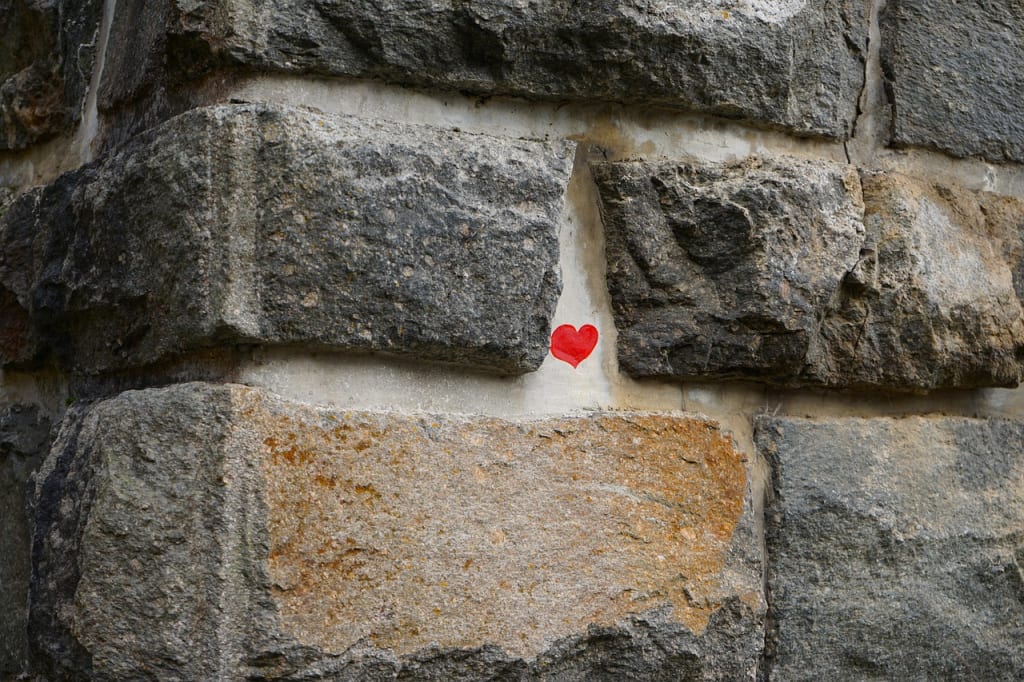
“A heart,” he said, looking down.
“I used a broken red crayon I had saved from our art class. I wanted to see if it could be symmetrical.”
“Why did you choose the heart?” she asked.
The boy replied, “My Maths teacher taught us about circles, squares, triangles, rectangles, and other shapes… but she forgot to mention the heart. So, I tried to draw it and check its symmetry. I drew a horizontal line, but it didn’t look symmetrical.”
The teacher couldn't help but smile warmly. “Dear, it actually is symmetrical. You just needed to draw a vertical line. In fact, hearts, stars, leaves, and many more shapes are all symmetrical. You can try it.”
The boy's eyes widened, his curiosity returning like a spark.
“Oh! I see!” he exclaimed.
For the boy, the heart was simply a 2D shape where one half mirrored the other — but for the senior teacher, it became something else entirely. Yet, in the little boy’s world, it remained a question of simple, innocent symmetry.
About the Creator
Enjoyed the story? Support the Creator.
Subscribe for free to receive all their stories in your feed.
Comments
There are no comments for this story
Be the first to respond and start the conversation.