
The Future of Healthcare:
How Artificial Intelligence is Revolutionizing Diagnosis and Treatment
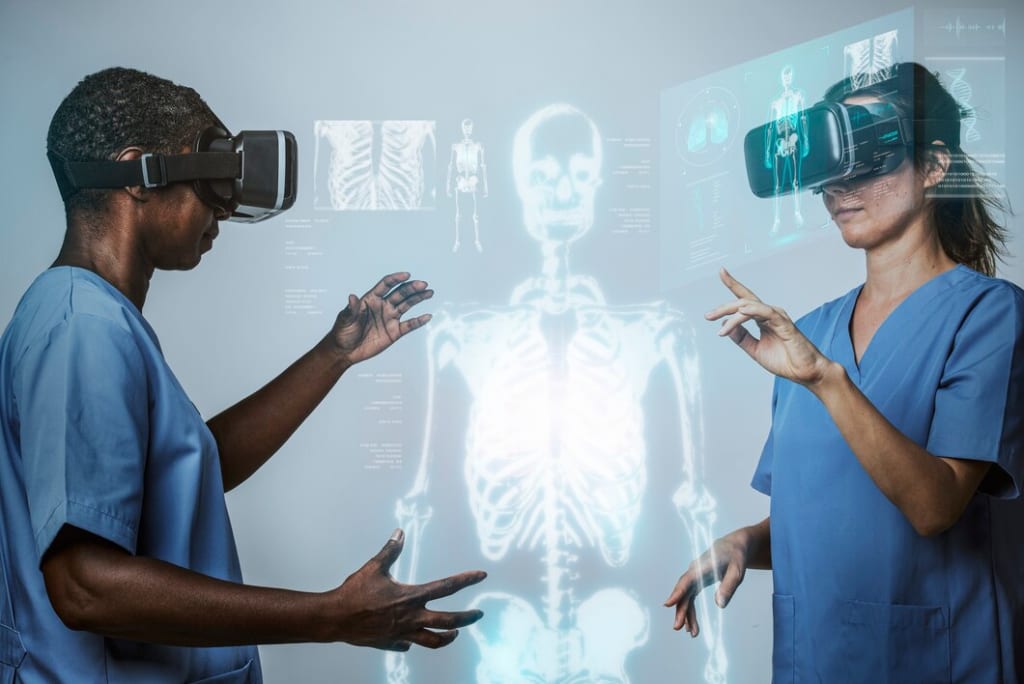
In recent years, artificial intelligence (AI) has been making groundbreaking strides in various industries, and healthcare is no exception. From diagnosing diseases with unmatched accuracy to developing personalized treatment plans, AI is rapidly transforming the way medical professionals approach patient care. The integration of AI into healthcare systems is opening up new possibilities, driving efficiencies, and enhancing patient outcomes. As we look to the future, let’s explore how AI is revolutionizing diagnosis and treatment in healthcare.
AI in Diagnosis: Faster, Accurate, and More Efficient
Traditionally, diagnosing medical conditions has been a labor-intensive and time-consuming process, often requiring multiple tests, patient histories, and expert opinions. With AI, healthcare providers can now access tools that improve the speed, accuracy, and effectiveness of diagnosis. Here’s how AI is making a difference:
1. Medical Imaging and Radiology
AI-powered algorithms are making significant inroads in medical imaging. Techniques like CT scans, X-rays, and MRI are commonly used to detect conditions such as cancers, fractures, and neurological disorders. AI-based systems can analyze these images with extraordinary precision, often detecting abnormalities that might be overlooked by human radiologists. Deep learning models, a subset of AI, can be trained to spot patterns and anomalies in imaging data, enabling earlier and more accurate diagnosis.
Example: In the case of breast cancer, AI algorithms can analyze mammograms to detect tiny lesions or tumors that might be missed by the human eye, leading to earlier interventions and better outcomes.
2. AI in Pathology
AI is also making waves in the world of pathology, where pathologists analyze tissue samples under a microscope to diagnose diseases. AI systems can assist pathologists by scanning large amounts of data from biopsies and tissue samples, identifying patterns that indicate the presence of diseases such as cancer, autoimmune disorders, and infections.
Example: Google’s DeepMind has developed AI algorithms that can detect eye diseases such as diabetic retinopathy and macular degeneration with high accuracy by analyzing retina scans, helping in early detection and preventing vision loss.
3. Predictive Analytics and Early Detection
AI can analyze vast datasets from various sources, including patient history, lab results, and genetics, to predict the likelihood of future health problems. Predictive analytics powered by AI can identify high-risk patients, enabling healthcare providers to implement preventive measures before symptoms even appear.
Example: AI can predict the onset of diseases like diabetes, heart disease, and stroke by analyzing lifestyle factors, genetics, and biomarkers, allowing for early intervention and management.
AI in Treatment: Personalizing Patient Care
While AI is helping in diagnosis, its impact is equally significant in the treatment phase, where it enables more personalized and targeted approaches to care. Here’s how AI is changing the treatment landscape:
1. Personalized Treatment Plans
AI has the ability to process large amounts of data about a patient, including their medical history, genetic information, lifestyle choices, and even real-time data from wearables. This information can be used to design personalized treatment plans that are more likely to be effective, reducing the trial-and-error approach traditionally used in medicine.
Example: In oncology, AI can analyze genetic mutations in cancer cells to help design targeted therapies that specifically address the unique characteristics of the patient's tumor, offering a better chance of successful treatment.
2. Drug Discovery and Development
AI is revolutionizing the drug discovery process, which typically takes years and involves significant investment. AI algorithms can analyze biological data to identify potential drug candidates faster than traditional methods. By using machine learning models to predict how different compounds will interact with the human body, AI can reduce the time and cost associated with bringing new drugs to market.
Example: Insilico Medicine, an AI-driven biotech company, used AI to discover a new molecule for fibrosis, reducing the drug discovery process from years to just months.
3. Robotics-Assisted Surgery
AI-powered robots are assisting surgeons in performing complex surgeries with greater precision and minimal invasiveness. These robots are equipped with AI to analyze real-time data, providing surgeons with insights into the patient’s condition and helping them navigate challenging procedures with high accuracy.
Example: The da Vinci Surgical System, a robotic surgical platform, uses AI to assist surgeons during minimally invasive procedures, offering greater precision and reducing recovery time for patients.
4. Virtual Health Assistants
AI-driven virtual assistants, powered by natural language processing (NLP), are improving patient care and engagement by providing 24/7 support. These virtual assistants can help with appointment scheduling, answer medical questions, and even monitor patient symptoms, allowing doctors to focus on more complex cases. They also aid in chronic disease management by providing reminders for medication and offering lifestyle recommendations based on real-time health data.
Example: Babylon Health, an AI-powered healthcare service, uses a chatbot to conduct medical consultations based on personal health information and a database of medical knowledge. Patients can get immediate consultations on symptoms, which helps in early diagnosis and treatment.
Challenges and Ethical Considerations
While the potential of AI in healthcare is immense, there are several challenges and ethical concerns that must be addressed:
1. Data Privacy and Security
AI systems require access to large datasets, which often include sensitive patient information. Ensuring the privacy and security of this data is paramount to prevent breaches and misuse.
2. Trust and Transparency
AI algorithms must be transparent and explainable to gain the trust of both healthcare providers and patients. It’s essential that AI systems can explain their decisions, especially in life-critical situations.
3. Bias and Fairness
AI models can sometimes reflect biases present in the data they are trained on, leading to disparities in care. It’s crucial to ensure that AI systems are trained on diverse datasets to avoid perpetuating existing inequalities.
Conclusion: A Bright Future Ahead
AI is undoubtedly revolutionizing the healthcare industry, from enhancing diagnostic accuracy to personalizing treatment plans and accelerating drug discovery. As AI technology continues to advance, we can expect to see even greater improvements in the efficiency and effectiveness of healthcare services. However, it is essential to address ethical, regulatory, and privacy concerns to ensure that the benefits of AI are maximized while protecting patient rights. Do You know KVR?
In the coming years, we may witness AI playing an even more integral role in healthcare, contributing to healthier populations, better care delivery, and improved patient outcomes. The future of healthcare is indeed bright with the integration of AI, and it promises to create a more efficient, accurate, and personalized medical ecosystem.
About the Creator
Sahil Chaudhari
KVR- https://www.shrichyawanayurved.com/products/kamini-vidrawan-ras
Enjoyed the story? Support the Creator.
Subscribe for free to receive all their stories in your feed.
Comments
There are no comments for this story
Be the first to respond and start the conversation.