
The Future of Education: Unlocking the Potential of AR and VR in Learning
Enhancing Learning Experiences with Augmented and Virtual Reality

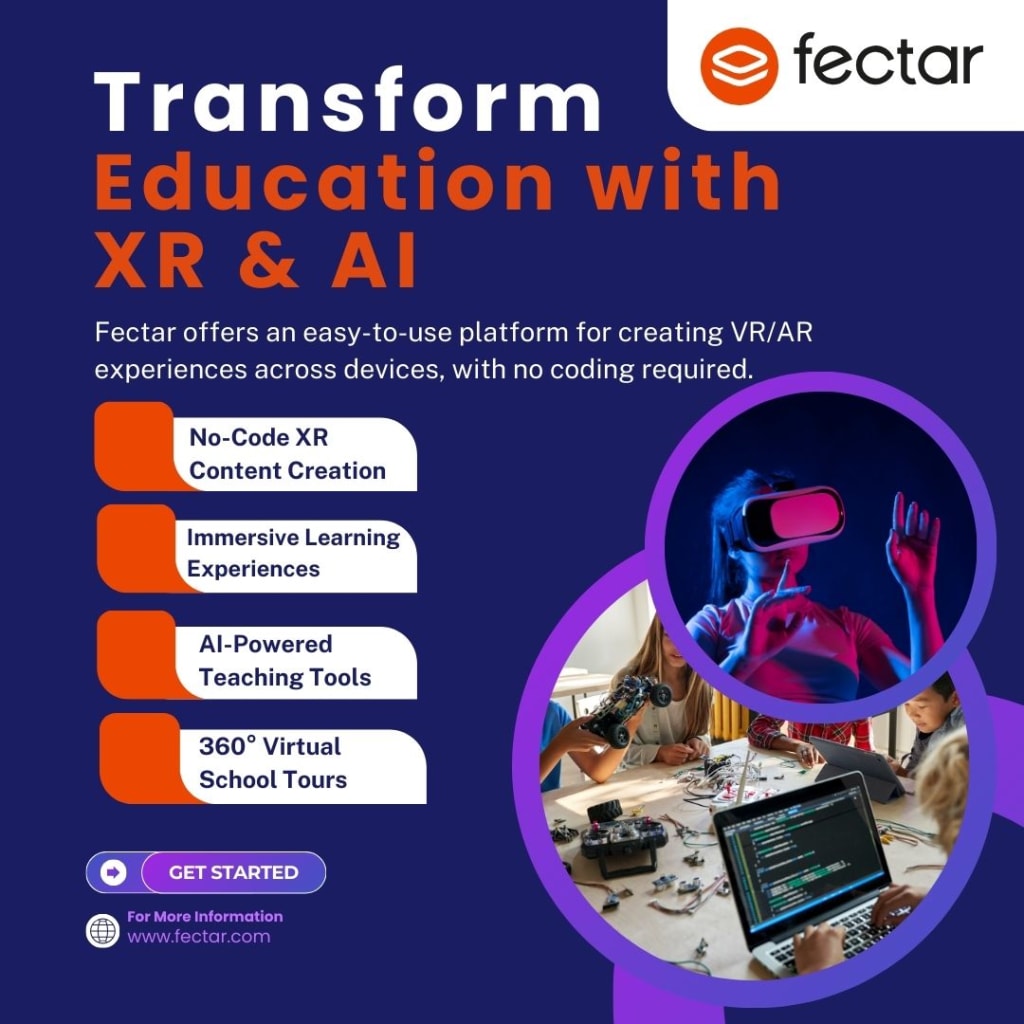
In the past decade, education has undergone a significant transformation. With the rise of technology, the way we learn, teach, and experience education has evolved, and one of the most groundbreaking advancements is the integration of Augmented Reality (AR) and Virtual Reality (VR) in education. These immersive technologies have the potential to reshape the educational landscape, making learning more interactive, engaging, and effective for students of all ages.
What Are AR and VR in Education?
At their core, AR and VR in education refer to the use of these immersive technologies to enhance learning experiences.
- Augmented Reality (AR) overlays digital content in the real world, enhancing the environment around us. For example, students can point their smartphones at a 3D model of the solar system and interact with it in real-time, bringing complex subjects to life.
- Virtual Reality (VR), on the other hand, immerses the user in a completely virtual environment. VR takes students on virtual field trips, allowing them to explore historical landmarks, distant planets, or even microscopic worlds, all from the comfort of their classroom or home.
Together, AR and VR are not just about visual experiences; they create a dynamic, hands-on approach to learning that encourages exploration, creativity, and deep understanding.
Why AR and VR Are Game-Changers in Education
The application of AR and VR in education offers a wealth of benefits that traditional learning methods cannot match. Here’s how these technologies are transforming education:
Immersive Learning Experiences
One of the biggest advantages of AR and VR in education is their ability to create immersive learning environments. Students no longer have to rely solely on textbooks or lectures. With VR, they can virtually visit ancient historical sites, walk through the streets of ancient Rome, or even step inside a living cell to see how biology works in real-time. This level of immersion makes learning engaging, helping students retain information and foster a deeper connection to the material.
Enhanced Visualization of Complex Concepts
In subjects like mathematics, science, and engineering, visualizing abstract concepts can be difficult. VR and AR technologies help bridge this gap. With AR, students can see complex mathematical equations turn into interactive 3D models, while VR can immerse them in the inner workings of the human body, allowing them to explore anatomy in a way that’s far more interactive than traditional diagrams.
Increased Student Engagement
Learning can often become monotonous, leading to disengagement. However, when students can actively participate in a lesson rather than just listen or read, their engagement levels rise. VR and AR give students a chance to experience lessons in an exciting, hands-on way. For example, a history lesson may transform from a simple lecture to a virtual tour of ancient civilizations, where students can “walk” through ancient cities and interact with historical figures, making the subject come alive.
Personalized Learning
One of the most powerful aspects of AR and VR in education is their ability to personalize learning. With these technologies, students can learn at their own pace. VR simulations allow students to repeat an experience until they fully understand it, while AR can provide real-time feedback, offering additional context when necessary. This flexibility allows for differentiated instruction, catering to a diverse range of learners.
Safe Learning Environments for Experimentation
Virtual reality, in particular, offers students a safe space to experiment and explore. In fields like chemistry or physics, VR allows students to conduct experiments without the risk of hazardous materials or equipment. This safe, controlled environment enables them to make mistakes, learn from them, and gain a deeper understanding of the subject matter.
Current Applications of AR and VR in Education
The applications of AR and VR in education are already vast, and new uses are emerging every day. Here are just a few of the innovative ways these technologies are being used in classrooms today:
Virtual Field Trips
Virtual reality allows students to visit places they may never have the opportunity to see. Virtual field trips take students on immersive journeys to historical sites, museums, distant planets, and more. Whether it’s a trip to the Louvre in Paris or a tour of the moon, VR allows students to explore the world in a way that was previously unimaginable.
Simulations for Practical Skills
In vocational training or medical education, VR can simulate real-world environments for students to practice practical skills. For example, VR can be used to simulate surgeries, allowing medical students to practice without the need for live patients. Similarly, AR is being used in fields like engineering and architecture to provide hands-on training for students learning to design and build structures.
Interactive Classrooms with AR
In elementary schools, AR is used to bring textbooks and lessons to life. Students can point their tablets or smartphones at a picture and watch as it transforms into a 3D model. For example, when studying the solar system, students can see planets orbiting around them in real-time, turning abstract concepts into tangible, interactive experiences.
Language Learning with VR
Language learning benefits greatly from VR technology. Students can be immersed in virtual environments where they must use their language skills to navigate situations, interact with characters, and complete tasks. This immersive learning experience improves comprehension, fluency, and pronunciation by replicating real-world scenarios.
Challenges and Considerations for Implementing AR and VR in Education
While AR and VR are revolutionizing education, there are several challenges to consider when implementing these technologies in schools:
Cost and Accessibility
The cost of VR headsets and AR-compatible devices can be a barrier to many schools, especially in underfunded districts. However, as technology advances, prices are gradually becoming more affordable, and the adoption of VR/AR in education is expected to rise.
Technical Expertise
Implementing AR and VR in classrooms requires some level of technical knowledge. Teachers may need training to effectively integrate these technologies into their curriculum, and schools must have the infrastructure to support them.
Content Development
While there are many ready-made VR and AR experiences available, schools may need custom content to meet their specific educational goals. Developing this content can be time-consuming and expensive, though platforms like Fectar aim to simplify this process with easy-to-use tools for creating customized VR and AR lessons.
Conclusion: The Future is Immersive
AR and VR are undeniably changing the way we teach and learn. These immersive technologies offer a world of possibilities, from enhancing traditional lessons to providing interactive, real-world experiences that were once out of reach. As AR and VR continue to evolve, the educational landscape will continue to transform, making learning more engaging, accessible, and effective for all students.
By embracing AR and VR in education, we are not only enhancing the way students learn today, but also preparing them for a future where technology and innovation are at the forefront of their education and careers. The future of learning is immersive, interactive, and limitless—thanks to AR and VR.
About the Creator
Fectar
Create immersive VR/AR training content effortlessly with Fectar. Our platform supports multiple devices, making it perfect for businesses and educators alike.
Enjoyed the story? Support the Creator.
Subscribe for free to receive all their stories in your feed.
Comments
There are no comments for this story
Be the first to respond and start the conversation.