
The Evolution of DevOps: From Agile to Continuous Deployment
Discover the evolution of DevOps from Agile to Continuous Deployment. Explore the benefits of DevOps training in Bangalore for advancing your career in tech.
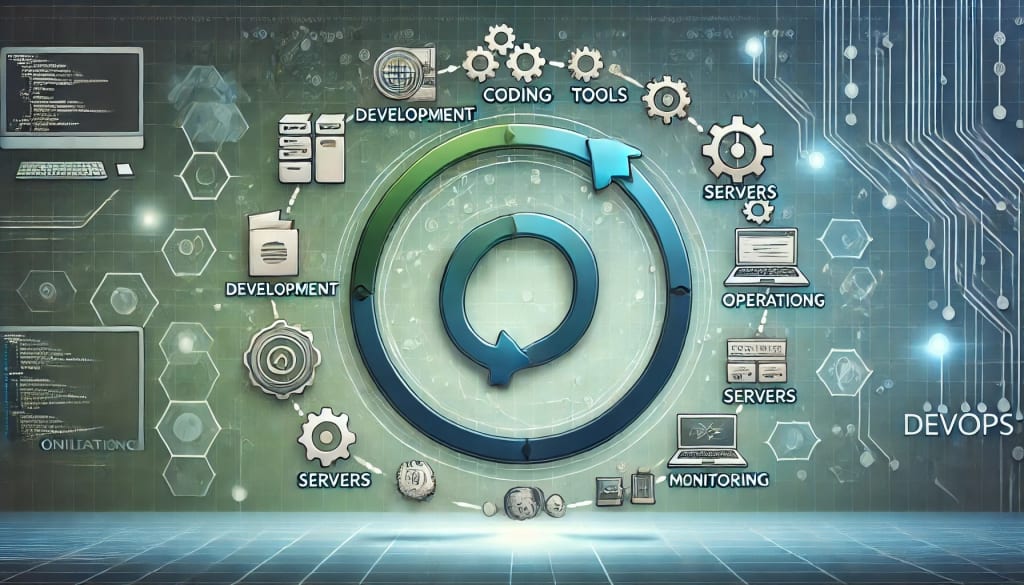
Technological advancements in the contemporary era of software development have forced rigorous methodologies and practices into the development lifecycle. Meanwhile, DevOps has evolved as a methodology that ensures collaboration between the development and operations teams to improve the efficiency and the time required to deploy the solutions. This blog will discuss the history of DevOps following the Agile paradigm through to continuous deployment and the essence of DevOps training in Bangalore.
The Roots: Agile Development
Before the existence of DevOps, the Agile approach began the process of embracing change and more iteration techniques into the SDLC. Agile came into the picture in the early years of this millennium and focused on customer interaction, changing legislation, and more importantly, delivering working software regularly. Scrum and Kanban have also helped alleviate the business and development divide, making it easier to update progress and continuously improve.
However, as Agile has become widely adopted, it is located between development and operations. Operational teams have lost control of application change since development teams have grabbed the reigns and have begun producing code at a much faster pace. This breakdown frequently has caused delays, communication breaches, and finally, a longer time to launch the respective product.
The Birth of DevOps
DevOps then developed as a technique for breaking barriers between development and operations. Derived from ‘Development’ and ‘Operation’, DevOps is the practice that emphasizes collaboration, integration, and iteration. The main aim of DevOps is the integration, testing, and implementation of software changes in such a way that all the time the code is in a releasable state.
The DevOps approach introduced several key practices, including:
Continuous Integration (CI): The developers, at regular intervals, commit code changes to the repository, which means that if there is a problem, it will be detected during the build or testing round.
Continuous Delivery (CD): Building on CI, CD processes make sure that the code changes are deployed to the staging environments and, hence, always ready for the production release.
Infrastructure as Code (IaC): Provisioning of environments and deployment of infrastructures through code, consistent and operational versioning of code, and automated execution environment.
Monitoring and Logging: Application and infrastructure health check to identify anomalies that require intervention and have predictive potential.
The Movement to Continuous Deployment
Once DevOps was implemented into organizations, the next consequent phenomenon was to advance toward continuous deployment. Continuous Deployment is a further extension of the continuous delivery model in which any code change that has undergone a battery of tests is immediately deployed to production. This practice removes interference from human beings, reduces the risk of human error, and shortens the cycle of releasing devices into the market.
Continuous Deployment incorporates automation pipelines, testing techniques, and monitoring tools, which are useful in ensuring its stability. The benefits of continuous deployment include:
Faster Time-to-Market: New features and bug fixes are given more frequently to the users as updates than in the case of competitors.
Improved Quality: Software testing and monitoring are done automatically, so any defects are detected early before reaching the production floor.
Enhanced Collaboration: Teams become more integrated, reducing silos and enhancing the sense of ownership among employees.
The Significance of DevOps Training in Bangalore
Bangalore or the Silicon Valley of India, is a technologically advanced city known for its tech successes. In light of several IT companies and startups occupying the city, there is an increasing need for efficient DevOps. DevOps training in Bangalore provides a platform where people are trained, educated, and prepared to master the field of DevOps.
Those who are already working in IT organizations can take DevOps training in Bangalore to be acquainted with the modern tools, techniques, and developments that are associated with it. These courses teach fundamental concepts like CI/CD pipelines, clouds, containers, and many others. Also, the project work inculcates experiences and learners can handle various projects once they get into the market.
Conclusion
DevOps, along with Agile, Continuous Integration, and Continuous Deployment, are becoming the more fresh trends of today’s software development practice. DevOps has become the new approach to helping groups deliver better software as it brings together a culture of collaboration, automation, and constant improvement. For those professionals who want to stay relevant in this growing industry, there is a need to seek DevOps training in Bangalore to improve their skills for career progression. There is an opportunity to enter into a new level of job opportunities in the technology field if you start practicing DevOps and get certified for the same in Bangalore.
About the Creator
Enjoyed the story? Support the Creator.
Subscribe for free to receive all their stories in your feed.
Comments
There are no comments for this story
Be the first to respond and start the conversation.