
"The Dopamine Effect: From Neurobiology to Daily Life"
"Understanding How This Powerful Neurotransmitter Influences Your Emotions, Habits, and Everyday Decisions"
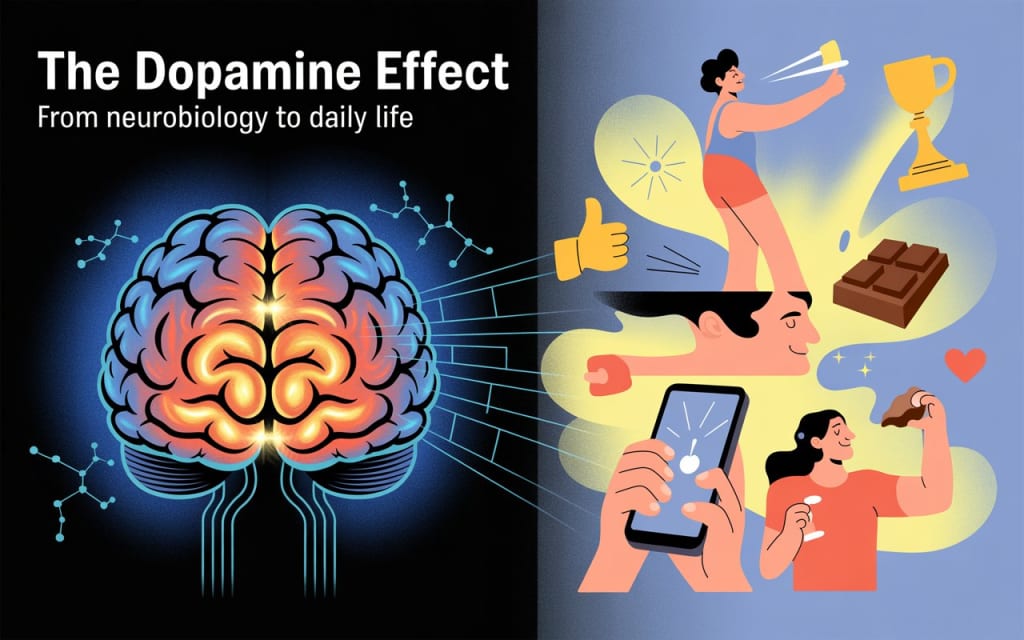
Understanding How This Powerful Neurotransmitter Influences Your Emotions, Habits, and Everyday Decisions
Dopamine is more than just the brain chemical behind feelings of pleasure—it's a critical component of how we think, act, and feel on a daily basis. From the motivation to get out of bed in the morning to the satisfaction of completing a task or winning a game, dopamine plays a central role in driving our behavior.
But what exactly is dopamine? And how does it influence the choices we make, the habits we form, and even our mental health? Let’s explore how dopamine works at the biological level and how its effects ripple through every part of our lives.
What Is Dopamine?
Dopamine is a neurotransmitter—a chemical messenger that transmits signals between nerve cells in the brain. While it's often labeled as the “pleasure chemical,” its primary function goes far beyond pleasure alone.
In reality, dopamine is more accurately described as the "motivation molecule." It's the chemical that helps you feel focused, driven, and rewarded. It doesn’t just make you feel good when something enjoyable happens—it pushes you to seek those rewards in the first place.
The Four Dopamine Pathways
There are four major dopamine pathways in the brain, each responsible for different functions:
Mesolimbic Pathway (Reward Pathway):
This is the most well-known. It governs feelings of reward, reinforcement, and pleasure. It's the circuit that activates when you eat chocolate, receive a compliment, or scroll through social media.
Mesocortical Pathway:
This pathway is involved in cognition, planning, and emotional regulation. It connects to the prefrontal cortex and plays a role in focus, decision-making, and working memory.
Nigrostriatal Pathway:
Essential for movement and coordination, this pathway is impacted in neurological disorders like Parkinson’s disease, where dopamine-producing neurons degenerate.
Tuberoinfundibular Pathway:
This lesser-known pathway regulates hormone secretion, particularly affecting the pituitary gland and processes like lactation and metabolism.
Understanding these pathways shows how dopamine isn't just about feeling good—it's essential to how we function physically, mentally, and emotionally.
Dopamine and Daily Behavior
Dopamine acts as a signal of anticipated reward, meaning it spikes not just when we experience pleasure, but when we expect it. This makes it a key player in:
Motivation:
Dopamine gives us the drive to pursue goals, even when they’re not immediately rewarding. It's what keeps you working on a project or striving to improve.
Habit Formation:
When certain behaviors consistently result in dopamine release (like checking your phone or eating sugary food), your brain starts to form habits around those actions. This is how both healthy routines and harmful addictions form.
Decision-Making:
Dopamine helps you weigh options based on potential rewards. It nudges you toward choices that your brain has associated with positive outcomes.
Dopamine and Mental Health
Because dopamine regulates motivation, mood, and reward processing, imbalances in the dopamine system are closely linked to several mental health conditions:
Depression:
Low dopamine levels are associated with anhedonia, the inability to feel pleasure—a core symptom of major depressive disorder.
ADHD (Attention-Deficit/Hyperactivity Disorder):
People with ADHD often have dysregulated dopamine systems, making it harder to focus, prioritize tasks, or stay motivated.
Addiction:
Drugs like cocaine, nicotine, and opioids artificially spike dopamine levels, creating a cycle of craving and dependency. Over time, the brain reduces its natural dopamine production, making it harder to feel motivated or happy without the substance.
Schizophrenia:
Excess dopamine activity in certain brain regions has been linked to the hallucinations and delusions associated with schizophrenia.
Understanding the connection between dopamine and mental health can help individuals better manage their emotional well-being—and guide treatment decisions involving medication or therapy.
The Dopamine Trap: Instant Gratification Culture
In our modern world, dopamine-triggering experiences are everywhere: social media likes, fast food, binge-watching, video games. These instant rewards can overstimulate the dopamine system, training the brain to crave quick hits of pleasure rather than long-term fulfillment.
This overstimulation can lead to a phenomenon called dopamine fatigue or desensitization, where normal levels of stimulation no longer feel satisfying. Tasks that once felt motivating—like working toward a long-term goal—may suddenly feel dull or overwhelming.
To combat this, some people practice dopamine fasting—a temporary break from stimulating activities to reset the brain’s reward system. While the science behind dopamine fasting is still emerging, reducing overexposure to artificial rewards can help restore balance.
How to Boost Dopamine Naturally
Thankfully, you don’t need drugs or digital likes to increase dopamine in a healthy way. Here are proven strategies to enhance your dopamine levels naturally:
Exercise:
Aerobic activity, strength training, or even a brisk walk can increase dopamine and other feel-good neurotransmitters.
Sleep Well:
Dopamine production relies on good sleep hygiene. Irregular or poor sleep disrupts dopamine receptor sensitivity.
Eat Dopamine-Boosting Foods:
Foods rich in the amino acid tyrosine (like almonds, bananas, eggs, fish, and chicken) help support dopamine synthesis.
Celebrate Small Wins:
Checking off tasks, setting micro-goals, and recognizing achievements—even small ones—can trigger dopamine release.
Practice Gratitude and Mindfulness:
Focusing on positive experiences and being present helps rebalance your brain’s reward system.
Connect With Others:
Social interaction, meaningful conversations, and even acts of kindness can promote dopamine release.
Conclusion: Take Control of Your Dopamine
Dopamine is not your enemy—it’s a powerful ally when balanced properly. It’s what fuels your ambition, your joy, and your sense of purpose. The key is learning how to work with your dopamine system rather than letting it be hijacked by temporary pleasures or unhealthy habits.
By understanding how dopamine affects your brain and behavior, you can make more intentional choices, form better habits, and live a more rewarding, focused life—from your biology to your everyday reality.
About the Creator
Enjoyed the story? Support the Creator.
Subscribe for free to receive all their stories in your feed.
Comments
There are no comments for this story
Be the first to respond and start the conversation.