
The Development and Worth of Education and Training in the Contemporary Society
Education and Training: Foundations of Progress and Future Adaptation in a Changing World
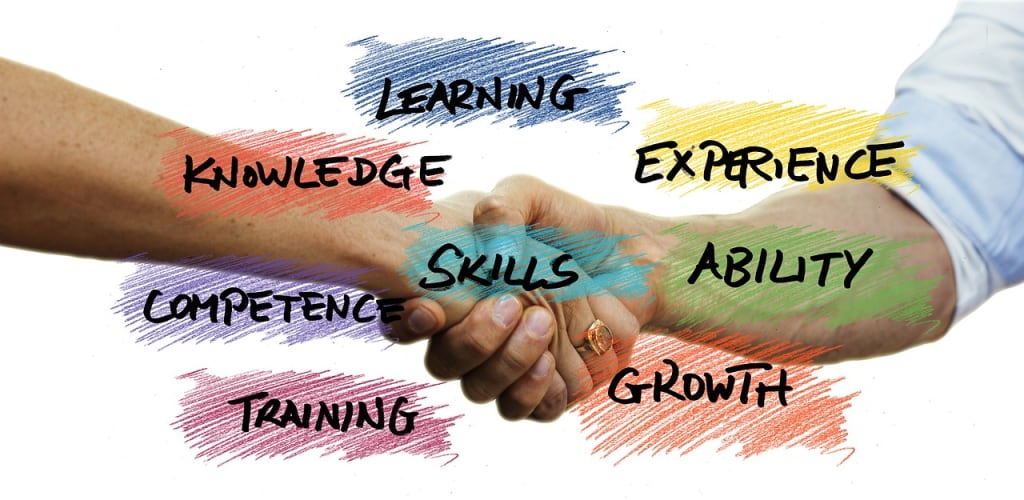
Education and training have been fundamental foundations of human development and society's progress for millennia. From the Greek old academies to contemporary digital classrooms, the evolution of these establishments reflects the evolving needs and values of societies. Not only for personal growth but also for economic stability and societal advancement; hence, education and training become even more crucial in modern society.
Set in History
Historically, only the rich could afford education. Emphasizing philosophy, eloquence, and the arts, ancient civilizations such as Greece and Rome educated a tiny population. First appearing in Europe during the Middle Ages, universities were limited to the rich and the clergy. Driven by the need for a highly educated workforce, the concept of mass education first emerged only during the Industrial Revolution.
In the 19th and 20th centuries, public education made significant progress. Realizing they required educated and trained people, governments set public school systems and created legislation mandating minimum education. By the use of vocational training programs, one could ensure that individuals may acquire specific skills needed for various crafts and professions, thereby expanding educational opportunities.
The Modern Scene
Modern training courses and educational institutions are more diverse and inclusive than they were years ago. The modern educational system consists of formal schooling, higher education, vocational training, and continuous professional growth taken together. Technology shapes this environment greatly and also affects the delivery of and access to education.
Formal instruction:
Usually, formal, basic, secondary, and postsecondary education. From both elementary and secondary school comes basic literacy, numeracy, and critical thinking skills. Comprising colleges and universities, tertiary education gives particular knowledge and abilities in numerous subjects, therefore empowering people for professional life.
vocational instruction
Vocational training stresses arming people with relevant knowledge for particular professions. This kind of training is quite important in disciplines such as computer technology, engineering, construction, and healthcare. For those who might not follow traditional academic routes, apprenticeships, technical colleges, and on-the-job training programs provide a road to work.
Continuous learning:
The concept of lifetime learning emphasizes the need for continuous education and skill improvement throughout a person's life. In a constantly changing environment when industry standards and technology are developing quickly, maintaining current is essential. There are plenty of online classes, seminars, self-study, and other forms of lifelong learning. It encourages individuals to grab new opportunities and challenges, enhancing their personal and professional lives.
The purposes of technology
Technology has revolutionized learning and training, so improving access to and flexibility of both. Online learning services including Coursera, edX, and Khan Academy provide courses from top institutions and schools so anybody with an internet connection may learn from the best. From computer science to humanities, these sites provide a wide range of subjects to suit different learning levels.
E-learning and movement of ideas:
Mass Open Online Courses (MOOCs) have democratized education by breaking down regional and budgetary constraints. For millions of students all around, they offer either free or cheap courses. E-learning generally provides flexibility so individuals may study at their own pace and schedule. Working professionals who wish to raise their competencies without stopping their careers may find this very useful.
Simulated and augmented reality
Virtual and augmented reality technology also makes advances in training and education. Especially in fields needing practical knowledge, these immersive technologies provide chances for hands-on learning. For example, medical students can virtually perform surgery and engineering students can copy challenging equipment operations. Such innovations provide interactive and logical experiences that enhance learning outcomes.
Challenges and Opportunities
Notwithstanding the progress, training and educational institutions still have some challenges. Still, gender, location, and financial class determine whether one has equitable access to high-quality education. Many places around the globe have inadequate infrastructure and few educational resources.
Connecting the void:
To bridge these gaps, governments and companies have to commit money to digital technologies, teacher preparation, and infrastructure supporting education. Policies supporting scholarships, financial aid, and inclusive education seek to ensure that everyone can have access to education. Moreover, public-private sector partnerships can inspire innovation and efficient use of resources, so addressing specific educational needs.
Adjusting to satisfy present needs:
As artificial intelligence and automation transform sectors, work is swiftly evolving. Training and educational systems have to adapt to prepare people for jobs not now accessible. Priority should thus be teaching digital literacy, critical thinking, and problem-solving. Furthermore, since human skills that cannot be easily replaced by technology become more valuable, it will be quite crucial to promote emotional intelligence and creativity.
Conclusion
Education and training determine both personal and societal development. They enable people with information and skills so they can benefit the economy and society. The ground of education and training has to alter to match new opportunities and challenges as the earth does. By embracing technology, encouraging inclusivity, and stressing lifelong learning, we may assist in building a day when education is a pillar of a strong and equitable society.
About the Creator
Enjoyed the story? Support the Creator.
Subscribe for free to receive all their stories in your feed.
Comments
There are no comments for this story
Be the first to respond and start the conversation.