
The Deadliest Disease on the Planet - Tuberculosis
By William Brennan, with help from an AI paragraph rewriter.
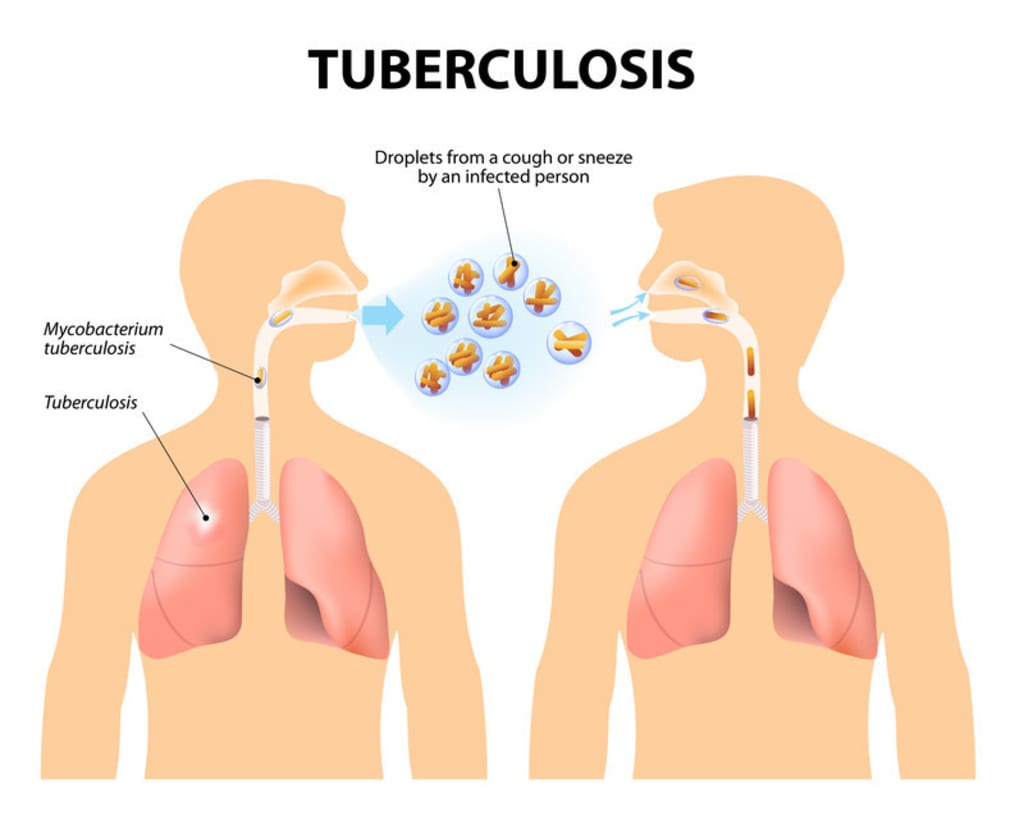
The white death, otherwise known as tuberculosis (TB), has haunted humanity for millennia. Caused by the bacterium Mycobacterium tuberculosis, TB has plagued us since the dawn of civilization, preying on our species through the ages. It was present when we first harnessed fire, developed complex cultures, and ventured out of Africa to conquer the world. In 1815, TB was responsible for one in four deaths in Britain. Over the past 200 years, it has killed more people than all wars and natural disasters combined - a staggering toll of over a billion lives lost. Even today, TB remains the deadliest infectious disease, with a higher kill count than any other. Yet, despite its longstanding and devastating impact, many are unaware of this ever-present threat. In fact, right now, one in four people alive are infected with the TB bacterium, meaning you may unknowingly harbor this formidable foe. So how is it possible that this ancient scourge has faded from public consciousness? The White Death, or tuberculosis, is a formidable human predator. It is highly infectious, yet often remains dormant and undetected. Careful not to overexert itself, it is perfectly adapted to evade the immune system, making it incredibly difficult to eliminate. What makes tuberculosis so powerful is its ability to infiltrate the body through the airways and establish itself within the lungs - a vast, complex system defended by billions of macrophages, the immune system's powerful guardians. Once inside, the tuberculosis bacteria are quickly attacked and consumed by these relentless cells.It is a formidable and cunning parasite. It has evolved a thick, waxy coat that makes it completely immune to the acids that normally destroy other pathogens. Worse, TB has the ability to capture and modify the macrophage, a key immune cell, turning it into a perfect host. Like a tiny vampire, the TB parasite slowly consumes the host cell, replicating at a much slower rate than other microbes. This allows TB to evade the immune system's efforts to eradicate it.
When the host cell is finally drained, the TB bacteria infect new macrophages, continuing the cycle. While the immune system recognizes the threat and mobilizes its forces, TB's thick cell wall makes it a formidable fortress, resistant to many attacks. In fact, TB even infects its own attackers in the process. Ultimately, TB's adaptations have given it the upper hand - it has already "won" by successfully establishing itself within the host. A granuloma is a sphere-like structure that forms as the immune system attempts to contain a tuberculosis (TB) infection. At the core of the granuloma are infected and dead macrophages, which provide a hospitable environment for the TB bacteria. Surrounding this "sphere of death" are other immune cells that try to isolate and contain the infection. This granuloma structure actually protects the TB bacteria, shielding it from medications and releasing chemicals that hinder the immune system's ability to mount an effective response. As a result, the TB infection can remain dormant for years, with the bacteria persisting within the granuloma in up to two billion people worldwide. However, in about one in ten of these individuals, the TB infection will eventually become active. This active TB is a medical emergency, as the granulomas can suddenly burst, flooding the lungs with bacteria and dead immune cells. The immune system then goes into overdrive, triggering severe inflammation that damages the delicate lung tissue. Rather than effectively clearing the infection, the panicked immune response ends up causing extensive harm to the patient's own body. This represents the dangerous and destructive "stalemate" of tuberculosis, where the bacteria are protected within the granulomas, but the immune system's attempts to fight the infection can be catastrophic. As the infection progresses, fluid buildup and dead tissue make it increasingly difficult to breathe, leading to intense coughing fits that can produce blood. This is all part of the disease's strategy, as the coughing spreads millions of bacteria-laden droplets to infect others. The body's severe stress response causes a high fever and rapid weight loss. The person becomes a shadow of their former self. Even with treatment, this critical phase can last for weeks or months and is extremely serious. Without proper treatment, tuberculosis will slowly, over months or even years, completely overtake the body. For children or those already in poor health, the strain may be too much, and the disease ultimately proves fatal. The bacteria spread to other organs, lung function deteriorates, and the patient dies. In 2023 alone, 1.3 million people succumbed to this fate. Tuberculosis is a uniquely pernicious problem - a slow-burning threat rather than a quick-striking pandemic like COVID-19. Its gradual progression means it fails to instill the same sense of urgency and panic, allowing it to persist unchecked. The initial symptoms are often mild for many months, lulling people into a false sense of security. But tuberculosis doesn't want to kill its host - it wants to survive and spread. And it exploits human behavior to do so, infecting those closest to the patient: family, friends, coworkers, and neighbors. When COVID-19 brought the world to a halt, the average infected person spread the virus to 2-3 others. In contrast, a person with active tuberculosis (TB) infects 5-15 people per year. TB spreads primarily through tiny droplets released when an infected person coughs or sneezes, especially in crowded, poorly ventilated settings. This transmission pattern fueled TB outbreaks during the Industrial Revolution and continues to drive its spread in areas of rapid, unplanned urbanization. While modern antibiotics can now cure most active TB cases within four months, TB remains the world's deadliest infectious disease. Between 1940-1965, medical advances made TB treatable, a remarkable human achievement. However, the cure was not effectively distributed globally. As a result, TB persists as a major threat, primarily in Africa, South Asia, and Latin America, where two-thirds of all cases and nearly half of all TB deaths occur. The gradual, insidious nature of the TB crisis, akin to climate change, has enabled it to be overlooked and under-addressed. This has allowed increasingly drug-resistant TB strains to develop and spread. Tackling this slow-moving global health emergency with the same urgency applied to acute crises could make TB a relic of the past, just as the development of effective treatments once seemed poised to do. The lack of new drug development has become a significant problem. For nearly 50 years, from 1965 to 2012, no new classes of drugs were created to treat tuberculosis, despite it remaining a major global health threat. This stagnation in research and development has severely hindered our ability to combat this deadly disease effectively.
Large thanks to the informational youtuber: Kurzgesagt in a Nutshell as I used all information said in his video to rewrite this essay.
Channel link here: https://www.youtube.com/@kurzgesagt
About the Creator
Enjoyed the story? Support the Creator.
Subscribe for free to receive all their stories in your feed.
Comments
There are no comments for this story
Be the first to respond and start the conversation.