
The Building Blocks of Life
The Structure of the Cell: Organelles and Their Functions

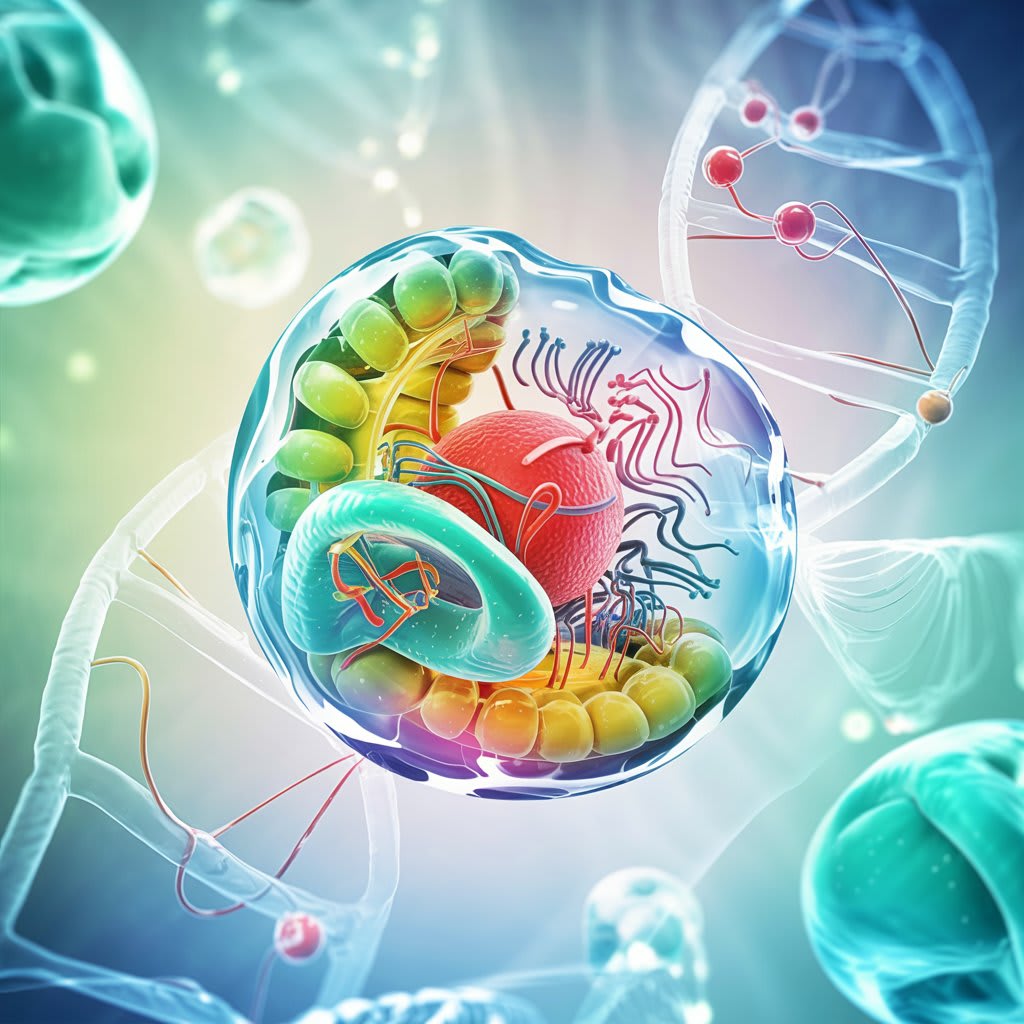
Cells are the basic building blocks of all living organisms. Every living thing, from the smallest bacterium to the largest whale, is made up of cells. They are the smallest units of life that can carry out all the processes necessary for life, including metabolism, growth, reproduction, and response to stimuli. The study of cells, known as cell biology or cytology, is one of the most fundamental areas of biological science because understanding cells helps scientists understand how life works.
Types of Cells
Cells come in two major types: prokaryotic and eukaryotic.
Prokaryotic cells are found in organisms such as bacteria and archaea. They are simpler and smaller than eukaryotic cells and lack a true nucleus. Instead, their genetic material is found in a region called the nucleoid. Prokaryotic cells also do not have membrane-bound organelles.
Eukaryotic cells, on the other hand, are found in all other forms of life, including plants, animals, fungi, and protists. These cells are more complex and contain a nucleus enclosed by a membrane, along with other specialized organelles such as the mitochondria, endoplasmic reticulum, Golgi apparatus, and lysosomes. The presence of these organelles allows eukaryotic cells to carry out more complex functions.
Structure of the Cell
Each cell, regardless of type, shares some common features:
1. Plasma Membrane: This is the outer boundary of the cell that separates the interior from the external environment. It is semi-permeable, meaning it controls the movement of substances in and out of the cell.
2. Cytoplasm: This is the jelly-like fluid that fills the inside of the cell. It contains water, salts, and various organelles that perform different functions.
3. Genetic Material: All cells contain DNA (deoxyribonucleic acid), which carries the instructions necessary for the cell’s activities and reproduction.
Organelles in Eukaryotic Cells
• Nucleus: Often called the control center of the cell, the nucleus contains the cell’s DNA and is responsible for regulating gene expression.
• Mitochondria: Known as the powerhouses of the cell, mitochondria produce energy in the form of adenosine triphosphate (ATP) through cellular respiration.
• Endoplasmic Reticulum (ER): This network of membranes comes in two forms – rough ER, which has ribosomes attached and helps in protein synthesis, and smooth ER, which is involved in lipid synthesis and detoxification.
• Golgi Apparatus: This organelle modifies, sorts, and packages proteins and lipids for storage or transport out of the cell.
• Lysosomes: Contain digestive enzymes that help break down waste materials and cellular debris.
• Ribosomes: These are the sites of protein synthesis and can be found either floating in the cytoplasm or attached to the rough ER.
• Chloroplasts: Found only in plant cells and some protists, these organelles carry out photosynthesis, converting light energy into chemical energy stored in glucose.
• Cell Wall: Present in plant cells, fungi, and some protists, the cell wall provides structural support and protection.
• Vacuoles: These are storage sacs that can hold water, nutrients, or waste products. Plant cells usually have a large central vacuole.
Functions of the Cell
Cells carry out a wide range of vital functions that are necessary for the organism’s survival:
• Metabolism: Cells perform various chemical reactions to maintain life, including breaking down nutrients for energy and building new molecules.
• Energy Production: Mitochondria generate ATP, the energy currency of the cell, which powers all cellular activities.
• Growth and Reproduction: Cells grow and divide to form new cells. In multicellular organisms, this is how the body grows and repairs itself.
• Protein Synthesis: Cells produce proteins that are essential for structure, function, and regulation of the body’s tissues and organs.
• Response to Stimuli: Cells can sense and respond to changes in their environment, which is crucial for homeostasis.
• Transport of Materials: Cells use various mechanisms, such as diffusion, osmosis, and active transport, to move substances across the cell membrane.
Cell Division
Cells reproduce through two main types of division:
• Mitosis: This process occurs in somatic (non-reproductive) cells and results in two genetically identical daughter cells. It is used for growth, repair, and asexual reproduction.
• Meiosis: This type of cell division occurs in reproductive cells (gametes) and results in four genetically diverse daughter cells, each with half the number of chromosomes. This is essential for sexual reproduction.
Importance of Cells
Cells are essential for all life processes. In multicellular organisms, cells specialize to perform specific functions. For example, muscle cells contract to produce movement, nerve cells transmit electrical signals, and red blood cells transport oxygen. This specialization allows organisms to be more efficient and survive in diverse environments.
Moreover, studying cells has led to numerous scientific and medical advancements. For instance, understanding how cells divide has helped scientists develop treatments for cancer. Research into stem cells, which have the potential to become any type of cell, has opened new possibilities in regenerative medicine. Additionally, knowledge of how viruses invade cells has been crucial in developing vaccines and antiviral drugs.
Conclusion
Cells are the foundation of all living things. They are incredibly complex and carry out a wide range of functions that are essential for life. From the simplest single-celled organisms to the most complex multicellular beings, the cell remains at the heart of biological structure and function. As science continues to advance, our understanding of cells and their processes will undoubtedly lead to even greater discoveries that improve human health and deepen our knowledge of life itself.
About the Creator
Mirwais Khan
medical student
Enjoyed the story? Support the Creator.
Subscribe for free to receive all their stories in your feed.
Comments
There are no comments for this story
Be the first to respond and start the conversation.