
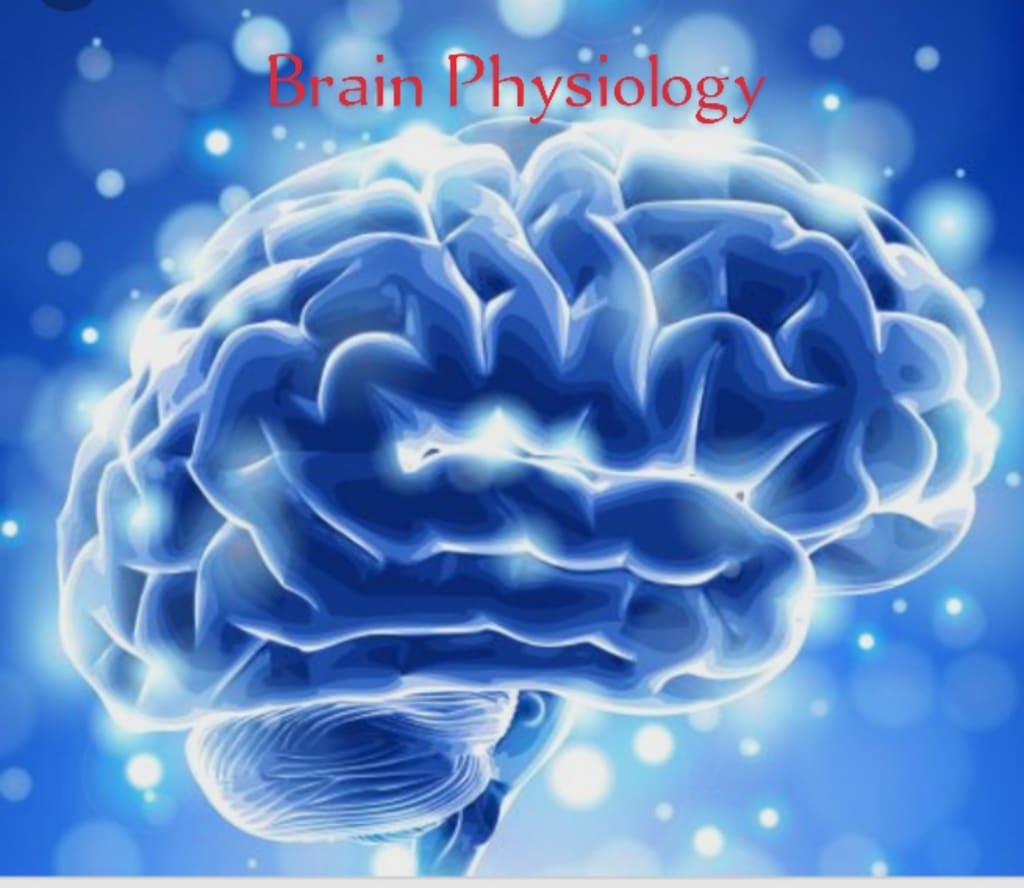
The brain physiology
The Brain Physiology:
Understanding the Complexities of the Human Mind. The human brain is a marvel of nature, a complex organ that governs our thoughts, emotions, and actions. It is responsible for our ability to perceive the world around us, process information, make decisions, and control our bodies. The study of brain physiology aims to unravel the intricate workings of this remarkable organ, exploring its structure, function, and the neural processes that underlie our cognitive abilities. In this article, we will delve into the fascinating world of brain physiology, shedding light on its fundamental principles and exploring the latest discoveries in the field.
Structure of the Brain:
The human brain is composed of billions of nerve cells called neurons, which are intricately connected to form a vast network. It is divided into several regions, each with its unique structure and functions. The three main divisions of the brain are the forebrain, midbrain, and hindbrain.
The forebrain is the largest and most complex region of the brain, consisting of the cerebral cortex, thalamus, and hypothalamus. The cerebral cortex is responsible for higher cognitive functions, such as perception, memory, language, and decision-making. It is divided into two hemispheres, connected by a bundle of nerve fibers called the corpus callosum.
The midbrain serves as a relay center for sensory and motor information, playing a crucial role in coordinating movement, visual and auditory processing, and the regulation of sleep-wake cycles. The hindbrain consists of the cerebellum, pons, and medulla oblongata, which are involved in balance, coordination, and the regulation of vital functions such as breathing and heart rate.
Neurons and Neural Communication:
Neurons are the building blocks of the brain and the fundamental units of neural communication. They are specialized cells that transmit information in the form of electrical signals. Neurons have a unique structure, consisting of a cell body, dendrites, and an axon.
The cell body contains the nucleus and other organelles necessary for the neuron's metabolic functions. Dendrites are branching structures that receive incoming signals from other neurons, while the axon is a long fiber that carries the outgoing signals to other neurons or target cells.
Neurons communicate with each other through synapses, specialized junctions where the axon of one neuron connects to the dendrites or cell body of another. When an electrical impulse, known as an action potential, reaches the end of an axon, it triggers the release of neurotransmitters, chemical messengers that transmit the signal across the synaptic gap to the receiving neuron.
Neurotransmitters bind to receptors on the postsynaptic neuron, initiating a cascade of biochemical events that either excite or inhibit the receiving neuron, depending on the specific neurotransmitter and receptor involved. This process forms the basis of neural communication and is critical for the transmission of information throughout the brain.
Brain Plasticity and Learning:
One of the most remarkable aspects of the brain is its ability to change and adapt in response to experience, a phenomenon known as brain plasticity. This plasticity underlies our capacity to learn new skills, acquire knowledge, and recover from brain injuries.
There are two primary forms of brain plasticity: structural and functional. Structural plasticity refers to the physical changes in the brain's structure, such as the growth of new connections between neurons or the pruning of unused synapses. These changes can occur throughout life and are influenced by factors such as learning, environmental enrichment, and even mental health.
Functional plasticity, on the other hand, refers to the brain's ability to reorganize its functions in response to injury or changes in sensory input. For example, if a person loses their sight, the visual cortex may adapt to process other sensory information, such as touch or sound, leading to enhanced abilities in these areas.
Understanding brain plasticity has significant implications for education, rehabilitation, and the treatment of neurological disorders. It highlights the importance of providing stimulating environments and tailored interventions to optimize brain development and recovery.
Brain Imaging Techniques:
Advancements in technology have revolutionized our ability to study the living brain, allowing researchers to observe its structure and function with unprecedented detail. Brain imaging techniques provide valuable insights into the brain's activity, connectivity, and organization.
One widely used imaging technique is functional magnetic resonance imaging (fMRI), which measures changes in blood flow and oxygenation to infer neural activity. By detecting these changes, fMRI can identify brain regions involved in specific tasks or cognitive processes, providing a window into the functional organization of the brain.
Another powerful imaging tool is electroencephalography (EEG), which records the electrical activity of the brain using electrodes placed on the scalp. EEG is particularly useful for studying the brain's temporal dynamics, such as the timing and sequence of neural events, and is widely employed in research on sleep, attention, and cognition.
Other imaging techniques, such as positron emission tomography (PET), magnetoencephalography (MEG), and diffusion tensor imaging (DTI), offer additional insights into brain structure, metabolism, and connectivity, respectively. These techniques, used in combination, have advanced our understanding of brain physiology and provided invaluable information about various neurological and psychiatric conditions.
The Future of Brain Physiology:
As our understanding of brain physiology deepens, so too does our ability to unlock the mysteries of the human mind. Emerging technologies, such as optogenetics and neural implants, hold promise for manipulating and interfacing with the brain in novel ways, offering potential avenues for treating neurological disorders and enhancing cognitive abilities.
Furthermore, ongoing research into brain-computer interfaces (BCIs) aims to establish direct communication pathways between the brain and external devices, allowing individuals to control prosthetics, computers, or even communicate solely through thought. While still in its infancy, this field holds great potential for revolutionizing the lives of people with severe disabilities.
In conclusion, the study of brain physiology is an ever-evolving field that continues to unravel the complexities of the human brain. By understanding the brain's structure, function, and plasticity, we gain insights into what makes us uniquely human. As technology advances and our knowledge deepens, the future of brain physiology holds tremendous potential for enhancing human cognition, treating neurological disorders, and unlocking the secrets of our most enigmatic organ.
About the Creator
Mubarek Jemal
Best article writer in health and journal content
Enjoyed the story? Support the Creator.
Subscribe for free to receive all their stories in your feed.
Comments
There are no comments for this story
Be the first to respond and start the conversation.