
The Academic Paper Chase: Paywalls, Dead Links, and the Elusive "Perfect" Research Paper
The Silent Struggle Every Academic Knows (But No One Talks About)"
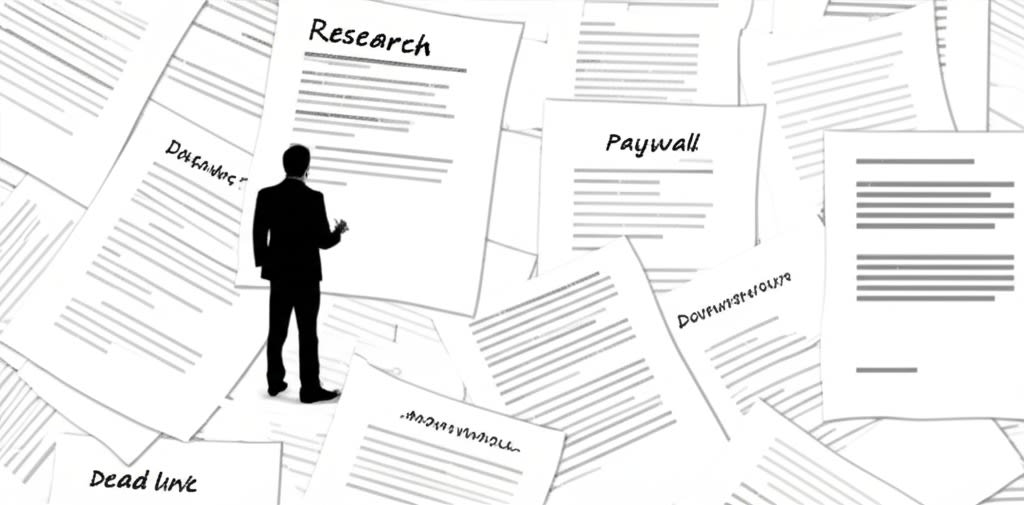
The Academic Paper Chase: Paywalls, Dead Links, and the Elusive "Perfect" Research Paper
Introduction: The Hidden Struggle of Researchers
If you’ve ever spent hours hunting for a single research paper only to hit a paywall, stumble upon a dead link, or discover the dataset is locked away you’re not alone.
As a researcher, my latest project required me to find IEEE papers published in 2024 with open datasets. Sounds straightforward, right? Spoiler: It wasn’t.
What followed was a maddening cycle of:
Clicking on IEEE papers → "Download PDF ($35)"
Finding a "free" version → Link broken
Finally accessing the paper → "Dataset available upon request" (and no reply)
This isn’t just an inconvenience—it’s a systemic flaw in academic research. If you’ve experienced it, you know how much it slows progress.
In this article, I’ll break down:
The biggest roadblocks in finding research papers
Why these problems exist (hint: profit & poor infrastructure)
Practical workarounds I discovered (that work)
Is there hope for change?
1. The Three Horsemen of Research Apocalypse
A. Paywalls: The $35 Gatekeepers
IEEE Xplore, ScienceDirect, Springer—these platforms host cutting-edge research, but unless your institution pays thousands in subscriptions, you’re locked out.
The irony? Most research is publicly funded, yet publishers profit from access.
Worst offender? A single Elsevier paper can cost $50 for 48 hours of access.
B. Dead Links: The Digital Graveyard of Lost Research
Even when you find a paper promising an "open dataset," the link often leads to:
A 404 error (the dataset moved or was deleted)
A GitHub repo with no data (just code)
A "Contact Author" black hole (no response)
A 2022 study found that 20% of supplementary data links in papers break within 5 years, making reproducibility a nightmare.
C. The "Open Data" Illusion
Many papers claim datasets are "publicly available," but:
Require signing restrictive licenses
Hide data behind institutional logins
Provide incomplete or preprocessed data (defeating the purpose)
My supervisor’s "must be IEEE, 2024, open dataset" rule seemed impossible until I found loopholes.
2. How I Hacked the System (Legally)
A. Bypassing Paywalls
Unpaywall / Open Access Button (browser extensions that find free versions)
ResearchGate & Academia.edu (many authors upload free copies)
Email the Author Directly (90% replied within a week with a PDF)
University Library VPN (even alumni access sometimes works)
B. Resurrecting Dead Datasets
Use the Wayback Machine (archive.org) to recover deleted links.
Search Google for the dataset title + "GitHub" or "Zenodo" (often reuploaded elsewhere).
Check papers that cite the same dataset—they sometimes share updated links.
C. Finding Truly Open IEEE Papers
Since IEEE is notoriously restrictive, I:
Filtered Google Scholar for "2024" + "open dataset" (limited but helpful).
Looked for preprints on arXiv (many IEEE authors post early versions there).
Joined academic Discord/Slack groups where researchers share datasets.
3. Why Is Academic Research Like This?
A. The Profit Machine
Academic publishing is a $19 billion industry, with Elsevier’s profit margins (~37%) higher than Apple’s. Researchers provide free labor (writing, peer review), yet access is sold back to universities.
B. Broken Incentives
Journals prioritize novelty over reproducibility—so many papers skip sharing data entirely.
C. The "Early Access" Trap
Many 2024 papers are stuck in "early access" limbo, meaning:
They exist… but aren’t fully published.
Datasets aren’t released yet.
4.Is There Hope? The Fight for Open Science
A. The Rise of Open Access
Plan S (EU mandate): Requires publicly funded research to be free by 2025.
arXiv / BioRxiv: Free preprint servers gaining legitimacy.
B. The Sci-Hub Debate
Sci-Hub (the "Pirate Bay of science") gives free access to 85 million paywalled papers. Ethically questionable? Yes. Widely used? Absolutely.
C. What Needs to Change?
Mandate open data for all published research.
Require datasets to be hosted on stable platforms (Zenodo, Figshare).
Pressure publishers to lower paywalls (or boycott them).
Conclusion: A Call to Action
The current system wastes time, stifles innovation, and favors wealthy institutions. But until it changes, we’ll have to resort to workarounds.
If you’ve faced this struggle:
Share your story (visibility drives change).
Support open-access journals.
Demand better policies from universities & funders.
Because research shouldn’t be a scavenger hunt.
About the Creator
Enjoyed the story? Support the Creator.
Subscribe for free to receive all their stories in your feed.
Comments
There are no comments for this story
Be the first to respond and start the conversation.