
The 5:53 AM Gamble: Why College Students Pay to Work
Inside the internship arms race, where young graduates spend more on commuting than they earn—just to keep their résumés alive.
I
At 5:53 on Friday morning, Luo Wei's alarm went off.
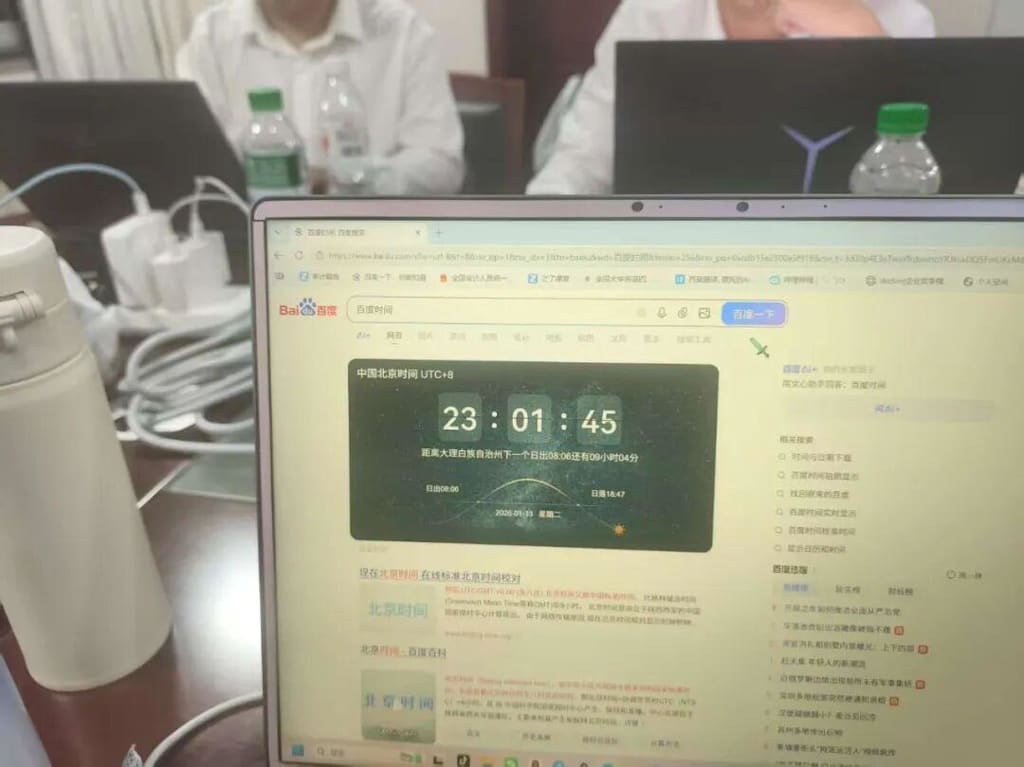
At 6:10, she left the dorm with two laptops on her back. One was silver, with the company's asset tag stuck on it; the other was black, with a chipped corner on the screen. From her dorm in Xianlin, Nanjing, to Nanjing Railway Station—walking plus subway—she had only twenty minutes. The high-speed train left at 6:30 for Suzhou and arrived at 7:55. If she was lucky enough to get a cab, she went straight to the office; if not, she squeezed onto the subway and then switched to a taxi. By nine o'clock, the time clock at her desk had to scan her face.
The commute took three hours and twenty minutes and cost 150 yuan in fares. Her daily wage was less than 140.
Luo Wei was a product manager intern at an internet company in Suzhou, while also pursuing her graduate studies in Nanjing. Friday was her weekly "commuting day." She had done the math—she was losing money on the job—but after three months, she told her friends it was worth it.
Worth it how, she didn't elaborate. Later, when she was putting together her résumé, she realized that after an internship ended, she didn't feel relieved. That end point, as it turned out, was exactly the starting point for the next round of applications. She began to habitually connect the "last day" of one experience with the "first day" of the next application.
II
Li Hang took much longer to figure this out.
By the end of his sophomore year, he had accumulated six internships. But when applying for auditing roles, he included only the audit projects; when applying for corporate finance positions, he swapped in the relevant finance experience. The six never appeared together on the same résumé. He was just stockpiling them—like a material library he could draw from anytime, piecing together whatever each employer wanted.
No one had ever stipulated that internships must start in freshman year. No policy required students to trade course time, vacations, or even a leave of absence for work experience. What college students face is something more concrete: an opportunity in front of them—should they take it? This one ends—should they do another? Everyone else has some—is their own résumé still lacking?
When more and more people choose "yes," what was originally a differentiator gradually becomes the new passing line. The threshold moves forward on its own.
Song Yao had done five internships in total. By the time she finished her third, she realized that the 2025 autumn recruitment season was just around the corner, and she had only one internship at a major internet company.
"I had to have another one. I saw on Xiaohongshu that people generally have three or four big-name internships to get a decent offer. Even though my third company had a great atmosphere, I still went looking for another one."
Internships break down the anxiety about the future into manageable tasks. What company will I end up in? How will the industry change? Will there be better positions when I graduate? These questions can't be answered in advance. But sending out another hundred résumés, doing another three‑month project, adding another relevant experience—that is within one's control. As long as you're still applying and still doing, at least you can confirm that you haven't stopped moving.
III
Qiqi just converted to full‑time this year. He works as a data optimization specialist for overseas ad placements at a tech startup, and occasionally helps interview interns. He says companies use two completely different logics for hiring interns versus full‑time employees. For full‑time hires, they look at role fit and stability; for interns, "more likely than not, they're treated as tools."
His own previous internship was also painful. A lot of things had to be figured out on his own, groping in the dark. If he delivered results, his leader's expression softened; if not, the message came through quickly. These experiences made him more patient when mentoring newcomers, and he tries to explain as much as he can. "A better training system is being responsible to yourself and to the company."
But he admits that most team leaders don't have the time to think that way.
After her Suzhou internship ended, Luo Wei took a week off and then started another one. Sometimes she thinks that without so many obsessions, there would be no real need to intern.
But she says stopping is harder than continuing.
"The AI wave is crashing against us. You have to keep up, or you'll be replaced."
IV
Li Hang is not the only one who had six internships by sophomore year. The frenzy around internships is no longer news today. Several layers of pressure are stacked together.
The first layer is the signal from the job market. There are still over 12 million new college graduates every year, and that number will remain high for years to come. The supply of jobs falls far short. According to the National Bureau of Statistics, the youth unemployment rate for ages 16–24 exceeds 15%. Some online sources claim that the undergraduate employment rate for ordinary universities in 2024 was as low as 19%. Whichever figure you trust, the direction is the same.
Once a college degree is no longer scarce, companies move their screening standards earlier. Students have to acquire relevant experience and skills before graduation, and internships become the most direct path. For companies, the shorter the training cycle, the better; the lower the cost, the better. Candidates who can "plug and play" are prioritized. So students desperately pile up internship experiences, just to make their résumés catch an HR manager's eye for a few extra seconds—otherwise, they can't even get past the screening.
The second layer is the misalignment between what schools teach and what the market needs. Many courses emphasize theory over practice, and the content lags far behind industrial changes. Class attendance and front‑row seating rates are low. Many students find lectures useless and prefer to learn directly on the job. Traditional jobs are shrinking, while new AI‑driven roles are changing rapidly. The speed of change far outpaces the education system's adjustment cycle. Old jobs disappear fast, new jobs have high entry barriers, and students caught in between have to fill the gap themselves.
The third layer is anxiety amplified by social media. Seeing others post about multiple big‑name internships makes you feel like you're missing something. When people around you start "jumping the gun," that pressure spreads quickly. Driven by the mentality of "if others have it, I must have it too," the internship timeline keeps moving earlier and earlier.
The fourth layer is that many college students lack a clear plan for their future. Studies suggest that 70% to 80% of students have no clear direction. When there's no direction, quantity becomes the easiest thing to grasp. Having one more is always better than having one less—never mind whether it actually helps.
V
For those three months in Suzhou, Luo Wei woke up at 5:53 every Friday morning, carried two laptops, and took the high‑speed train. She lost money on the job, but she said it was worth it.
She didn't elaborate on what made it worth it. But that scene itself says a lot: a student willing to spend three hours and twenty minutes and lose ten yuan every week, doing something whose daily wage doesn't even cover the commute. She is not alone. Li Hang has six, Song Yao has five, and there are many more you haven't counted.
Internships are useful. They can fill the gaps in textbooks and give people early exposure to the industry frontier. But when an activity becomes something everyone feels compelled to do, it turns into involution.
What I advocate is a different logic.
Start from who you are and what you study. Find roles that fit you, and anchor yourself in one or two directions. Don't jump between tracks too frequently. Don't use quantity to compensate for a lack of quality. With each internship, ask yourself: Does this experience make me go deeper in a certain direction than the last one?
Don't throw away your university theory courses. The foundation of many cutting‑edge technologies is those seemingly dry formulas and principles. You have to crawl and walk before you can run. I do not advocate for students who give up their academic studies just to intern.
Also watch out for some practical issues. For internships that cost you money or pay too little, do the math. Watch out for subtle exploitation during internships, for scams from paid intermediaries, and for your rights being trampled. Also watch out for the mindset of "interning for the résumé," which gradually hollows out meaning and leaves you with nothing but a list.
VI
After the Suzhou internship ended, Luo Wei took a week off and then started the next one.
She still had two laptops—one silver with the company tag, one black with a chipped corner on the screen. At 5:53 on Friday morning, the alarm went off as usual.
About the Creator
Jin
Writer of reamstories
https://reamstories.com/jin
Enjoyed the story? Support the Creator.
Subscribe for free to receive all their stories in your feed. You could also become a paid subscriber, letting them know you appreciate their work.
Comments
There are no comments for this story
Be the first to respond and start the conversation.