
The 23rd Floor: A Medical Student’s Death and the System With No Exit
He was seven years into an eight-year M.D. His father had just died. His mother was in the ICU. The institution gave him three days, then asked for research data.
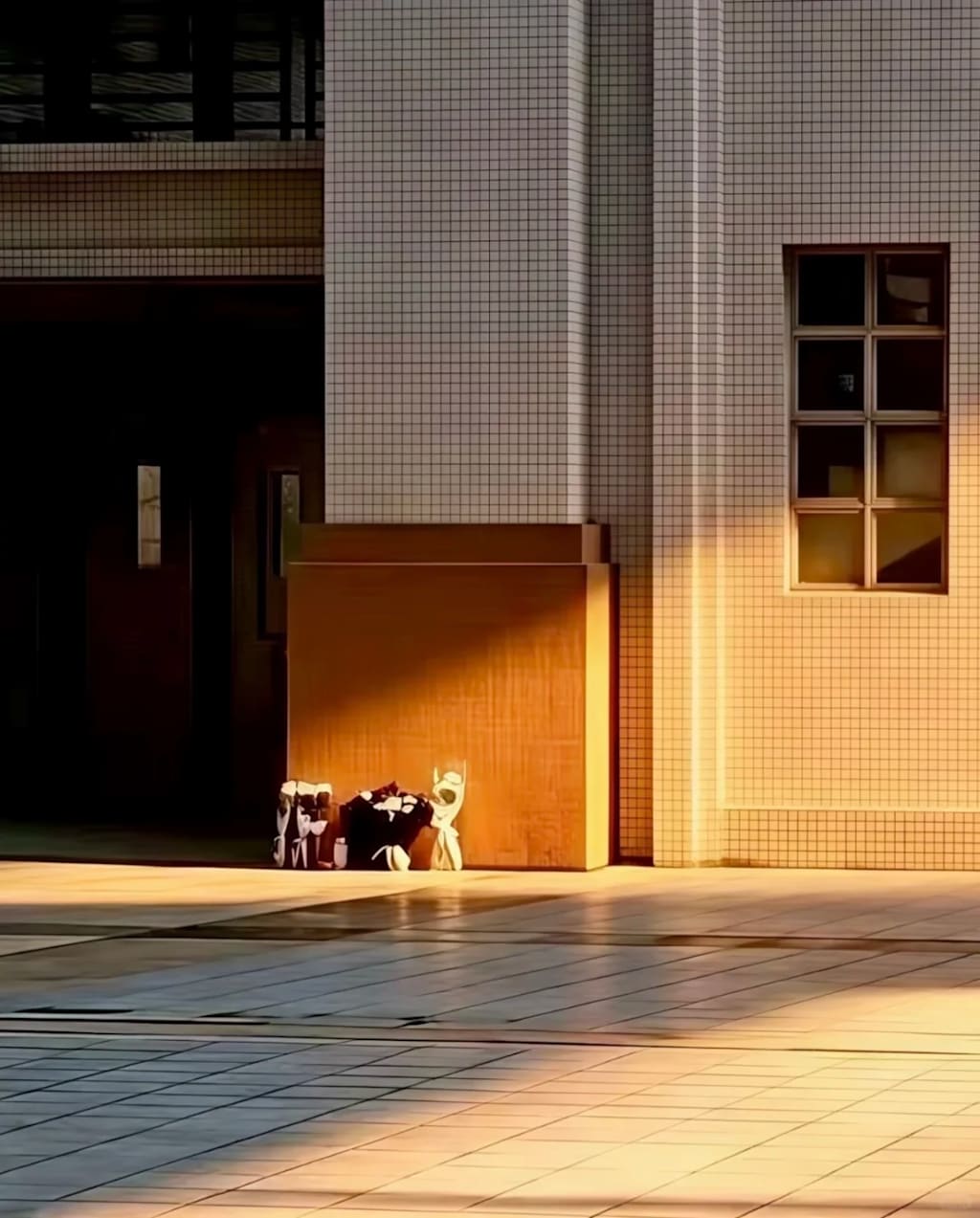
Around 1 a.m. on September 15, 2026, at the Baiyun Campus of Southern Medical University, a 23-year-old student in the eight-year clinical medicine program fell from the 23rd floor of a dormitory building.
He was in his seventh year. The eight-year clinical medicine program is an integrated bachelor’s-to-doctorate track. Students are locked into the doctoral path upon admission, and only 14 universities in China offer it. If not for this, a year later he would have received his doctorate and become a doctor at a Grade 3A hospital.
Police later said the matter was “still being followed up; case details cannot be disclosed.” Calls to multiple university departments went unanswered. The only office that answered, human resources, said it “does not oversee student affairs.” Calls to the publicity department were made repeatedly and did not go through. The university’s official account had enabled “one-click protection” on its comment section.
By the evening of September 16, more than 40 hours had passed since his fall. As for what he experienced in his final days, the only people with the authority to explain, his supervisor, his school, his university, had issued no statement.
The online account says this: in July of this year, his parents were in a serious car accident. His father eventually died. His mother was still in the ICU. He was an only child from Chongqing. He applied to his supervisor to go home and was granted only three days. While caring for his mother in the hospital, he was required to complete research data entry every day, or his thesis proposal would not be approved. The choice his supervisor gave him was described as: take the three-day leave and come back to keep working, or delay graduation, or withdraw.
These details come from the internet and await official verification. Even if the final statement differs from the online account, one basic fact can no longer be changed: a 23-year-old man, after his father’s death and with his mother seriously ill, did not find a way not to fall.
The eight-year clinical medicine program has a rule that is rarely discussed publicly: there is no intermediate degree.
In a five-year clinical medicine undergraduate program, a student who cannot continue can get a bachelor’s diploma. In a master’s program, a student who cannot continue can leave with a master’s degree. The eight-year program does not work that way. If a student chooses to withdraw in the fifth, sixth, or seventh year, he cannot get a master’s degree, cannot get a bachelor’s degree, and his educational record remains at high school. All the years of anatomy, pathology, internal medicine, surgery, obstetrics and gynecology, pediatrics, clinical rotations, and laboratory data reset to zero.
Delayed graduation is not the main threat here. The main threat is that seven years can disappear at once.
On the withdrawal application page of an academic affairs system, the pop-up dialog will not ask “what difficulties are you facing?” It will only display one line: “Confirm giving up eight-year program status? This action is irreversible.”
This means that when a student in the eight-year program encounters a life crisis such as both parents entering the ICU, his institutional options are reduced to two: continue, or lose everything. There is no option to take a year’s leave and come back, no buffer zone of first getting a master’s degree and then deciding whether to continue for a doctorate, and no exit channel of transferring to the five-year undergraduate program and graduating.
According to online claims, this student was required to complete research data entry every day. If this detail is true, then the situation he faced was: if he did not do it, his supervisor would not approve his proposal; without approval, he could not enter the thesis stage; without entering the thesis stage, he could not complete the eight-year training program; without completing the training program, he would be withdrawn. Withdrawal meant the past seven years reset to zero.
If a system makes a person in despair feel that stopping is more terrifying than death, then its problem is not training quality. Its problem is that it has forgotten that what it is training is human beings.
The issue of supervisor power is mentioned in almost every discussion of graduate student tragedies. Most discussion remains at the level of “a certain supervisor is a bad person.” That avoids the central question.
The central question is: why can one supervisor simultaneously hold the power to decide whether a student can graduate and the power to decide what a student does every day, while the student has no effective channel for appeal or checks and balances?
Research on supervisor-student relationships describes the pattern as vertical bullying caused by imbalanced supervisor-student power. It is not only caused by the individual moral failure of supervisors. It is also induced by asymmetric supervisor-student power, excessive power gradients, and the indulgence of university administrative power.
Translated into concrete scenarios: a student reports unreasonable demands from his supervisor to a counselor. The counselor says, I’ll help you communicate. The result of the communication is that the supervisor learns the student complained. The student appeals to the school. The school says, this is a matter between you and your supervisor. The student wants to change supervisors. Academic affairs says, in the eight-year program, changing supervisors requires the original supervisor’s signed consent.
The person who ultimately judges you is the person you are appealing against.
Under this power structure, the decision to grant three days’ leave is no longer a management issue. It is a display of power. When a supervisor approves three days, he is not making a reasonable judgment about how much time a student’s family crisis requires. He is exercising a dominating power: I have the right to decide how long you can be away.
When this dominating power is superimposed on the rigid no-exit structure of the eight-year system, the student falls into a closed loop: you have no bargaining power because you have no way out; you have no way out because the system gives you no way out; the system gives you no way out because the supervisor is the system’s enforcer; the supervisor is the system’s enforcer, so you have no bargaining power.
There is a set of data on the mental health of medical graduate students.
A survey involving 1,219 medical graduate students showed: 59.81% had moderate stress, 15.26% had severe stress, and only 8.20% reported always regular daily routines.
Another survey found that 97.50% of clinical medical students reported relatively high stress. Their SCL-90 scores on all factors except paranoid ideation were higher than the college student norm, with statistically significant differences on six factors: somatization, obsessive-compulsive symptoms, depression, anxiety, phobic anxiety, and paranoid ideation.
In everyday language, these numbers mean: the vast majority of medical students, for long periods, are sleep-deprived, low in mood, and highly anxious. Many of them already have somatic symptoms: headaches, stomachaches, insomnia, palpitations. The body is sending distress signals in the most primitive way.
The signals have no clear recipient.
Most medical schools’ mental health crisis intervention mechanisms remain at the level of establishing ledgers, holding meetings, and setting up a four-tier early warning network. These mechanisms may work for ordinary academic stress or emotional fluctuations. When the student’s core stressor is the supervisor himself, traditional counselor intervention and psychological counseling referrals often cannot help.
What the student most needs is to escape the supervisor’s control. In the existing institutional framework, no body independent of the supervisor has the authority to make that decision.
In some cases, seeking psychological help itself can become a new risk. In chat records left by Sun, a graduate student at Xiangya Hospital, she wrote: after she jumped and was pulled back, “the first thing the graduate office did after pulling me down was throw me into the psychiatric department of Xiangya Second Hospital. From then on I carried the shackles of mental illness,” and the academic affairs office and supervisor “kept asking me why others were fine but I wasn’t, repeatedly telling me to reflect on myself.”
When seeking help leads to a label, repeated interrogation, and a liability waiver to sign, not seeking help becomes the most rational choice. The endpoint of not seeking help is often complete silence.
The absence of humanistic care in medical education has two sides in this incident.
In 2024, the National Health Commission and three other departments jointly issued the “Action Plan for Improving Medical Humanistic Care (2024-2027),” explicitly stating that medical humanistic care should run through the entire process of training medical students. China’s medical talent training system still widely values professional and technical education while neglecting the cultivation of humanistic spirit.
This absence is bidirectional. Future doctors do not receive enough humanistic training and may lack empathy when facing patients. The training system itself does not treat future doctors as human beings.
When a student, after his father’s death and with his mother seriously ill, is required to prioritize research data entry, the system is telling him not just a management rule but a value: your personal pain does not matter; your task progress does.
The transmission of this value is more powerful and lasting than any humanities course. What it produces may be doctors with excellent skills but blunted emotions, or practitioners who learned to not treat others as human before being crushed themselves.
A system that claims to train people to “heal the wounded and rescue the dying” cannot leave a student in despair without breathing room. When it does, the values it transmits become the deepest irony against the humanistic spirit of medicine.
While this happened, the same campus of Southern Medical University was recording the variety show “An Exciting Offer” medical season.
Some netizens set the two side by side, saying, “On one side is the vase packaged by the production team in the teaching building; on the other is the life that vanished last night in the dormitory building.” The show depicts the bright career prospects of the medical industry and stories of young doctors striving. On camera, medicine looks noble and elite.
Off camera, an eight-year-program student, whose parents were in a car accident, whose father died, and whose mother is in the ICU, was required to complete research data entry every day, or lose everything from the past seven years.
The reflector board used by the production team leaned next to the trash can downstairs from the dormitory. It was less than a hundred meters from the 23rd floor from which he fell.
The specific online details await official investigation and confirmation. Even if the final statement differs from the online account, even if “only three days’ leave approved” and “required to remotely enter data” need verification, one basic fact can no longer be changed: a 23-year-old man, at the hardest moment of his life, did not find a way not to fall.
The pothos on his dorm desk had probably not been watered for days.
About the Creator
Jin
Writer of reamstories
https://reamstories.com/jin
Enjoyed the story? Support the Creator.
Subscribe for free to receive all their stories in your feed. You could also become a paid subscriber, letting them know you appreciate their work.
Comments
There are no comments for this story
Be the first to respond and start the conversation.