
Teacher or Facilitator?
Teacher Centered Learning vs. Student Centered Learning

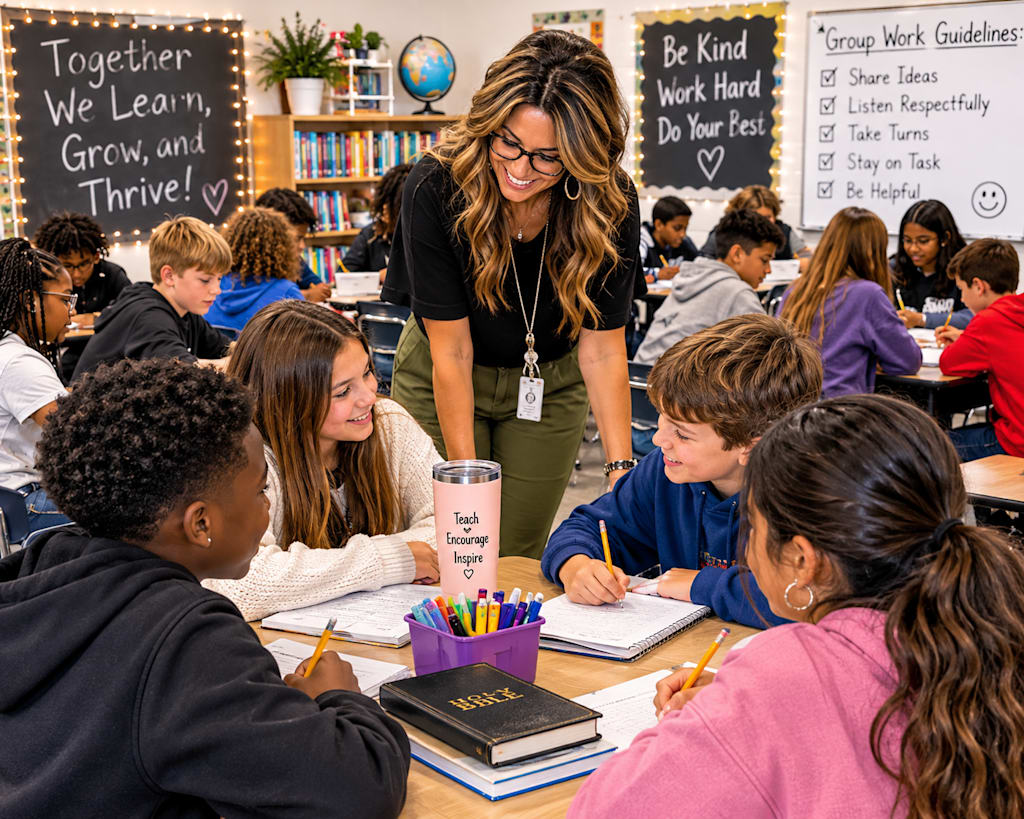
The face of education has changed over the course of time. In the past, teachers sat at their desks in the front of the classroom with a blackboard behind them. The student desks were in several neat rows facing the teacher. In certain photos, the students are all facing forward.
Today, you could walk into most classrooms and find pod-type seating or bouncy chairs. One might even see a student sitting on the floor or on a beanbag chair as they draw or complete a lesson. The classroom has evolved since the end of the 20th century.
Teacher Centered Learning
Education was teacher centered in the not-so-distant past. The students were expected to focus on every word that passed from their teacher’s lips. They hardly spoke in many cases. They were fed information by their teachers for hours.
In today’s classroom, students are speaking more frequently and having meaningful discussions. Students often work in groups or at stations as they talk about a range of topics from historical events and mathematical equations to politics and grammar.
Student Centered Learning
Now that more research has been completed, educators have discovered that many students are more successful in an environment in which the teacher facilitates as they engage in productive struggle. If you are not familiar with the term productive struggle, it simply means that students work at challenging assignments and tasks that are slightly above their learning level.
Of course, direct instruction is still given, but it is not given for more than a few minutes in one sitting. A successful classroom engages the students by switching gears several times during a class period rather than simply listening to a lecture or reading silently for long periods of time. These concepts are still needed, but more student collaboration is being seen.
Is student collaboration effective?
Many teachers who approve of student-centered learning would answer the question of its effectiveness with a resounding yes. The following quote is taken from Emily Talarico, a teacher who endorses student centered learning: “You have to trust the students, but you have to train them little by little. As a teacher we must teach them to take responsibility for their own learning. We will be there to guide them, but we must challenge them every day to strive to become better.” Ms. Talarico is a teacher at Marshall Ranch Elementary School.
While students still need guidance from their teachers, they will deepen their learning by taking charge of it. After all, experience is often the best teacher. Peer tutoring and peer assistance has been a learning strategy used by many educators. Student centered learning is taking peer leadership a step further.
What are the disadvantages?
No strategy is perfect because no student or teacher is perfect. Pitfalls are inevitable, but they can be detoured by the teacher who serves as a facilitator. The teacher can ensure that everyone is participating in the student collaboration.
Some teachers have voiced concern that some students will just wait for others to complete the task. Other students will take over the task completely while the other students become frustrated. These are legitimate concerns that must be addressed by the teacher. The teacher should be monitoring the discussions and tasks. If someone is off task, the teacher as facilitator can guide the student back to the assignment. If a student is dominating the entire discussion or task, the teacher should remind this student that everyone must participate and contribute to the assignment or discussion.
Is student centered learning here to stay?
Many educators believe student centered classrooms are the norm for the 21st century. A principal at a small, rural school in Wyoming County, West Virginia stated in a personal interview that she does not believe the classroom will return to the past in which the teacher was the focus of the lesson. While many teachers are skeptical about surrendering control to their students, other educators realize the positive impact a teacher has as a facilitator.
Teacher or facilitator? An educator can successfully fulfill both of these roles. After all, the students are worth the effort.
About the Creator
Allison Mitchell Endicott
I am a Christian, wife to Jimmy, mother to Aaron and Amber, Educator, and Writer.
Enjoyed the story? Support the Creator.
Subscribe for free to receive all their stories in your feed.
Comments
There are no comments for this story
Be the first to respond and start the conversation.