Vocal
Climb up the mountain
The Summit of Determination: Emily's Ascent In a small village nestled at the base of the towering Atlas Mountains, lived a young woman named Emily. Emily had always been captivated by the mountains that loomed over her village. Their snow-capped peaks called to her, promising adventure and challenges. Her father, a seasoned mountaineer, had often regaled her with stories of his own climbs, planting the seeds of a dream within her to one day reach the summit.
By m habibullah2 years ago in Education
in a relationship
A Journey of Love The Meeting In a bustling city filled with the constant hum of life, there was a quaint little café named Serendipity. It was a haven for those seeking a moment of peace amidst the chaos. It was here, one rainy afternoon, that Emma and Jake's paths crossed.
By m habibullah2 years ago in Education
The Legend of Miyamoto Musashi
The Legend of Miyamoto Musashi A Warrior's Beginning In the late 16th century, amidst the tumultuous Sengoku period of Japan, a boy named Bennosuke was born in the Harima Province. This boy would grow up to be the legendary samurai Miyamoto Musashi. Raised in a country torn by war and conflict, Musashi’s early life was shaped by the constant need for strength and survival.
By m habibullah2 years ago in Education
Decoding the Human Brain
The human brain has evolved, showing similarities with the chimpanzee brain in terms of the limbic system and the development of emotions and memory. The neocortex in humans is thought to be linked to creative thinking and consciousness. Through millions of years, the human brain has grown in size due to the competitive necessity for problem-solving and critical thinking. It is designed to efficiently tackle tasks for short periods and then conserve energy. Humans are adept at marathons because of their efficient energy consumption. While humans may not have the advantage in hand-to-hand combat against primates due to a lack of tools, they excel in endurance activities like marathons. Our brains are highly demanding in terms of energy, which has led to adaptations in muscle energy consumption for endurance purposes.
By Isaac Ekow Anyidoho2 years ago in Education
TV advertising revenue
The Early Days In the early days of television, advertising was a fledgling industry, much like TV itself. The first TV commercial aired in 1941, when the Bulova Watch Company paid $9 for a 10-second spot during a baseball game broadcast on WNBT in New York. This simple black-and-white ad marked the beginning of a new era in advertising, where moving images and sound could be used to promote products and services directly to consumers in their homes.
By m habibullah2 years ago in Education
The beginning of TV
The Birth of Television The Seeds of Innovation In the early 20th century, the world was abuzz with new technological advancements. The invention of the radio had revolutionized communication, and now, scientists and inventors were dreaming of a way to transmit moving images to accompany the sound. The concept of television, a device that could bring visual entertainment and information directly into people's homes, was born from this dream.
By m habibullah2 years ago in Education
"Empowering Women in Education"
In the realm of education, the quest for gender equality has been both a journey and a destination. Across the globe, efforts to empower women in education have aimed not only to close the gender gap but also to foster a more inclusive and equitable society. From grassroots initiatives to policy reforms, various approaches have been employed to ensure that women and girls have equal access to educational opportunities and are encouraged to pursue their academic and professional aspirations without barriers. In many parts of the world, traditional cultural norms and economic disparities have historically restricted women's access to education. However, over the past few decades, significant strides have been made to challenge these barriers and create pathways for women to thrive academically. One such initiative is the promotion of girls' education at the primary and secondary levels. By investing in programs that prioritize girls' enrollment and retention in schools, communities can break the cycle of generational poverty and promote economic independence among women. Moreover, initiatives focused on higher education have also played a pivotal role in empowering women. Scholarships, grants, and mentorship programs aimed specifically at women have provided them with the necessary resources and support to pursue degrees in fields traditionally dominated by men, such as science, technology, engineering, and mathematics (STEM). These efforts not only empower women to pursue their passions but also contribute to diversifying the talent pool in these critical sectors. In addition to access, the quality of education received by women is equally crucial in closing the gender gap. Reforming curricula to be more inclusive of women's contributions to history, science, and literature helps challenge stereotypes and biases from an early age. By presenting diverse role models and narratives, educators can inspire young girls to envision themselves as leaders and change-makers, paving the way for future generations of empowered women. Beyond academics, extracurricular activities and leadership opportunities are instrumental in fostering confidence and leadership skills among young women. Programs that encourage girls to participate in sports, arts, debate clubs, and student government not only enhance their overall educational experience but also prepare them for future challenges in their personal and professional lives. Through these activities, girls learn important skills such as teamwork, resilience, and critical thinking, which are essential for success in any field. On a global scale, international organizations and partnerships have been instrumental in advocating for women's rights to education. Initiatives like the United Nations Sustainable Development Goals (SDGs), specifically Goal 4 (Quality Education) and Goal 5 (Gender Equality), have provided a framework for countries to prioritize gender-responsive education policies and programs. By aligning national agendas with these global commitments, governments can accelerate progress towards closing the gender gap in education and ensuring equal opportunities for all. Despite these advancements, challenges remain in achieving full gender equality in education. Socioeconomic factors, cultural norms, and political instability continue to pose significant barriers to girls' education in many regions. Addressing these challenges requires a coordinated effort involving governments, civil society organizations, and the private sector to implement sustainable solutions and ensure that no girl is left behind. Looking ahead, the journey towards empowering women in education must continue to evolve. It requires ongoing investment in educational infrastructure, teacher training, and community engagement to create supportive environments where girls can thrive academically and socially. It also calls for policies that protect girls from discrimination, violence, and early marriage, ensuring their right to a safe and inclusive learning environment. In conclusion, empowering women in education is not just about closing the gender gap; it is about creating a more just and equitable world where every individual has the opportunity to reach their full potential. By investing in girls' education and supporting their aspirations, we can build a future where women are leaders, innovators, and changemakers in their communities and beyond.
By Dharanidharan T 2 years ago in Education
Karate
The Karate Kid A New Beginning In the bustling city of Kyoto, Japan, lived a young boy named Hiro. At twelve years old, Hiro was small for his age, often overlooked by his classmates and occasionally bullied for his quiet demeanor. He spent most of his time alone, dreaming of becoming strong and confident like the heroes he read about in his favorite comic books.
By m habibullah2 years ago in Education
Samsung story
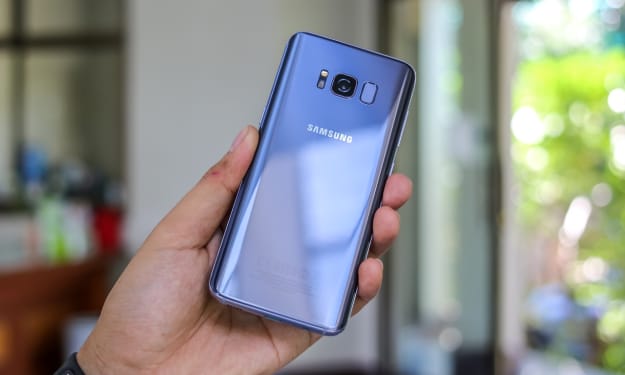
The Visionary Journey of Samsung Humble Beginnings In the bustling port city of Busan, South Korea, a young entrepreneur named Lee Byung-chul founded a small trading company in 1938. He named it Samsung, which means "three stars" in Korean, symbolizing greatness and prosperity. Initially, Samsung dealt in dried-fish, locally-grown groceries, and noodles. Lee’s vision was to create a company that would become a cornerstone of the Korean economy.
By m habibullah2 years ago in Education
Disney world
A Magical Adventure at Disney World The Big Surprise Samantha, an eight-year-old girl with a wild imagination and a heart full of dreams, lived in a cozy suburban house with her parents and her younger brother, Max. For years, Samantha had dreamed of visiting Disney World, the land of magic and wonder where all her favorite characters came to life.
By m habibullah2 years ago in Education
Into the Forest
Into the Forest In the quiet village of Greenbrook, bordered by dense, mysterious woods, lived a boy named Leo. Leo was a curious and adventurous twelve-year-old, always dreaming of exploring the unknown. The village elders often told tales of the enchanted forest that lay just beyond the village boundaries, filled with magical creatures, hidden treasures, and untold dangers.
By m habibullah2 years ago in Education
In a small village
The Hidden Treasure of Willowbrook In a quaint village named Willowbrook, nestled in the heart of a lush valley, life moved at a gentle, unhurried pace. Willowbrook was a place where everyone knew each other, where the sound of children laughing echoed through the streets, and where the community gathered under the old oak tree for weekly markets and celebrations.
By m habibullah2 years ago in Education