Vocal
You’re Genetically Related to a Banana (No, Seriously! Here’s Why)
You walk into the kitchen, peel a banana, and take a bite. It’s sweet, a little mushy, and maybe even a bit awkwardly curved. But here’s a mind-bending twist: you share roughly 50% of your DNA with that banana. That’s right—half of the genetic recipe that makes you you is also found in the fruit you’re snacking on.
By Maaz Ahmadabout a year ago in Education
"The Stethoscope That Wasn’t Mine
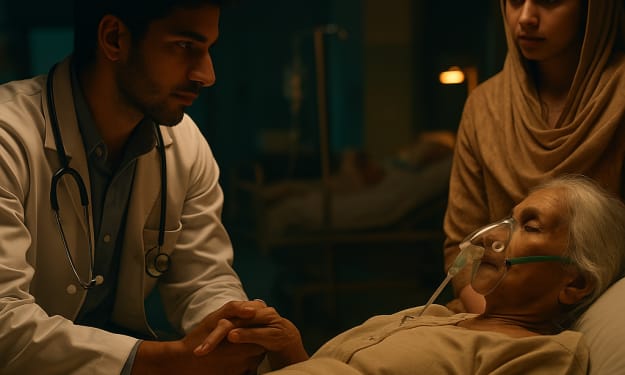
"The Stethoscope That Wasn’t Mine" How one borrowed stethoscope carried a young man through shame, struggle—and finally, success. For most of his first year in medical college, Umair didn’t own a stethoscope. In a class of over 150 students, nearly all of them arrived on the first day with shiny new Littmanns, proudly dangling from their necks like trophies. They wore crisp white coats, fancy watches, and designer shoes. They spoke English fluently and made study groups with people from similar backgrounds. Umair? He sat alone. He had come from a tiny village near Dera Ghazi Khan. His father was a retired primary school teacher, living on a modest pension. Umair had scored well in FSC—surprisingly well—and ranked just high enough in MDCAT to get admission to a government medical college in Lahore. He had never left his village before. Everything about the city was foreign: the traffic, the food, the language. Even the way people dressed made him feel small. But the real pain came during his first physical examination class. “Take out your stethoscopes,” the professor instructed. Umair froze. He had no stethoscope. He had told his parents not to buy one yet—it was too expensive, and they needed money for rent, books, and food. He thought he could borrow one from a classmate. But when he turned to ask, the student ignored him. “Sir, I forgot mine today,” Umair lied. The professor frowned and moved on. After class, Umair sat in a corner and cried. Not loudly. Just quiet tears that fell into his hands. He didn’t cry because he was poor. He cried because, for the first time, he felt like poverty made him invisible. That evening, he messaged a senior from his village who was now in final year. “Bhai, can I borrow your old stethoscope?” The reply came instantly: “Of course. Come to Room 217 in the boys' hostel tomorrow.” The next day, Umair received an old, scratched-up stethoscope wrapped in a plastic bag. It didn’t shine. The sound wasn’t crystal clear. But to Umair, it was sacred. He cleaned it gently. He carried it with pride. He practiced with it late at night, listening to his own heartbeat, to friends' pulses, to anyone who would let him. It wasn’t the best—but it was his lifeline. Weeks turned into months. Umair studied harder than everyone. He knew he couldn’t afford to fail. He had no backup, no connections, no tutors. He borrowed notes, watched YouTube videos for anatomy lectures, and translated English textbooks into Urdu just so he could understand. Slowly, he became known. Quietly, respectfully—students began coming to him for help. “Umair, do you have the notes?” “Can you explain this topic?” “What’s the best way to memorize cranial nerves?” He shared everything. His books. His notes. His borrowed stethoscope. In his third year, during a cardiology ward round, a visiting professor asked a difficult question. No one answered. Umair raised his hand and answered it perfectly—word for word from a book he had read at night under a hostel lantern. The professor was impressed. “You should apply for a clinical rotation abroad,” he said. Umair smiled. “I’d love to, sir. But I can’t afford the travel.” The professor said nothing but noted his name. Two months later, Umair received an email: he had been selected for a fully funded medical internship in Turkey through a student exchange program. His flight, visa, stay—everything was covered. He couldn’t believe it. The boy with no stethoscope was going abroad to train. He flew for the first time. Touched snow for the first time. Learned new medical systems, saw rare cases, met international students—and made lifelong friends. When he returned, he carried something else with him: confidence. He no longer hid in class. He answered questions. Presented cases. Mentored juniors. In his final year, he led the student research team and even presented a paper at a national medical conference. The stethoscope he once borrowed now lay in his desk drawer. He had purchased a new one—expensive, shiny, with his name engraved on it. But he never threw the old one away. On his graduation day, as he walked across the stage to receive his MBBS degree, he carried it in his pocket—not for use, but as a symbol. Of what he had been. Of what he had become. Today, Dr. Umair works at a teaching hospital in Punjab. He sees dozens of patients daily, teaches young students, and volunteers at free rural medical camps. And whenever he meets a first-year student sitting alone, looking lost, unsure of their place—he does what no one did for him. He offers a seat. He asks, “Need help with this topic?” And if they don’t have a stethoscope? He smiles and says, “Here, use mine.”
By Doctor marwan Dorani about a year ago in Education
The Last Ember of Arkon
The forge had been cold for years. In the village of Greyholt, nestled in the shadows of the Ironspine Mountains, fires rarely burned brighter than the fading sun. It was a place forgotten by kings, untouched by war, and cursed with silence. Yet beneath its soot-blackened stones, something ancient stirred.
By Muhammad Saeedabout a year ago in Education
Domain Investing for Beginners: A Complete Guide to Getting Started
Learn how to build digital wealth by buying and selling domain names. In the digital era, domain names are much more than web addresses — they are virtual real estate. Like physical property, domains can increase in value over time and be sold for a profit. This concept is called domain investing or domaining, and it has become a legitimate and potentially lucrative opportunity for individuals looking to build passive income streams.
By Mahbubul hasan Oniabout a year ago in Education
Mysterious Bright Spots in Jupiter’s Aurora Baffle Scientists: New Observations Reveal Unexplained Phenomena
Jupiter, the largest planet in our solar system, has long been known for its spectacular auroras—vast, glowing light displays near its poles that outshine even Earth’s most dazzling northern and southern lights. However, recent high-resolution observations from some of the world’s most advanced telescopes have revealed strange and unexplained bright patches in Jupiter’s auroras, leaving scientists puzzled. These new findings challenge existing theories about how auroras form on gas giants and may hint at previously unknown cosmic processes.
By Niranjon Chandra Royabout a year ago in Education
Chromate Conversion Coating Mechanism: What Happens at the Surface?. AI-Generated.
Chromate conversion coating is a widely used surface treatment that enhances corrosion resistance, promotes paint adhesion, and extends the life of metal components. But what exactly happens at the microscopic level when a chromate conversion coating is applied? Understanding the mechanism of chromate conversion coating—particularly the reactions that take place at the surface—can help manufacturers and engineers select the right treatment for their components and ensure optimal performance.
By Advanced Surface Technologiesabout a year ago in Education
Is Maxillofacial Surgery Safe? What Patients in Dalton Should Know
Maxillofacial surgery may sound intimidating, but for many Dalton residents, it is a transformative procedure that restores both function and confidence. At Northwest Georgia Oral Facial Surgery & Implants, patient safety, comfort, and trust are our highest priorities. If you're asking whether maxillofacial surgery in Dalton is safe, this guide will give you the insight you need to make an informed decision.
By Jamie Smithabout a year ago in Education
Mission impossible final reckoning movie full review and how to download it. AI-Generated.
Opening Note: The Epic Saga Approaches Its Crescendo After nearly thirty years of gravity-defying escapades and shadow-laced subterfuge, the Mission Impossible franchise arrives at its most blistering and soul-baring juncture — Dead Reckoning Part One. With fervent anticipation and bombastic flare, this chapter reasserts Tom Cruise as the unparalleled titan of visceral cinema. But does this culmination surpass its predecessors or falter beneath its own ambition? Let’s peel the layers with surgical precision.
By Muhammad Aizazabout a year ago in Education
Comprehensive Guide to Chronic Ulcer Management in Kerala – Trives Hospital Thrissur
In the lush green state of Kerala, healthcare has always been a top priority, and chronic ulcer management in Kerala has taken a significant leap forward in recent years. Trives Hospital, a leading multi-specialty healthcare institution located in Thrissur, is at the forefront of offering advanced and compassionate wound care solutions for patients suffering from chronic ulcers.
By Salma D plus connectabout a year ago in Education
China’s Pharmaceutical Equipment Manufacturing Industry: Growth, Innovation, and Global Reach
In recent years, China’s pharmaceutical equipment manufacturing industry has emerged as a major force in the global healthcare and pharmaceutical sectors. Once considered a follower in technological innovation, the country has made significant strides in developing, producing, and exporting pharmaceutical machinery and systems. From advanced drug production lines to intelligent packaging systems, China is steadily positioning itself as a global manufacturing hub that meets international standards for quality and safety.
By SearchEngineWaysabout a year ago in Education
Non-Healing Ulcer Treatment in Kerala: A Comprehensive Guide by Trives Hospital
Types of Non-Healing Ulcers and How to Identify Them There are various types of non-healing ulcers, each with distinct characteristics. Early diagnosis and appropriate treatment are crucial to prevent complications. Let’s explore the common types and how to identify them:
By Salma D plus connectabout a year ago in Education