Vocal
The Art of Culinary Craft: Transforming Ingredients into Experiences
Cooking is a universal human experience, but culinary craft elevates it into an art form. At its heart, culinary craft is the mastery of turning humble ingredients into dishes that nourish, delight, and inspire. It’s the process of combining skill, creativity, and tradition to create meals that tell stories, celebrate culture, and evoke emotion. From a chef meticulously refining knife skills to a baker perfecting the balance of texture and flavor in a sourdough loaf, culinary craft is an endless pursuit of excellence. It is the bridge between raw produce and the unforgettable memories we associate with great food—birthdays, family dinners, or the first taste of a new cuisine.
By Table to Stix Ramenabout a year ago in Education
The Chalk and Her Dreams
In a dusty village nestled between golden wheat fields and whispering mango trees, lived a young girl named **Mehreen**. She was twelve, sharp-eyed, and full of curiosity. Her world was small—a two-room mud house, a hand pump, and a sky wide enough to hold her dreams. But in her village, dreams for girls had rules, and learning to read was not one of them.
By ArshNaya Writesabout a year ago in Education
5 AI Tools That Will Change Your Life in 2025
This content is AI-generated. The world is evolving rapidly with the rise of Artificial Intelligence (AI). What was once considered science fiction is now part of our daily lives. Whether it’s writing content, designing graphics, editing videos, or automating tasks, AI is helping millions of people worldwide become faster, smarter, and more productive.
By Farooq Hashmiabout a year ago in Education
The Day I Almost Gave Up on Everything — And What Saved Me”
📖 Introduction Have you ever reached a day when you feel like everything is pointless? I have. This is the story of the day I almost gave up on my dreams, my goals, and even my hope. I’m writing this not just for me, but for you if you’re sitting with your phone right now, wondering if it’s worth it to keep going.
By Mr Haris Khanabout a year ago in Education
. “Discipline is the bridge between goals and accomplishment.” — Jim Rohn
But let’s go deeper. Let’s unpack why discipline is so powerful — and how it can completely change your life. --- Why Discipline Matters More Than Anything People often confuse discipline with punishment. They think it’s about denying yourself joy or living a boring life. But in reality, discipline is the opposite. Discipline gives you freedom. Freedom from regret. Freedom from guilt. Freedom to live the life you truly want — instead of the one that just happens to you. Imagine waking up every day knowing you’re on track. That you’re becoming better, stronger, sharper — day by day. That’s what discipline gives you. --- The Pain of Regret vs. the Pain of Discipline There are only two pains in life: 1. The pain of discipline 2. The pain of regret The pain of discipline is short. Waking up early. Saying no to distractions. Staying focused. It might hurt now… but it leads to growth. The pain of regret? It lasts much longer. It whispers, “What if?” “What if I had tried harder?” “What if I hadn’t quit?” “What if I had believed in myself a little more?” Choose your pain wisely. --- Success Leaves Clues Look at anyone who’s done something great. A champion athlete. A bestselling author. A successful entrepreneur. A brilliant scientist. What do they all have in common? It’s not just talent. It’s not even motivation. It’s discipline. They show up when it’s hard. They practice when no one’s watching. They repeat boring tasks a thousand times until they’re excellent. You see their success on the surface — but beneath it is a mountain of daily discipline. --- Real-Life Example: Kobe Bryant Kobe Bryant was one of the greatest basketball players of all time. But what made him truly legendary was his work ethic. He used to wake up at 4 AM to train before anyone else. He would shoot thousands of baskets before the sun even rose. Not because he had to — but because he chose to. His discipline made him a legend. His discipline built his bridge. You may not be chasing basketball glory, but whatever your dream is — that same discipline can take you there. --- What’s Really Stopping You? Let’s be honest. You don’t lack time. You don’t lack resources. You don’t lack opportunity. What most people lack… is discipline. They wait for the perfect mood. The right weather. A fresh notebook. A Monday. But successful people? They don’t wait. They start. They adapt. They move forward — even when it’s uncomfortable. So if you’ve been stuck, ask yourself: Are you waiting for motivation… or are you training your discipline muscle? --- How to Train Your Discipline Muscle Just like a physical muscle, discipline grows with use. Here’s how to start: 1. Do the Hard Thing First Each morning, tackle the task you’re avoiding. It builds confidence. It builds strength. You teach your brain: “I do hard things.” 2. Set Non-Negotiables Create a list of habits that are non-negotiable. No excuses. No skipping. No compromising. For example: 30 minutes of reading every day 20 minutes of exercise No phone during work blocks These small promises to yourself add up to massive transformation. 3. Track Your Progress Use a habit tracker. Mark an X every day you follow through. It’s visual. It’s rewarding. It works. 4. Create an Environment of Discipline Remove temptation. If junk food is in the house, it will get eaten. If your phone is next to your desk, it will distract you. Design your environment for success. --- What About Burnout? “But what if I get burned out?” That’s a valid fear. But burnout doesn’t come from discipline. It comes from imbalanced discipline. Discipline isn’t about hustling 24/7. It’s about intentional effort + intentional rest. If your schedule includes: Work Health Rest Relationships …then your discipline will be sustainable. --- The Myth of Overnight Success You’ve seen the headlines: “How I made $1 million in 6 months” “How I built a 6-pack in 90 days” “How I got famous on YouTube overnight” But here’s the truth: Every “overnight success” is built on years of unseen effort. Discipline is the engine that powers those years. So stop measuring your progress by someone else’s highlight reel. Stay focused on your own path — and walk it with daily discipline. --- From Average to Elite Discipline is the difference between: Average health vs. peak fitness Living paycheck to paycheck vs. building wealth Wishing for more vs. achieving more Someday vs. now Anyone can want success. Anyone can dream big. But only the disciplined will get there. --- A Message to the Dreamers If you’re a dreamer — that’s good. Dreams are the seeds of change. But seeds don’t grow on their own. They need water. They need care. They need consistent action. And that’s where most dreamers stop. But you — you can be different. You can water your dream every single day. Not with motivation. But with discipline. --- Imagine Your Future Self Close your eyes. Picture yourself 1 year from now. You’ve been disciplined every single day. You followed through on your habits. You stayed focused. You didn’t quit when it got hard. What do you see? A stronger body? A healthier mind? A bank account that’s growing? A project you finally completed? A version of you that’s powerful, focused, proud? That’s who you’re building — with every disciplined decision. --- Final Reminder: You Are Capable Let this be your wake-up call: You are not weak. You are not lazy. You are not “bad at sticking to things.” You are simply untrained — not unworthy. And training starts now. With one decision. One action. One day. > “Discipline is the bridge between goals and accomplishment.” — Jim Rohn You have the power. You have the vision. Now build the bridge. One step at a time. --- A Final Call to Action So here's the truth: This video… this article… this inspiration… it’s not enough. You already have the motivation. Now it’s time for discipline. So what’s one thing — just one — you’ll commit to today? Not tomorrow. Not next week. Today. Write it down. Say it out loud. Do it. Because dreams don’t work unless you do. And the work… is discipline. --- Start now. Build the bridge. And become unstoppable. ---
By Lawn Tennisabout a year ago in Education
Discipline is the bridge between goals and accomplishment.” — Jim Rohn
But let’s go deeper. Let’s unpack why discipline is so powerful — and how it can completely change your life. --- Why Discipline Matters More Than Anything People often confuse discipline with punishment. They think it’s about denying yourself joy or living a boring life. But in reality, discipline is the opposite. Discipline gives you freedom. Freedom from regret. Freedom from guilt. Freedom to live the life you truly want — instead of the one that just happens to you. Imagine waking up every day knowing you’re on track. That you’re becoming better, stronger, sharper — day by day. That’s what discipline gives you. --- The Pain of Regret vs. the Pain of Discipline There are only two pains in life: 1. The pain of discipline 2. The pain of regret The pain of discipline is short. Waking up early. Saying no to distractions. Staying focused. It might hurt now… but it leads to growth. The pain of regret? It lasts much longer. It whispers, “What if?” “What if I had tried harder?” “What if I hadn’t quit?” “What if I had believed in myself a little more?” Choose your pain wisely. --- Success Leaves Clues Look at anyone who’s done something great. A champion athlete. A bestselling author. A successful entrepreneur. A brilliant scientist. What do they all have in common? It’s not just talent. It’s not even motivation. It’s discipline. They show up when it’s hard. They practice when no one’s watching. They repeat boring tasks a thousand times until they’re excellent. You see their success on the surface — but beneath it is a mountain of daily discipline. --- Real-Life Example: Kobe Bryant Kobe Bryant was one of the greatest basketball players of all time. But what made him truly legendary was his work ethic. He used to wake up at 4 AM to train before anyone else. He would shoot thousands of baskets before the sun even rose. Not because he had to — but because he chose to. His discipline made him a legend. His discipline built his bridge. You may not be chasing basketball glory, but whatever your dream is — that same discipline can take you there. --- What’s Really Stopping You? Let’s be honest. You don’t lack time. You don’t lack resources. You don’t lack opportunity. What most people lack… is discipline. They wait for the perfect mood. The right weather. A fresh notebook. A Monday. But successful people? They don’t wait. They start. They adapt. They move forward — even when it’s uncomfortable. So if you’ve been stuck, ask yourself: Are you waiting for motivation… or are you training your discipline muscle? --- How to Train Your Discipline Muscle Just like a physical muscle, discipline grows with use. Here’s how to start: 1. Do the Hard Thing First Each morning, tackle the task you’re avoiding. It builds confidence. It builds strength. You teach your brain: “I do hard things.” 2. Set Non-Negotiables Create a list of habits that are non-negotiable. No excuses. No skipping. No compromising. For example: 30 minutes of reading every day 20 minutes of exercise No phone during work blocks These small promises to yourself add up to massive transformation. 3. Track Your Progress Use a habit tracker. Mark an X every day you follow through. It’s visual. It’s rewarding. It works. 4. Create an Environment of Discipline Remove temptation. If junk food is in the house, it will get eaten. If your phone is next to your desk, it will distract you. Design your environment for success. --- What About Burnout? “But what if I get burned out?” That’s a valid fear. But burnout doesn’t come from discipline. It comes from imbalanced discipline. Discipline isn’t about hustling 24/7. It’s about intentional effort + intentional rest. If your schedule includes: Work Health Rest Relationships …then your discipline will be sustainable. --- The Myth of Overnight Success You’ve seen the headlines: “How I made $1 million in 6 months” “How I built a 6-pack in 90 days” “How I got famous on YouTube overnight” But here’s the truth: Every “overnight success” is built on years of unseen effort. Discipline is the engine that powers those years. So stop measuring your progress by someone else’s highlight reel. Stay focused on your own path — and walk it with daily discipline. --- From Average to Elite Discipline is the difference between: Average health vs. peak fitness Living paycheck to paycheck vs. building wealth Wishing for more vs. achieving more Someday vs. now Anyone can want success. Anyone can dream big. But only the disciplined will get there. --- A Message to the Dreamers If you’re a dreamer — that’s good. Dreams are the seeds of change. But seeds don’t grow on their own. They need water. They need care. They need consistent action. And that’s where most dreamers stop. But you — you can be different. You can water your dream every single day. Not with motivation. But with discipline. --- Imagine Your Future Self Close your eyes. Picture yourself 1 year from now. You’ve been disciplined every single day. You followed through on your habits. You stayed focused. You didn’t quit when it got hard. What do you see? A stronger body? A healthier mind? A bank account that’s growing? A project you finally completed? A version of you that’s powerful, focused, proud? That’s who you’re building — with every disciplined decision. --- Final Reminder: You Are Capable Let this be your wake-up call: You are not weak. You are not lazy. You are not “bad at sticking to things.” You are simply untrained — not unworthy. And training starts now. With one decision. One action. One day. > “Discipline is the bridge between goals and accomplishment.” — Jim Rohn You have the power. You have the vision. Now build the bridge. One step at a time. --- A Final Call to Action So here's the truth: This video… this article… this inspiration… it’s not enough. You already have the motivation. Now it’s time for discipline. So what’s one thing — just one — you’ll commit to today? Not tomorrow. Not next week. Today. Write it down. Say it out loud. Do it. Because dreams don’t work unless you do. And the work… is discipline. --- Start now. Build the bridge. And become unstoppable. ---
By Lawn Tennisabout a year ago in Education
What Are The Benifits Of Probiotic Drinks On Health
In today's fast-paced world, where convenience often trumps nutrition, maintaining a balanced and healthy digestive system is more important than ever. Among the rising stars in the health and wellness space are probiotic drinks beverages that aren't only refreshing but also packed with live beneficial bacteria. These drinks are becoming increasingly popular for their supposed ability to improve gut health, enhance immune function, and contribute to overall well-being. But what exactly are probiotic drinks? How do they differ from supplements? And what specific benefits do they offer?
By Gut Foundationabout a year ago in Education
Hidden Marvels: Bizarre Human Body Facts No One Told You About
INTRO - Hook] You live in it. You breathe with it. You feed it daily. But how well do you really know your body? Forget the basic trivia like “you blink 20 times a minute” or “your heart beats 100,000 times a day.” Today, we’re diving deep—really deep—into the human body to uncover shocking, rarely known facts that even the internet barely whispers about. Let’s begin the strange tour of your own biology. --- 1. Your Brain Can Create False Organs There’s a bizarre condition known as phantom organ syndrome—where people feel organs that don’t exist. Some patients with congenital organ absence report feeling pain or movement in a kidney or appendix that was never there to begin with. The brain essentially creates an imaginary organ and treats it like it’s real. --- 2. Your Bones Glow Under Certain Conditions You’ve heard bones are white, right? But under ultraviolet light and in total darkness, bones emit a faint bluish-green glow. This glow comes from calcium hydroxyapatite crystals, especially in freshly cut or exposed bones. Technically, your skeleton is slightly radiant. --- 3. The Stomach Thinks On Its Own Scientists call it the second brain—your gut has over 100 million neurons, more than a cat’s brain. It can operate independently of your central nervous system, make decisions, control behavior, and even influence mood. Ever heard the term “gut feeling”? Yeah, it’s not just a phrase. --- 4. Your Lungs Can Taste Yes, your lungs have taste receptors. They don’t taste pizza or chocolate, but they can detect bitter substances. When exposed, they trigger a reaction to widen airways, a potential evolutionary defense mechanism against inhaling toxins. Breathing just got flavorful. --- 5. Skin Cells Can Smell You think your nose is the only olfactory tool? Nope. Your skin has scent receptors too, especially in hair follicles. It can detect chemical signals and even respond to odor-like molecules by triggering healing or stress responses. Your skin literally "smells danger." --- 6. Your DNA Is Older Than the Sun The atoms in your DNA—carbon, nitrogen, oxygen—were forged in ancient stars that exploded billions of years ago. This means parts of your body are older than Earth itself. You’re not just stardust. You’re cosmic history. --- 7. Humans Have a Hidden Sense of Direction—In Their Cells Each cell in your body has microscopic magnetite particles, allowing them to respond to Earth's magnetic field. While it's weaker than in birds, experiments show some humans may unconsciously use this to navigate direction—an ancient compass inside your biology. --- 8. You Shed 40 Pounds of Skin in a Lifetime Your skin replaces itself every 27 days. Over an average lifetime, you’ll shed around 40 pounds of skin. That means there’s more of your former self floating around the world than you thought. --- 9. Your Eyes Can Detect Infrared Light—Briefly Under specific lab conditions, researchers discovered that when two photons of infrared light hit the same photoreceptor simultaneously, your eye can perceive them as visible light. In other words, your eyes are capable of seeing invisible light—but only in perfect quantum conditions. --- 10. You Have Ancient Virus DNA Living in You Over 8% of your DNA is made up of viral remnants from ancient infections—called endogenous retroviruses. They don’t harm you now, but they’ve helped shape your evolution, immune system, and even how pregnancy works. So yeah, you’re part virus. --- 11. Some People Have Bioluminescent Sweat Certain rare skin fungi and bacteria in very specific conditions can cause your sweat to glow faintly in the dark—a condition so rare that it’s mostly recorded in forensic science labs and military studies. You could be glowing… and not know it. --- 12. Your Bones Are Stronger Than Concrete Cubic inch for cubic inch, human bone is stronger than concrete. The femur can withstand over 2,500 pounds of force—yet most people break bones because of sudden force direction, not lack of strength. You’re built like a fortress. --- 13. You Hear with More Than Ears Your bones, especially your skull and collarbone, conduct sound too. This is called bone conduction, and it’s why you can hear your own voice so weirdly in recordings. Basically, you’re a walking tuning fork. --- 14. Human Body Emits Light (But You Can't See It) Your body emits a weak level of biophoton light, especially from your face and hands. Japanese researchers discovered that the emission is strongest around late afternoon, following metabolic rhythms. It’s about 1,000 times weaker than the human eye can detect. You’re literally glowing—just on a spectrum we can’t see. --- 15. You Replace Yourself Completely Every 7–10 Years Cells in your body are constantly regenerating. Some (like stomach lining) refresh every few days, others (like bone) take years. This means that over time, you’re never physically the same person twice. Your body is a ship sailing through time—changing with every wave. --- [OUTRO] So next time you think the human body is simple—remember, there’s a galaxy of mysteries living under your skin. You’re not just a person. You’re a living, glowing, regenerating, partially-viral, ancient quantum machine. And that’s only scratching the surface. Stay curious. Stay strange.
By James World about a year ago in Education
The Best Japanese Learning Books: A Complete Guide
Learning Japanese can be a rewarding experience, but finding the right resources to guide your journey is essential. Among the many tools available, textbooks remain one of the most popular and effective ways to learn. A good Japanese textbook will help you master everything from basic grammar to advanced sentence structures, while also providing essential vocabulary and cultural insights.
By Daily Blogabout a year ago in Education
Why Flight Attendants Sit on Their Hands During Takeoff
If you’ve ever taken a seat near the front or rear of a plane, you’ve likely seen a flight attendant sitting stiffly in a jump seat during takeoff, often with their hands placed underneath their thighs. It might look uncomfortable or even strange to the average passenger. But there’s an important reason behind this posture—and it has everything to do with safety, readiness, and reaction time. Let’s explore the fascinating reason why cabin crew are trained to sit on their hands during takeoff and landing, and why this routine move can mean the difference between chaos and control during an emergency. 1. The “Brace Position” for Crew Members Flight attendants are required to assume a specific position during takeoff and landing known as the “brace position.” This is a safety protocol designed to reduce injury risk in the event of a sudden impact. For cabin crew, the brace position is slightly different than for passengers. While passengers are told to lean forward and place their hands on their head or seat in front, crew members sit upright in their jump seat, with their feet flat on the floor, back straight, head against the headrest, and hands under their thighs. This posture is not random—it’s calculated for maximum injury prevention. By sitting on their hands, flight attendants are anchoring their arms and stabilizing their bodies. This minimizes the risk of flailing or limb movement during impact. 2. Muscle Tension and Reaction Readiness There’s another clever reason behind the practice: muscle tension and immediate action. Sitting on their hands helps the cabin crew stay tense and focused, rather than relaxed or distracted. In an emergency situation—especially one that occurs within the first few minutes of flight—every second counts. If something goes wrong, the flight attendants must be ready to jump into action instantly. By keeping their muscles tense and hands pinned, they prevent involuntary movement and can spring into action more quickly once the aircraft comes to a stop or once it’s safe to unbuckle. It’s a subtle way of telling their body: stay alert, be ready. 3. Standardized Safety Training This practice is not something cabin crew come up with on their own. It’s a universal protocol that’s taught and reinforced in airline safety training programs across the globe. Whether you’re flying in Asia, Europe, or the Americas, you’ll likely find flight attendants following the same routine. Sitting on their hands ensures a uniform safety response and also provides a clear visual cue to other crew members and even passengers that the flight attendant is focused and in position. It shows preparedness and signals that the safety phase of the flight (takeoff or landing) is being taken seriously. 4. Preventing Injury From Loose Objects or Impact Aircraft accidents or rough landings often result in sudden jolts or unexpected turbulence. In such cases, loose hands can hit armrests, seat frames, or other hard surfaces, causing bruises or fractures. By sitting on their hands, cabin crew protect their fingers and wrists from impact-related injuries. Additionally, with hands secure and out of the way, there’s less chance of injury from flying objects or carts that may shift in turbulence or a crash scenario. 5. Psychological Impact: Staying Focused and Calm Believe it or not, there’s also a psychological benefit. The routine of sitting on their hands can be calming and centering for flight attendants. It helps them mentally shift into “safety mode,” signaling the importance of the moment. With limited control over what happens during takeoff and landing, this small ritual helps them stay grounded and mentally sharp. Final Thoughts The next time you’re flying and you see a flight attendant sitting on their hands before takeoff or landing, you’ll know it’s not discomfort or boredom—it’s a lifesaving technique backed by rigorous training and years of aviation safety research. It’s just one of the many behind-the-scenes ways that flight attendants ensure your flight is not only smooth, but safe from the very moment the plane leaves the ground.
By DigitalAddiabout a year ago in Education
Why You Should Always Put Your Suitcase in the Hotel Bathroom First
When you first walk into your hotel room, the instinct is to drop your suitcase on the bed or near the wardrobe, freshen up, and start settling in. But seasoned travelers and pest control experts alike will tell you to do something different — head straight for the bathroom and place your suitcase inside the bathtub. It might sound strange, but this simple act has big benefits that many travelers overlook. 1. Protection From Bedbugs One of the biggest hidden threats in hotel rooms isn’t poor service or broken amenities — it’s bedbugs. These tiny pests are masters of hiding in mattresses, upholstered chairs, carpet seams, and even luggage racks. Once they crawl into your suitcase, they can hitch a ride to your home and infest your entire house. But here’s the good news: bedbugs don’t like tile, metal, or porcelain, which makes the bathtub one of the least likely places for them to hide or climb. By putting your suitcase in the tub right after entering the room, you buy time to inspect the mattress, headboard, and room corners for any signs of infestation without risking contamination of your clothes or belongings. 2. Gives You a Clean, Controlled Environment Let’s be honest — even in luxury hotels, floors and carpets are not always as clean as they appear. Placing your bag directly on the floor or furniture increases the chances of picking up dirt, dust, or worse. The bathroom, particularly the bathtub or shower area, is usually the most thoroughly cleaned space in the room thanks to regular sanitizing with disinfectants. By starting in the bathroom, you ensure your suitcase stays clean and away from germs, especially during those crucial first few minutes before you’ve unpacked or hung anything up. 3. Helps You Stay Organized While Settling In The bathroom is a naturally defined space, separate from the rest of the room. Putting your suitcase there temporarily gives you time to take a breath, inspect your surroundings, and unpack in a thoughtful way instead of just scattering your items around. Many travelers find that it helps them unpack more strategically, separating clean items from shoes or dirty clothes right from the start. 4. Allows You to Check the Room Without Rushing Have you ever checked into a hotel room, unpacked immediately, and only then noticed it had unpleasant smells, broken AC, or hair in the sheets? Placing your suitcase in the bathroom while you do a walk-through of the room gives you time to assess if everything is in working order. If there’s a problem and you decide to switch rooms, you can do so easily without needing to repack or worry about contamination. 5. Peace of Mind for Allergy Sufferers People with allergies — especially dust mites, pet dander, or mold — are more vulnerable when staying in hotel rooms. Keeping your luggage in a cleaner space like the bathroom reduces the chances of your items absorbing allergens that might be lingering in carpet or bedding. It’s a small but meaningful trick to help protect your health on the road. --- Final Thoughts The idea of parking your suitcase in the bathtub might seem quirky, but the benefits are real — from preventing pests to staying clean and organized. It’s a favorite hack of seasoned travelers, flight crews, and even pest control professionals. Next time you check into a hotel, don’t head straight to the bed. Take a quick detour to the bathroom — your suitcase (and your sanity) will thank you later.
By DigitalAddiabout a year ago in Education
Why Indians Eat Only With Their Right Hand
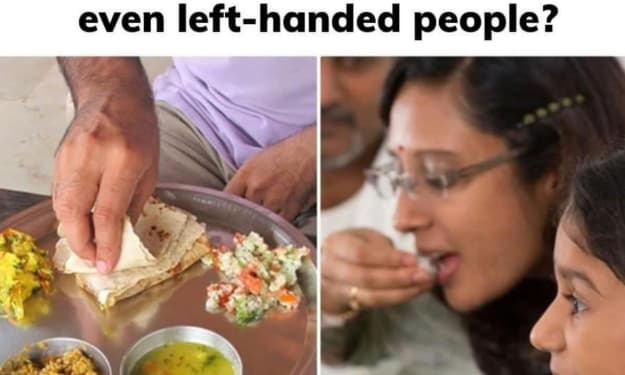
In many parts of the world, using a knife and fork is standard dining etiquette. But in India, a land rich in tradition and symbolism, eating with your hands—specifically your right hand—is both a ritual and a reflection of deeper cultural values. Even left-handed individuals are often taught to adapt and use their right hand for meals. To the outsider, this might seem curious or even restrictive, but to those raised in Indian households, the practice is second nature, a symbol of respect, purity, and mindfulness. So why do Indians insist on eating 100% with their right hand, even when someone is naturally left-handed? The answer lies in a combination of ancient customs, religious beliefs, hygiene considerations, and social etiquette that have shaped Indian life for centuries. A Matter of Cleanliness and Respect In traditional Indian culture, the left hand is associated with personal hygiene, specifically with cleaning oneself after using the restroom. This association is deeply ingrained and has a significant influence on etiquette. Because of this, using the left hand for tasks such as serving food, eating, or giving offerings is considered impolite or even unclean. Eating with the right hand is seen as a mark of respect—not just for others but also for the food itself. Meals in India are more than sustenance; they are sacred acts often accompanied by gratitude and blessings. Using the right hand ensures that the act remains clean and respectful in both a physical and symbolic sense. The Role of Religion and Rituals India is a diverse country with multiple religions, but many of them—including Hinduism, Islam, Jainism, and Sikhism—have similar cultural taboos around the use of the left hand. In Hinduism, for example, the right hand is used for religious offerings (pujas), lighting lamps, and eating, while the left is reserved for less pure tasks. During ceremonies, even something as simple as handing someone a gift or receiving prasad (blessed food) is always done with the right hand. This is why, even in temples and spiritual gatherings, one would never see prasad being taken with the left hand. The same reverence extends to everyday meals, reinforcing the tradition at home and in public settings. Social Norms and Community Dining India places a strong emphasis on communal dining. It is common to share food with family members, neighbors, and guests. Traditionally, meals are served on large banana leaves or steel thalis (plates), and people may eat sitting on the floor in a circle. In such communal settings, hygiene and manners are critical. Touching food that others may eat with your left hand, which is believed to be unclean, can be considered disrespectful or offensive. Using your right hand ensures the food remains acceptable for everyone and maintains social harmony. Even in modern urban environments where people eat with utensils, this tradition still lingers. You may notice people serving themselves or others with the right hand only, especially during weddings, festivals, or religious events. Adaptation for Left-Handed Individuals Left-handedness is naturally occurring in a minority of the population worldwide, and India is no exception. However, due to the cultural weight given to the right hand, left-handed children in Indian households are often encouraged or trained to eat with their right hand from a young age. This does not mean their natural dominance is discouraged entirely. Many left-handed Indians write, play sports, or perform other tasks with their left hand. But when it comes to eating, serving food, or participating in rituals, they are expected to switch to the right. While this might seem unusual, it is viewed more as a matter of cultural conformity than a suppression of identity. Most people adapt to it just as they would adapt to wearing traditional attire for certain occasions or observing family customs. The Sensory Experience of Eating Another reason behind hand-eating in Indian tradition is the sensory connection with food. According to Ayurveda, the ancient Indian science of life and wellness, eating with your hands stimulates the five elements—earth, water, fire, air, and ether—promoting digestion and balance. The fingertips are believed to release enzymes that aid in digestion. By using your hands, you become more mindful of the texture, temperature, and even the energy of the food you are consuming. This mindful eating aligns with Indian philosophy, which teaches that meals should be eaten slowly, gratefully, and with intention. Embracing the Experience: Eating with the Right Hand as a Cultural Bridge For travelers or guests unfamiliar with Indian customs, the idea of eating with the hand—especially only the right hand—can feel awkward at first. But many who try it come to appreciate the tactile, sensory richness it offers. By using the hand, you don’t just eat your food—you interact with it. You feel the softness of warm rice, the crunch of a papad, or the texture of a spiced lentil curry, and that enhances both awareness and appreciation. Eating in this way can also become a symbol of respect toward the host culture. In many Indian households, a guest who makes the effort to follow this practice—even imperfectly—is appreciated for being open and willing to honor tradition. It becomes a cultural bridge, breaking down barriers and creating shared understanding. Science Behind the Practice Modern science has even offered some surprising support for the practice. When you eat with your hand, particularly using the right one in Indian style, your brain engages in more motor coordination and sensory awareness than it does with utensils. This can lead to a more mindful eating experience, where you are more in tune with hunger and fullness cues—something modern nutritionists actually encourage. Furthermore, Ayurvedic philosophy teaches that our fingers have nerve endings connected to the digestive system. Stimulating these nerves by touching food is believed to activate enzymes and improve digestion, providing a physical benefit beyond the cultural and spiritual ones. Changing Times, Enduring Values Despite the increasing use of spoons and forks in modern Indian dining, the cultural message behind the “right hand only” rule remains relevant. It reflects values that are timeless—respect, cleanliness, mindfulness, and community. These values can be embraced in any form, regardless of whether you’re eating with your hands or utensils. Some Indian households today are becoming more accepting of left-handed family members using their dominant hand, especially in more urban or globalized settings. However, many still follow the tradition during religious festivals, weddings, and sacred meals, where the symbolism of the right hand holds deep significance. At its core, the practice reminds people to approach food not as a quick bite to fill the stomach, but as a gift to be received with gratitude, attention, and intention. Final Thoughts In a world increasingly driven by convenience, the Indian tradition of eating with the right hand stands as a beautiful reminder of what it means to eat with awareness, respect, and presence. It’s more than a rule or ritual. It’s a way of life—a small but profound expression of how food connects us not just to our bodies, but to our culture, our history, and the people we share our meals with. Whether you’re right-handed or left-handed, Indian or not, there’s something powerful in this simple gesture. It teaches us that the hand you eat with matters less than the heart you bring to the table.
By DigitalAddiabout a year ago in Education