vintage
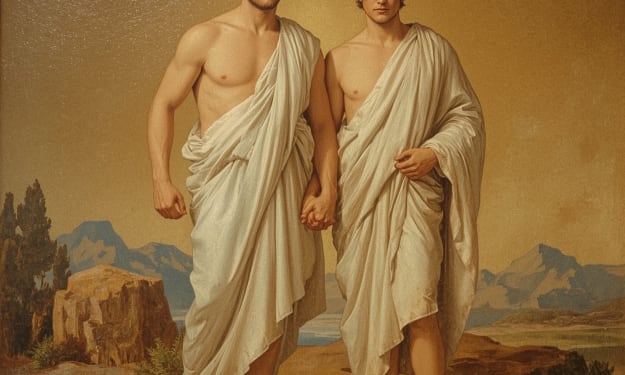
Vintage education shows us that elevating our level of comprehension has been beneficial to humanity's growth and success.
Damon and Pythias
Long ago, in the ancient city of Syracuse in Greece, there lived two best friends named Damon and Pythias. They were known by everyone for their deep friendship and trust in each other. Wherever one went, the other followed. They shared everything—food, dreams, laughter, and even sorrows.
By Muhammad Saeedabout a year ago in Education
Understanding Google Cloud Outages: Causes and Impacts. AI-Generated.
In today's digital world, grasping the effects of google cloud outages is essential for businesses. These disruptions can cause server downtime and hinder daily operations. The downtime of the google cloud platform impacts not just users but also entire organizations. This underscores the need for strong incident response strategies.
By Abdul Moyizabout a year ago in Education
Freedom in Madness
My husband John is a physician. He doesn’t believe I am really sick. He says I’m only experiencing a “temporary nervous depression”—a slight hysterical tendency. Because he is a doctor, and a man, his word carries more weight than mine. So, we’ve rented a large, secluded house for the summer, where I can rest and recover. John says I must avoid all stimulation—no writing, no visitors, no thinking too hard. I disagree, but I have no voice.
By Najibullahabout a year ago in Education
4 Morning Habits That Increase Stroke Risk and How to Avoid Them
Strokes are among the leading causes of disability and death worldwide, and many people are unaware that some of their everyday habits, especially in the morning, may be silently increasing their risk. Morning routines set the tone for the rest of the day, and while they often seem harmless, certain behaviors can put strain on the heart and brain. This article explores four common morning habits that may contribute to stroke risk and provides practical advice on how to change them for better long-term health. 1. Skipping Breakfast or Choosing Unhealthy Options Skipping breakfast is a habit many people fall into, either due to time constraints or simply a lack of appetite in the morning. Others might reach for convenient but unhealthy foods like pastries, sugary cereals, or fast food. While this might seem like a small issue, it can have major consequences for your cardiovascular health. Studies show that skipping breakfast is linked to increased blood pressure, higher cholesterol levels, and a greater risk of developing heart disease and stroke. When you skip breakfast, your body may react with hormonal changes that increase blood sugar and blood pressure levels later in the day. Over time, this stress on your system can damage arteries and increase stroke risk. Eating a breakfast high in sugar or saturated fats can also contribute to clogged arteries by raising LDL (bad) cholesterol levels. How to avoid it: Start your day with a balanced meal that includes whole grains, protein, and fruits or vegetables. Examples include oatmeal with fruit and nuts, whole-grain toast with eggs, or a smoothie with leafy greens and protein. A nutritious breakfast helps regulate blood sugar and blood pressure, supporting overall heart and brain health. 2. Rushing and Experiencing High Stress Many people wake up feeling behind schedule, leading to a rushed and chaotic morning. Whether it's skipping your morning routine, fighting traffic, or trying to meet deadlines, this type of stress can trigger a sharp increase in blood pressure. Acute stress responses, especially when repeated daily, can lead to chronic hypertension—a major risk factor for stroke. Stress causes the body to release hormones like cortisol and adrenaline, which temporarily increase heart rate and blood pressure. If this becomes a pattern, it can weaken blood vessels and increase the risk of clots or bleeding in the brain. How to avoid it: Wake up 15–30 minutes earlier than usual to give yourself more time in the morning. Establish a routine that includes calming activities, such as stretching, meditation, or simply sitting quietly while drinking water or tea. Reducing morning stress can lower your baseline blood pressure and protect your cardiovascular health. 3. Not Drinking Water After Waking Up After several hours of sleep, your body is naturally dehydrated. Many people ignore this and go straight to coffee or tea, both of which can further dehydrate you. Dehydration makes the blood thicker, which increases the risk of blood clots forming—one of the primary causes of ischemic stroke. Thicker blood puts more pressure on the heart and can make it harder for blood to circulate properly. If the blood flow to the brain is restricted due to a clot, a stroke can occur. Proper hydration in the morning is essential to help the circulatory system function efficiently. How to avoid it: Make it a habit to drink at least one full glass of water as soon as you wake up. Keep a water bottle or glass next to your bed as a reminder. Throughout the morning, continue drinking water to stay hydrated, especially if you drink caffeinated beverages like coffee or tea. 4. Ignoring Symptoms or Pushing Through Fatigue Morning is often when subtle warning signs of stroke can appear—such as dizziness, headaches, or numbness in one side of the body—but people tend to dismiss them. Instead of slowing down and assessing their condition, many push through the discomfort, thinking they’re just tired or stressed. Others may overexert themselves during exercise or skip proper warm-ups, putting strain on an already stressed cardiovascular system. Ignoring early warning signs or placing unnecessary stress on the body can result in severe outcomes. A stroke can develop quickly, and delaying medical attention can increase the chances of permanent damage. How to avoid it: Pay attention to your body in the morning. If you feel unusual symptoms such as sudden confusion, weakness, vision changes, or severe headaches, seek medical help immediately. When exercising, start slowly and give your body time to adjust. It’s better to do light exercise consistently than to overdo it and risk injury or stress to your heart and brain. Conclusion Our morning habits have a stronger impact on long-term health than most of us realize. Skipping a nutritious breakfast, starting the day with stress, neglecting hydration, and ignoring early warning signs are behaviors that can significantly raise the risk of stroke over time. Fortunately, these habits can be changed with simple adjustments. By making thoughtful choices in the morning—such as eating a healthy breakfast, staying hydrated, managing stress, and paying attention to your body—you can protect your cardiovascular and brain health. Stroke prevention is not just about medication or emergency care; it's about building a lifestyle that supports your body every day, starting with how you begin each morning.
By DigitalAddiabout a year ago in Education
The World's Most Beautiful Roads and Routes
The World's Most Beautiful Roads and Routes When the journey itself is as breathtaking as the destination, hitting the open road has a magical quality to it. From coastal highways winding along dramatic cliffs to mountain passes cutting through snow-capped peaks, the world is filled with roads that are more than just a means of travel—they are destinations in their own right. Here, we explore some of the most stunning routes across the globe, each offering unforgettable views and thrilling driving experiences.
By parves mosharafabout a year ago in Education
Lessons in the Heart of Life
In a quiet village nestled between green hills and a winding river stood a weathered tamarind tree. The villagers called it “The Whispering Tree,” not just because of the sound the wind made through its leaves, but because it had watched over generations — births, deaths, laughter, heartbreak — in the same patient silence.
By Muhammad Atifabout a year ago in Education
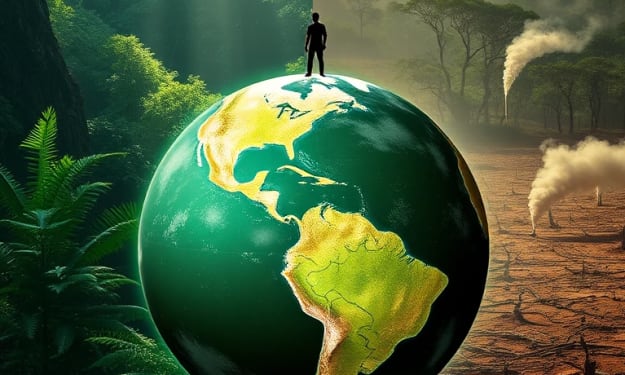
"Deforestation and the Future of the Amazon: A Wake-Up Call for Humanity"
Introduction The Amazon rainforest, sprawling across over 6.7 million square kilometers in nine South American countries, is the world’s largest tropical forest and a vital component of Earth’s ecological system. Often called the "lungs of the Earth," this vast forest produces about 20% of the planet’s oxygen and absorbs enormous amounts of carbon dioxide, helping regulate the global climate. Home to an estimated 10% of all known species and over 400 indigenous communities, the Amazon is a hotspot of biodiversity and cultural heritage. However, ongoing deforestation in the Amazon threatens to unravel this delicate balance, risking devastating consequences for local ecosystems and global climate alike.
By Shamshair Khan Hasan Zaiabout a year ago in Education
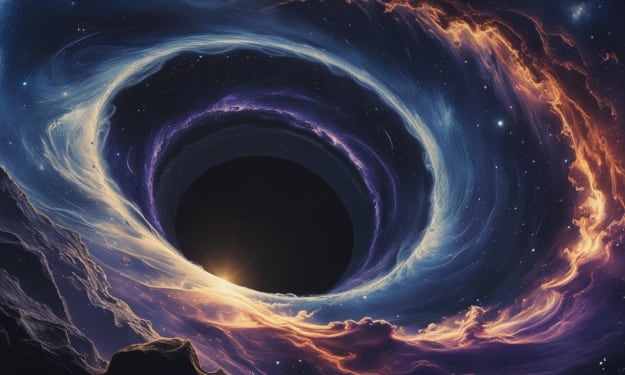
"Black Holes: Cosmic Monsters of Space and Time". Content Warning.
*Black Holes: Cosmic Monsters of Space and Time* In the vast expanse of space, there exist phenomena so mysterious and powerful that they defy our understanding of the universe. Among these cosmic wonders are black holes, regions of spacetime where gravity is so strong that nothing, not even light, can escape. Black holes have captivated the imagination of scientists and the public alike, and their study has led to groundbreaking discoveries in astrophysics and cosmology. *What are Black Holes?* A black hole is formed when a massive star collapses under its own gravity, causing a massive amount of matter to be compressed into an incredibly small space. This compression creates an intense gravitational field that warps the fabric of spacetime around the black hole. The point of no return, known as the event horizon, marks the boundary beyond which anything that enters cannot escape. *Types of Black Holes* There are four types of black holes, each with distinct properties and formation mechanisms: 1. *Stellar Black Holes*: These are the smallest and most common type of black hole, formed from the collapse of individual stars. 2. *Supermassive Black Holes*: Found at the centers of galaxies, these black holes can have masses millions or even billions of times that of the sun. 3. *Intermediate-Mass Black Holes*: Black holes with masses that fall between stellar and supermassive black holes, thought to be formed by the merger of stellar black holes. 4. *Primordial Black Holes*: Hypothetical black holes formed in the early universe before the first stars formed. *The Power of Black Holes* Black holes are cosmic monsters that can have a profound impact on their surroundings. They can: 1. *Warp Spacetime*: Black holes distort spacetime, creating gravitational lensing effects that can bend and magnify light from nearby stars. 2. *Consume Matter*: Black holes feed on surrounding matter, including stars, planets, and gas, releasing enormous amounts of energy in the process. 3. *Emit Radiation*: As matter accretes onto a black hole, it heats up and emits radiation, including X-rays and gamma rays. 4. *Influence Galaxy Evolution*: Supermassive black holes can regulate star formation and shape the structure of galaxies. *The Mysteries of Black Holes* Despite significant advances in our understanding of black holes, many questions remain unanswered: 1. *Information Paradox*: What happens to the information contained in matter that falls into a black hole? 2. *Singularity*: The laws of physics as we know them break down at the center of a black hole, known as the singularity. 3. *Black Hole Formation*: The exact mechanisms behind black hole formation, particularly for supermassive black holes, are still not well understood. *Observational Evidence for Black Holes* While black holes themselves are invisible, their presence can be inferred from the effects they have on their surroundings. Observational evidence for black holes includes: 1. *X-rays and Gamma Rays*: Telescopes can detect X-rays and gamma rays emitted by hot gas swirling around black holes. 2. *Radio Waves*: Radio telescopes can detect radio waves emitted by matter as it spirals into a black hole. 3. *Gravitational Waves*: The detection of gravitational waves by LIGO and VIRGO have provided strong evidence for the existence of black holes. *The Impact of Black Hole Research* The study of black holes has far-reaching implications for our understanding of the universe: 1. *Cosmology*: Black holes can provide insights into the formation and evolution of galaxies. 2. *Quantum Mechanics*: The study of black holes has led to new understanding of the interplay between gravity and quantum mechanics. 3. *Astrophysics*: Black holes can help us understand the behavior of matter in extreme environments. *Conclusion* Black holes are cosmic monsters that continue to fascinate and intrigue us. Their study has led to significant advances in our understanding of the universe, from the behavior of matter in extreme environments to the evolution of galaxies. As we continue to explore the mysteries of black holes, we may uncover new insights into the fundamental laws of physics and the nature of spacetime itself.
By Syed Ghaziabout a year ago in Education