travel
Travel advice for the worldly scholar; discover the best places to study abroad, the best art and history museums, and beyond.
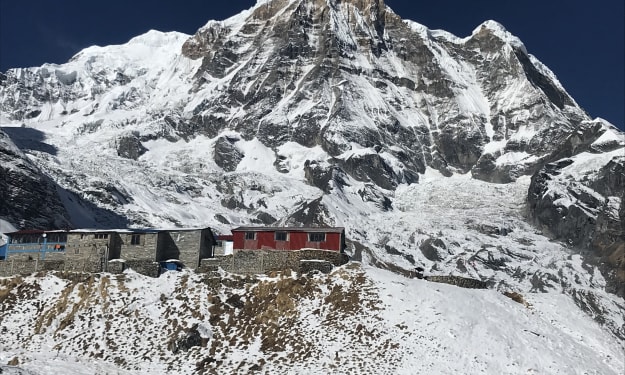
Annapurna Base Camp Trek in Autumn
Annapurna Base Camp Trek in a Glance The Annapurna Base Camp Trek, also known as the ABC Trek from Jhino Danda, is a beautiful Himalayan odyssey. Beginning with jeep driving from Pokhara to Jhino Danda (5,741 ft / 1,750 m), the Annapurna trek starts with forest walks, riverside paths, and farming terrains. The trek to ABC goes along the Modi Khola river, moving deep into the Annapurna Sanctuary.
By Haven Holidays2 years ago in Education
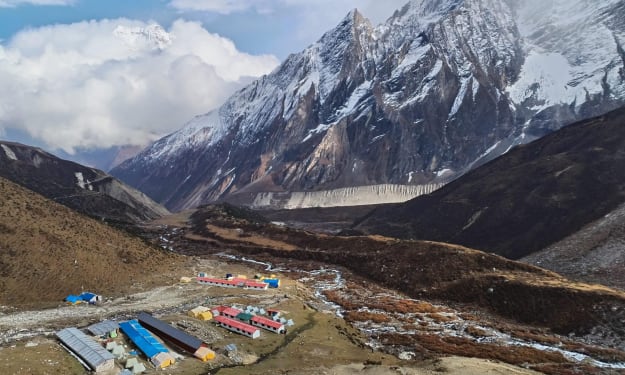
Manaslu Circuit Trek in October
Manaslu Circuit Trek Overview Manaslu Circuit Trek is a trailblazer's trekking experience around Mount Manaslu (8,163m), the eighth highest peak in Nepal. The Manaslu trek begins at Machhakhola (869m) and ends at Besisahar, making intermediate stops at Dharapani, covering a total of approximately 177 kilometers. It leads you through remote villages bordering to Tibet, rhododendron woods, and along the roaring Budhi Gandaki River.
By Haven Holidays2 years ago in Education
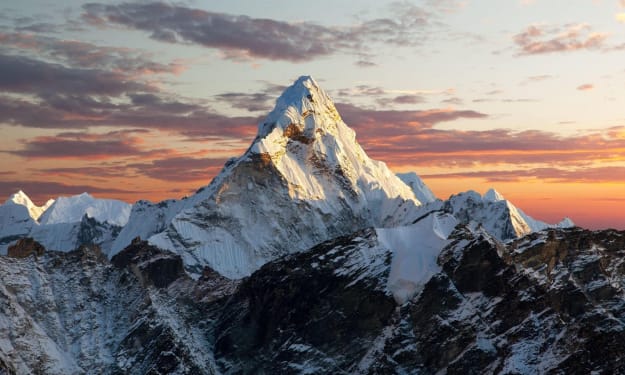
Annapurna Base Camp Trek in September
Annapurna Base Camp Trek at a Glance Annapurna Base Camp Trek (ABC Trek) is one of the most classical adventure trekking in Nepal. The ABC trek starts and finishes at Jhino Danda (5,770 ft / 1,760 m) after a scenic jeep drive from and to Pokhara. The round-trip distance from Jhino Danda is about 45 miles (72 kilometers). A one-way jeep ride to Jhino takes 3–4 hours from Pokhara. The overall trip, including back, takes around 6–8 hours by road from and to Pokhara.
By Haven Holidays2 years ago in Education
Chaos and Loyalty: The Battle for Control of the Pentagon
Washington, D.C. — As tensions within the Pentagon’s senior ranks escalate, President Donald Trump appears unwilling to distance himself from Pete Hegseth, the Fox News personality and informal adviser whose influence has fueled frustration among Defense Department officials. Despite mounting concerns over disorganization in Defense Secretary Mark Esper’s inner circle, Hegseth remains a trusted voice in the president’s ear—raising questions about the stability of military leadership just months before the election.
By JOY SHORKAR2 years ago in Education
Transcript of Why Nobody Uses Boats Between the Hawaiian Islands. AI-Generated.
Transcript of Why Nobody Uses Boats Between the Hawaiian Islands you're chilling in Hawaii on the island of Aahu a friend calls you up hey I'm here too meet me in Maui great but how do you get there your first thought is probably to take a ferry but that's impossible hawaii is a pretty unique place it's the most expensive state to live in it has its own official language besides English and it's the only American state made up entirely of islands hawaii has a total of 137 islands eight are the main ones but only six are open to tourists and the distance between those islands is probably bigger than you'd expect for example traveling from Oahu to the Big Island is around 185 mi which is about the same distance as Chicago to Indianapolis you might be surprised that you can't make that trip by boat in fact the only ferry system that actually takes passengers in Hawaii runs between Maui and Lai that's it so your only option is to travel between islands is by plane honestly it's a little surprising especially considering how many people visit Hawaii every year tourism pretty much drives their economy and in the first 8 months of 2024 alone over 6 million people visited its beautiful beaches knowing that we would expect Hawaii to set up a good ferry system to make it easier for visitors to get around just like in Greece this would probably boost tourism even more bringing more money to the state but believe me authorities and private companies also know that in fact they've already tried it fairies were a big way of getting around in Hawaii from the 19th century up until the 1950s since then there have been a few attempts to bring back a ferry service but unfortunately they have all failed one of the biggest attempts was the Hawaii Super Ferry which aimed to provide a fast affordable boat service between islands it could carry almost 900 passengers and even allow them to bring their own cars along the trial run started in 2007 and people were excited but it turned into a big fiasco a bunch of legal and environmental issues came up like concerns about the impact on marine life especially whales the courts decided the ferry didn't go through the proper environmental reviews and that caused a lot of trouble by 2009 after tons of protests and setbacks they had to shut it down if a project like this comes up again it will probably fail one more time and there are a few reasons why it's almost impossible to set up a regular ferry system there let's start by talking about Hawaii's rough waters they are deep and wild take the Alenoi Channel for example it's a 30-m stretch that separates Maui from the Big Island its name means great billow smashing channel and it lives up to that it's over 6,000 ft deep making it one of the most dangerous stretches of water on Earth the wind there is also super strong the fastest in Hawaii's coastal waters but it's not any easier in the rest of the archipelago the whole region gets hit by storms from the Pacific up north sending big waves crashing into the islands and making the waters rough and unpredictable swells can come from three four or even more directions making the sea feel really choppy someone who's not used to taking ferry boats would definitely find that well uncomfortable to say the least to deal with rough seas like this the fairies have to be really big and strong but that also makes them more expensive and harder to run than the ones in places like Alaska or Washington State another reason it's so tough to set up this system today has to do with marine life a big ship moving through the shallower waters when docking could really damage the local ecosystem and there's also the problem that the seaw routes are also the migration paths of many sea animals like humpback whales and spinner dolphins not to mention fairy services can make it easier to spread harmful plants and animals what experts call invasive species see Hawaii's ecosystem is super unique because it's been isolated out in the middle of the Pacific when we talk about plants and animals that are native to Hawaii we mean they got there on their own no humans involved they arrived with the help of waves wind or even birds flying over but events like these are super rare so for over 70 million years their plants and animals didn't have to deal with outside competition that's made them really fragile so when new species get brought in by us it can be a big problem and they could end up harming the environment hawaii's already been battling invasive species like fire ants ki frogs and mikonia a fast growing plant from South America that takes over native forests people there worry that fairies which carry cars and cargo between islands could accidentally spread these invaders even more like we mentioned at the beginning of the video the long distances between their lands don't really help either for example if you were to travel from Oahu to the big island of Hawaii by boat it would take around 30 hours and that's without any stops the same trip by plane takes about 50 minutes fairies that cover long distances are much more expensive so they need a much bigger demand to make them profitable on top of that the state doesn't really have the infrastructure like enough ports and terminals to support the operations so setting up new routes is pretty much out of the question airplanes on the other hand are a different story the air travel industry in Hawaii is already well established and super competitive that means flying is still the most practical option in Hawaii planes are quick they don't make you seasick and are pretty affordable usually costing around $100 for a round trip okay but what do the locals think about all this well apparently there isn't a huge demand for residents to commute between the islands all that often aahu is the busiest island in Hawaii with about 70% of the state's population living there it is where Honolulu the capital is located and where most of the state's business happens so people from the either islands usually come over for a specific doctor's appointment or to catch a big concert and that might happen once or twice a year no more than that so even if people could choose between taking a ferry and a plane for these special occasions most of them would probably still prefer flying there are plenty of options between the main island airports planes usually start flying around 5:00 in the morning and there are flights available every hour until the last one which is usually at 9:00 in the evening if you've been dreaming of going to this paradasical place but are worried about spending too much on plane tickets I have some tips for you first off keep in mind that visiting all the main islands in 5 days or less is way too ambitious so if you don't have much time to spend there think about your priorities each of the six islands open to tourists has its own vibe and activities but you don't need to visit them all in one trip and you can save some money by sticking to fewer islands you can still explore the diversity of the islands by picking two that offer a nice contrast to each other for example while Aahu has that bustling city energy Kauaii has a much more relaxed vibe also flights in the morning are usually cheaper and it might be better to fly on a weekday rather than the weekend although the price difference isn't usually huge hopefully these tips will save you some cash while still having an unforgettable island hopping adventure in Hawaii don't forget to share this video with a friend who's also dreaming of exploring these amazing islands that's it for today so hey if you pacified your curiosity then give the video a like and share it with your friends
By taylor lindani2 years ago in Education
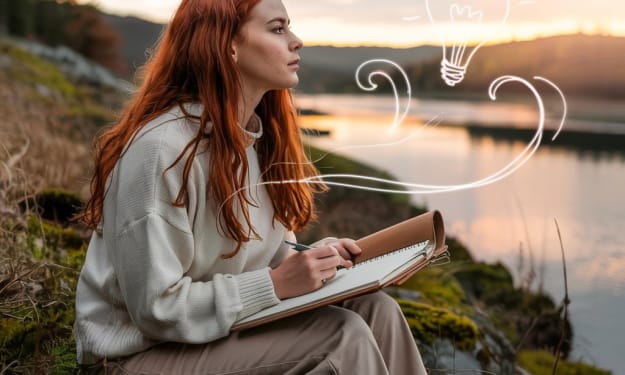
The Psychology of Solitude: How Alone Time Shapes Creativity and Mental Health
In today’s fast-paced world, the idea of spending time alone can be intimidating. Many people associate solitude with loneliness or isolation, often fearing the quiet moments that come when we are disconnected from others. However, research and experience show that solitude can be a powerful tool for personal growth, creativity, and emotional well-being. The Science of Solitude At its core, solitude is simply the state of being alone without feeling lonely. It’s important to distinguish solitude from loneliness, as the latter can lead to feelings of isolation and sadness, while solitude can foster introspection, self-discovery, and creativity. The key difference lies in the intention behind it. While loneliness often stems from a lack of social connection, solitude is a voluntary experience that provides space for reflection and inner peace. Psychologically, solitude has been shown to have numerous benefits. When alone, the brain shifts into a different mode, allowing individuals to process thoughts, analyze experiences, and engage in deep thinking. This cognitive shift can trigger creativity, as it allows the brain to wander freely without distractions. In solitude, the mind is able to make connections that may not be possible in a busy, social environment. Research by the University of California has found that solitude helps to increase brain activity in the regions associated with memory and creative problem-solving. When we are alone, the brain has the freedom to engage in “mind-wandering,” a state that has been linked to creative breakthroughs and innovative ideas. In this mental space, new neural connections are formed, allowing individuals to solve problems more efficiently and come up with original solutions. Solitude and Creativity One of the most profound impacts of solitude is its ability to enhance creativity. Many artists, writers, musicians, and other creators have long advocated for spending time alone to nurture their creative processes. This is because, in solitude, the mind is free from external noise and social pressures, allowing it to focus solely on the task at hand. Albert Einstein once said, “The monotony and solitude of a quiet life stimulates the creative mind.” Indeed, solitude provides the perfect environment for deep thought and creative exploration. When we are alone, we are less likely to be influenced by others’ opinions or societal expectations. Instead, we can focus on our own ideas and perspectives, giving rise to innovation and originality. In addition to fostering creativity, solitude allows individuals to develop their creative talents without fear of judgment or interruption. Writers, for instance, often experience a surge in inspiration when they retreat into solitude, enabling them to write freely without distractions. Similarly, musicians and artists benefit from uninterrupted time alone, where they can experiment, refine their skills, and push the boundaries of their craft. Mental Health Benefits of Solitude Beyond its creative benefits, solitude also plays a crucial role in improving mental health. In our constantly connected world, many people feel overwhelmed by the demands of daily life, including work, social media, and relationships. Taking time to be alone allows individuals to recharge, clear their minds, and regain a sense of inner balance. Spending time alone can help reduce stress and anxiety by providing a break from external stimuli and social pressures. It’s in these moments of solitude that we can engage in mindfulness practices, meditation, and self-reflection, all of which contribute to better mental health. Research from the American Psychological Association suggests that solitude can help individuals reduce their stress levels, improve their emotional regulation, and foster greater self-awareness. Moreover, solitude allows for emotional healing. Many people find that spending time alone gives them the space they need to process difficult emotions, such as grief, anger, or disappointment. In solitude, there are no distractions to mask these feelings; instead, individuals can confront their emotions head-on, leading to personal growth and emotional resilience. How to Use Solitude Effectively While solitude can be incredibly beneficial, it’s important to approach it mindfully. Spending too much time alone, especially without purpose, can lead to feelings of loneliness and isolation. To reap the benefits of solitude, it’s essential to balance it with meaningful activities that nourish the mind and spirit. Here are some tips for using solitude effectively: 1. Set Intentions: Use your time alone with a clear purpose. Whether it’s to work on a creative project, reflect on your emotions, or practice mindfulness, having an intention will help you make the most of your solitude. 2. Create a Comfortable Space: Designate a quiet area where you can feel at ease. This could be a cozy corner at home, a peaceful spot in nature, or a quiet café. A comfortable environment helps you relax and focus. 3. Limit Distractions: To fully immerse yourself in solitude, turn off your phone or any other distractions. This allows you to engage deeply with your thoughts and emotions. 4. Practice Mindfulness or Meditation: Use your alone time to engage in mindfulness practices, such as deep breathing, journaling, or meditating. These activities help to calm the mind and improve emotional well-being. 5. Take Breaks from Social Media: Social media can often lead to overstimulation and comparison. Taking time away from these platforms allows you to reconnect with yourself and your own thoughts. Conclusion Solitude is often misunderstood as a negative experience, but when used intentionally, it can be a powerful tool for enhancing creativity and improving mental health. By embracing moments of solitude, we can foster self-awareness, reduce stress, and unlock the creative potential within us. So, the next time you find yourself alone, embrace the opportunity to explore your thoughts, recharge your spirit, and allow your creativity to flourish.
By Majid Ullah2 years ago in Education
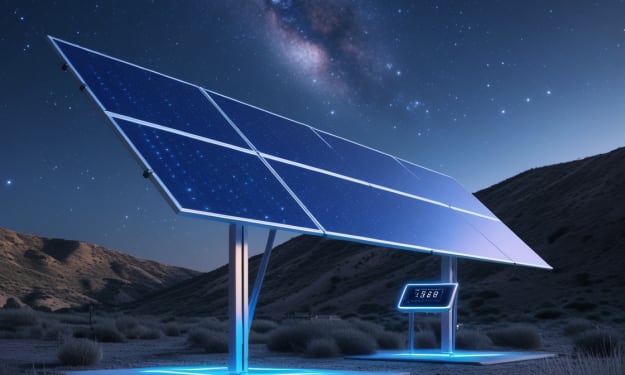
Moonlight Solar Panels: How Stanford Scientists Are Turning Night into a New Source of Renewable Energy. Content Warning.
In a groundbreaking shift that could redefine the way we harness solar power, researchers at Stanford University have developed a new kind of solar panel that can generate electricity even at night. While it may sound like science fiction, this innovation could soon become a reality that revolutionizes the clean energy landscape—especially for off-grid regions and locations with limited sunlight. This cutting-edge development centers around *radiative cooling* and the integration of *thermoelectric generators*—a combination that allows panels to continue producing power after sunset. This article explores how this technology works, why it matters, and what the future might hold for solar energy solutions that don’t stop working when the sun goes down. Why Traditional Solar Panels Fall Short Traditional solar panels depend solely on sunlight to function. When the sun sets, these panels essentially go to sleep, unable to generate power until daylight returns. This limitation has long been a challenge for renewable energy advocates. In places where energy storage solutions like batteries are either too expensive or unsustainable due to material demands, there’s been an urgent need for alternatives. Although solar panels have been widely adopted around the world, their dependency on daylight limits their effectiveness, particularly in remote areas and during the winter months when sunlight hours are reduced. That’s where the new Stanford research steps in—with a game-changing alternative that works even under moonlight. The Science Behind Nighttime Electricity Generation The technology developed at Stanford hinges on a principle known as **radiative cooling**, where surfaces lose heat to the cold night sky. At night, the Earth emits infrared radiation outward into space, which is much colder than the planet's surface. This creates a natural temperature difference between an object (like a solar panel) and the surrounding air. Stanford engineers have found a way to capture this temperature difference using **thermoelectric generators**. These generators convert temperature gradients directly into electrical voltage. By attaching them to commercial solar panels, the researchers created a hybrid system that can function both during the day and at night. Though the current output is relatively modest—about **50 milliwatts per square meter**—it’s a powerful proof of concept. During the day, standard solar panels generate up to **200 watts per square meter**, but the nighttime function still holds significant promise, especially for powering small, low-energy devices. Real-World Applications and Benefits While 50 milliwatts per square meter might not sound like much, it’s enough to keep small electronic devices running through the night. This includes essential equipment such as **LED lights, weather monitoring sensors, or small Internet of Things (IoT) devices**. In remote or off-grid settings where power is scarce, even this minimal output can make a significant difference. One of the most promising aspects of this technology is its potential to **reduce reliance on batteries**. Batteries, while effective for energy storage, are often expensive and require rare minerals that come with environmental and ethical concerns related to mining and disposal. A solar panel system that can operate around the clock without depending on batteries offers a cleaner, more sustainable alternative. Additionally, these new panels can be integrated into existing solar arrays. Homeowners and businesses that have already invested in solar infrastructure wouldn’t need to start from scratch. Instead, thermoelectric components could be **retrofitted** into their current setups, making this a scalable and cost-effective upgrade. Looking Ahead: What’s Next for Solar Tech? The Stanford team, led by Professor Shanhui Fan, is continuing to refine the technology with the goal of improving its efficiency and expanding its commercial viability. While it may take a few more years before nighttime solar panels hit the mainstream market, this innovation opens the door to a future where solar power is truly 24/7. As the global community continues to combat climate change and reduce dependence on fossil fuels, innovations like these become increasingly vital. Nighttime solar panels represent more than just an exciting scientific breakthrough—they mark a **major leap toward continuous, renewable energy production** that could change the game for clean energy access worldwide. Final Thoughts This breakthrough from Stanford proves that solar technology still has plenty of room to grow. By leveraging thermoelectric generators and the physics of radiative cooling, researchers have unlocked a new frontier for sustainable energy. Imagine a world where solar panels don’t shut down when the sun sets—where rural areas, developing nations, and even cities can keep their lights on without relying on polluting generators or expensive batteries. With continued innovation, that world might not be far off. If you’re a clean tech enthusiast, a sustainability advocate, or simply someone curious about the future of renewable energy, this is definitely a development to watch. Nighttime solar panels could soon become an essential part of how we power our homes, devices, and communities—no matter the hour.
By Tech Horizons2 years ago in Education