trade school
Trade school tips to keep you a step ahead; make the most out of your trade school experience as a soon-to-be electrician, dental hygienist, paralegal, nurse, graphic designer, and others.
The 2025 China–U.S. Trade War: Global Business Risks and Strategic Shifts
In 2025, the China–U.S. trade war has entered a new and more intense phase, marked by sharp tariff escalations, tightened regulations, and rising geopolitical friction. The renewed conflict is not only reshaping the economic relationship between the world’s two largest economies but is also sending ripples across global markets, supply chains, and business strategies. As businesses around the world brace for long-term uncertainty, the need to adapt to a rapidly changing trade environment has never been more urgent.
By Nasratulllah Barakzaiabout a year ago in Education
Do not wait to strike till the iron is hot; but make it hot by striking
In life, many people wait for the perfect moment to begin. They wait for the stars to align, for the right opportunity to knock, for all conditions to be ideal before making a move. But the truth is, waiting often leads to missed opportunities and unfulfilled dreams. The quote, "Do not wait to strike till the iron is hot; but make it hot by striking," is a powerful reminder that action must come first. We don't have to wait for the perfect moment we have the power to create it. This mindset separates achievers from dreamers. While one waits for inspiration, the other is already creating results through effort. The idea is simple: don't wait for the right time make the time right by your consistent efforts. Life rarely hands us perfect conditions. There will always be something missing, some challenge in the way, or a reason to postpone. But those who move forward despite imperfection are the ones who shape the world. Think about any successful person, and you’ll see a common pattern. They started where they were, with what they had, and took action. They didn’t wait for funding to build their dream company—they bootstrapped it. They didn’t wait for a publisher to validate their talent they self-published. They didn’t wait for approval to speak their truth they used social media, stages, blogs, and books. They struck the iron even before it seemed hot, and through that persistence, they heated it up themselves. The quote teaches us to take initiative. It tells us not to rely on external factors, but to be the source of momentum. You can’t sit and wait for motivation or clarity or an invitation. Instead, you work toward your goals, even when it’s hard, uncertain, or inconvenient. Through action, you generate energy. Through movement, you create direction. Through effort, you carve the path. This applies to all areas of life. In relationships, if you want deeper connection, don’t wait for the other person to start the conversation or repair the bridge take the first step. In your career, don’t wait for a promotion or an opportunity to show your talent demonstrate it now, even in small tasks. In education, don’t wait for someone to teach you what you want to know seek it, study, experiment. Every moment you hesitate is a moment lost. Every action you take is a moment gained. This quote is especially relevant for aspiring entrepreneurs and creatives. So many people have ideas, talents, or dreams, but they put them on hold, waiting for the “right time.” The right time is a myth. There is only now. Each day that passes without action is a day further from the life you want. If you want to start a business, write a book, launch a podcast, or create a brand, the only way forward is to begin. It won’t be perfect. You’ll make mistakes. You’ll feel unsure. But with every strike, you heat the iron. Eventually, it glows with opportunity. Even in moments of fear or doubt, action has power. Courage doesn’t always roar. Sometimes, it’s a whisper saying, “Try again tomorrow.” But when you strike consistentl when you take steps despite the fear you become stronger. You build confidence. You develop resilience. That’s how you make the iron hot. Not by waiting, but by striking, again and again. There is wisdom in taking action, but also in understanding that action must be thoughtful and persistent. Rushing aimlessly isn’t the point. The idea is to combine preparation with boldness. You learn what you need to, plan your steps, and then you take them whether the timing feels ideal or not. Don’t wait for motivation. Motivation often follows action. The first step creates momentum. The second builds discipline. The third shapes progress. And soon, you’re no longer waiting you’re creating. For young people just starting out, this quote is gold. The world often tells you to wait. Wait until you graduate. Wait until you get experience. Wait until someone gives you a chance. But you don’t have to wait to lead, innovate, or grow. Start where you are. Use what you have. Build while others hesitate. Your youth is your advantage. The energy, curiosity, and drive you possess can be channeled into building something meaningful today. Don’t let fear of failure keep you stuck. Every failure teaches. Every try sharpens your skills. You strike, and you learn, and with every swing, your iron gets hotter. Even for those later in life, it’s never too late. Too many people believe their time has passed. But as long as you are breathing, you have time to create, to change, to act. Your experience, your insight, your maturity they are assets. Whether it’s starting a second career, writing that book, going back to school, or launching a passion project, don’t wait for someone to tell you it’s your turn. Make it your turn. Strike the iron now. One of the most liberating truths in life is realizing that you are responsible for your momentum. You can choose to act. You can decide not to wait. You can begin the journey without anyone’s permission. The circumstances might not be perfect. But you’re not looking for perfection you’re looking for progress. And that only comes through doing. This quote is also about the spirit of proactivity. Instead of reacting to life, you shape it. Instead of sitting back, you stand up. Instead of hoping, you’re doing. That mindset is the foundation of success, happiness, and fulfillment. When you take ownership of your time, your effort, and your goals, you’re no longer at the mercy of chance. You’re building something with your own hands. There will always be reasons not to start. But there are far more reasons to begin. The journey won’t be easy, but it will be worth it. Every small effort counts. Every choice to act builds your story. The world is full of people who waited and regretted. Be the one who struck, who shaped their destiny, who turned cold iron into something powerful. So take the quote to heart. Don’t wait to strike till the iron is hot. Make it hot by striking. Your moment is not something you wait for it’s something you create. Keep going, keep striking, and eventually, you’ll see your effort pay off in ways you never imagined.
By Nora Arianaabout a year ago in Education
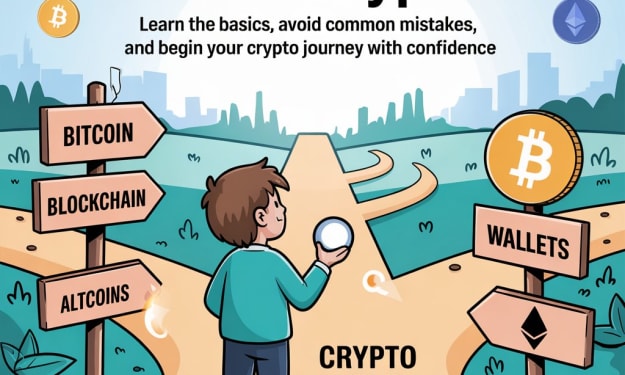
New to Crypto? Here’s the Simple Step-by-Step Guide You Wish You Had Sooner!
Cryptocurrency can feel like a foreign language when you’re just getting started. From confusing jargon like blockchain, DeFi, and wallet addresses, to the endless sea of altcoins and market hype, it’s no wonder many beginners feel overwhelmed. But the good news? You don’t need to be a tech genius or financial expert to get started with crypto.
By MaazHassanabout a year ago in Education
"What Is Cryptocurrency? A Beginner's Guide to Digital Money"
In recent years, cryptocurrency has become a buzzword that shows up everywhere—from news headlines to social media, and even in everyday conversations. But what exactly is cryptocurrency, and why is everyone talking about it? Whether you’ve heard about people making big profits, seen “Bitcoin” in the headlines, or just want to understand what all the hype is about, this guide is for you. We’ll break it down in a way that’s simple, human-friendly, and free of jargon. --- Understanding the Basics At its core, cryptocurrency is a form of digital money. Unlike traditional currencies like the dollar or euro, which are controlled by banks and governments, cryptocurrencies are decentralized. That means no single person or institution controls them. The most well-known cryptocurrency is Bitcoin, which was introduced in 2009 by someone (or a group) using the name Satoshi Nakamoto. Bitcoin was created as a response to the financial crisis of 2008, with the idea of giving people full control over their money. But since Bitcoin’s creation, thousands of other cryptocurrencies have been developed, including Ethereum, Litecoin, Ripple, and Dogecoin, each with its own unique features and purposes. --- How Does It Work? Cryptocurrencies run on a technology called blockchain. You can think of a blockchain as a digital ledger—a record book that keeps track of all transactions. But unlike a traditional bank ledger, this one is shared across a network of computers around the world. Every time someone sends or receives cryptocurrency, the transaction is verified and added to the blockchain. This system makes it incredibly difficult to cheat or tamper with, and it’s part of what makes cryptocurrencies secure. Another important aspect is cryptography, which is where the name “cryptocurrency” comes from. Cryptography is a method of securing information so that only the intended parties can understand it. It’s used to protect wallets, verify transactions, and keep user identities anonymous. --- Why Do People Use Cryptocurrency? People are drawn to cryptocurrency for many different reasons: 1. Decentralization: Many users like the idea that no central authority controls their money. 2. Lower Fees: Sending money across borders can be expensive with banks, but crypto often allows fast, low-cost transfers. 3. Investment Potential: Some see crypto as a way to grow their wealth, much like investing in stocks. 4. Privacy: While not completely anonymous, crypto can offer more privacy than traditional banking. 5. Innovation: Developers are building apps, games, and financial tools on blockchain networks—especially Ethereum. --- Is It Safe? Like any new technology, cryptocurrency comes with both risks and rewards. The blockchain technology behind it is considered very secure, but that doesn’t mean it’s risk-free. For example, the value of cryptocurrencies can be highly volatile. Prices can swing dramatically within a short time. Also, while your crypto wallet is safe from hacking if properly protected, if you lose your private key (like a password), you could lose access to your funds permanently. Scams and frauds are also a concern in the crypto space. It’s important to do research and use trusted platforms when buying or storing cryptocurrency. --- How Do You Get Cryptocurrency? There are a few ways to get started: Buy it: The most common way is to buy cryptocurrency from an exchange like Coinbase, Binance, or Kraken using your local currency. Earn it: Some people earn crypto by doing freelance work or selling goods and accepting it as payment. Mine it: Mining is the process of using computers to verify transactions and earn rewards in the form of cryptocurrency. However, it can be expensive and requires technical know-how. Once you own some crypto, you’ll store it in a digital wallet, which can be software (like an app) or hardware (like a USB device). --- Real-World Uses of Crypto Cryptocurrency isn’t just about investment or speculation—it’s slowly being adopted for everyday use. Here are some examples: Online shopping: Some companies, including Microsoft and Overstock, accept crypto as payment. Donations: Charities like the Red Cross and Save the Children now accept crypto donations. Remittances: People are using crypto to send money to family and friends in other countries faster and cheaper than traditional methods. Decentralized Finance (DeFi): These are financial services built on blockchain that allow people to lend, borrow, or earn interest without a bank. --- The Future of Cryptocurrency While it’s still early in the journey, cryptocurrency has the potential to transform the way we think about money. Governments are exploring digital versions of their own currencies, known as Central Bank Digital Currencies (CBDCs). Meanwhile, tech giants and financial institutions are investing heavily in blockchain and crypto. Still, challenges remain—regulations, environmental concerns (from energy-heavy mining), and public education all need to be addressed. --- Final Thoughts Cryptocurrency is much more than just a trend—it’s a new kind of financial system being built in real time. Whether it becomes the money of the future or simply a new asset class, it’s worth understanding how it works. As a beginner, the best way to approach crypto is to learn, stay cautious, and explore at your own pace. The world of digital money can seem overwhelming at first, but with the right knowledge, anyone can start to navigate it.
By Daily worldabout a year ago in Education
The Power of Small Businesses in Building a Strong Economy
In today’s world of towering skyscrapers and multinational corporations, it’s easy to forget the true engine of any economy: small businesses. But from what I’ve observed, studied, and experienced, it's clear to me that these small enterprises are the real game changers. They don’t just sell products or offer services—they provide jobs, create innovations, build communities, and drive local and national progress.
By Zia Ur Rehmanabout a year ago in Education
Turning Ideas Into Money
Introduction Ideas are everywhere. They strike in the shower, while you're stuck in traffic, or during a late-night scroll on social media. But what separates a fleeting thought from a million-dollar business? Action. In a world flooded with creativity, the true winners are those who can transform ideas into income. This article walks you through how to capture, validate, build, and profit from your ideas—whether you’re an aspiring entrepreneur, freelancer, or content creator. --- ### **1. The Power of an Idea** Every business, product, or innovation started with an idea. Apple, Netflix, and even Instagram—all began as thoughts in someone’s head. But ideas, on their own, are cheap. The real power lies in execution. That’s why someone with a “simple” idea but relentless drive will out-earn the person with a genius idea and no action. **Key Point:** *Don’t overthink your idea. Start.* --- ### **2. Capture Your Ideas Before They Escape** Ideas are like dreams—if you don’t write them down, you’ll lose them. Successful entrepreneurs keep idea journals, voice notes, or digital boards where every thought is recorded. **Tips for Capturing Ideas:** - Use apps like Notion, Google Keep, or Evernote. - Keep a notepad beside your bed. - Use voice memos when you're on the go. **Action Step:** *Start building your “idea bank” today. No filters—just store them.* --- ### **3. Filter and Validate: Which Ideas Are Worth Pursuing?** Not every idea is worth turning into a business. Some are passion projects; others are monetizable. You need a system to filter which ideas are worth your time. **Ask Yourself:** - Does this solve a real problem? - Is there a target audience for this? - Are people currently paying for similar solutions? - Can I realistically execute this with the resources I have? **Pro Tip:** *Validation doesn’t need to be complicated. Start by talking to 10 people who fit your target audience.* --- ### **4. Identify a Marketable Niche** Even the best ideas fail without a clear market. It’s not about pleasing everyone—it’s about solving a specific problem for a specific group. **Examples:** - Idea: Fitness tips → Niche: Fitness for busy moms - Idea: Digital marketing → Niche: Email marketing for real estate agents - Idea: Graphic design → Niche: Branding for e-commerce startups **Action Step:** *Niche down until your idea speaks directly to someone’s pain point.* --- ### **5. Develop a Simple MVP (Minimum Viable Product)** Before building an entire product or service, test a basic version. This saves time, money, and gives you real feedback. **Examples:** - Want to launch a course? Start with a 1-hour live Zoom class. - Want to build an app? Create a clickable prototype using tools like Figma. - Want to sell a product? Create a landing page and see if people sign up. **Goal:** *Prove demand before investing heavily.* --- ### **6. Create a Monetization Plan** There are many ways to monetize ideas, depending on what you’re building. Here are common models: - **Selling Products:** Digital or physical (ebooks, courses, merch) - **Freelance Services:** Based on your skills (writing, design, marketing) - **Memberships/Subscriptions:** Exclusive content, community, or mentorship - **Affiliate Marketing:** Promote other people’s products for a commission - **Ads and Sponsorships:** Monetize traffic (YouTube, blogs, podcasts) **Action Step:** *Choose 1–2 monetization models to start, and build around them.* --- ### **7. Build an Audience Around Your Idea** In today’s world, attention is currency. If you can get people to care, follow, and trust you—you can monetize almost anything. **How to Build an Audience:** - Pick 1–2 platforms (Instagram, TikTok, YouTube, LinkedIn, etc.) - Share valuable content related to your idea/niche - Build an email list for long-term control - Engage: Comments, DMs, replies—show you care **Reminder:** *People don’t buy products. They buy solutions from people they trust.* --- ### **8. Use Social Proof and Feedback** People trust results. Testimonials, reviews, screenshots, and case studies build confidence. **What to Collect:** - Testimonials from beta testers - Screenshots of results - Feedback from your first users Even if you’re starting small, document every win. --- ### **9. Create a Simple Sales Funnel** To consistently turn your idea into money, you need a system that guides people from “just curious” to “ready to buy.” **Basic Funnel Example:** 1. Free valuable content (social media, blog, YouTube) 2. Lead magnet (free guide, checklist, class) 3. Email nurture sequence 4. Paid offer (product, service, course) Tools like ConvertKit, Systeme.io, or MailerLite make this easy. --- ### **10. Leverage Automation and AI** You don’t have to do it all manually. Use tools to automate and scale: - **ChatGPT** for content ideas, writing, and brainstorming - **Canva** for graphics and designs - **Zapier** for automating workflows - **Calendly** for appointment setting Let tech do the heavy lifting while you focus on growth. --- ### **11. Reinvest and Scale** Once the money starts coming in, don’t just spend—reinvest. Where to reinvest: - Better tools/software - Marketing and ads - Hiring freelancers (design, content, tech) - Upskilling (courses, coaching) **Goal:** *Turn your idea into a business, not a hustle.* --- ### **12. Stay Consistent & Adaptable** Every successful entrepreneur has one thing in common: consistency. The difference between a $0 idea and a six-figure one is often how long someone stuck with it. But also be flexible. Listen to feedback. Watch trends. Pivot if needed. --- ### **Real-Life Examples of Ideas Turned to Money** 1. **Sara Blakely (Spanx)** – Started with $5,000 and turned her idea for women’s shapewear into a billion-dollar brand. 2. **Ali Abdaal** – From doctor to YouTube productivity creator. Monetizes through courses, affiliates, and content. 3. **Digital Product Creators** – People selling Notion templates, planners, AI prompts, and courses make 5–6 figures a year. --- ### **Conclusion: Your Idea Has Power** The next big thing isn’t a secret—it’s probably sitting in your notes app, waiting for action. If you’ve ever said: - “I wish I could make money doing this” - “This idea keeps coming back to me” - “I just don’t know where to start” The answer is: **start small, stay focused, and keep building**. Ideas only make money when you bring them to life. Your thoughts are valuable—but your action is what turns them into income. Perfect! Here's the revised **ending section** of your article with an added motivational push and a clear CTA (call to action) about your money-printing blueprint: --- some billionaire’s notebook—it’s probably sitting in your mind or notes app, just waiting for you to act on it. If you’ve ever said: - “I wish I could make money doing this” - “This idea keeps coming back to me” - “I just don’t know where to start” Then this is your **wake-up call**. The difference between where you are now and where you want to be is **one idea and one decision** away. You *don’t* need to have it all figured out. You *don’t* need fancy equipment or a million followers. You just need to start with what you have, where you are, and stay consistent. **I believe in you — and your idea deserves a shot.** To help you even further, I’ve created a simple, actionable **Money Printing Blueprint** that walks you through how to turn your ideas into consistent cash flow. **The link is in my bio — grab it now and take your first step toward financial freedom.** Because at the end of the day, **the money won’t print itself — but your idea can.** --- Let me know if you want a shorter version for social posts or want this turned into a lead magnet PDF!
By Keli Chrisabout a year ago in Education
Why You Should Never Count Money Before It Arrives
In life, there’s a lesson that many people learn the hard way: never calculate money that has not yet entered your hands. It’s a common habit, especially when we are eager, hopeful, or excited about opportunities, deals, or promises. People start planning how to spend their next paycheck before it arrives, or even worse, they begin spending in advance, assuming that a certain amount will surely come in. This kind of mindset creates a false sense of security, one that can lead to disappointment, debt, stress, and broken trust. Money that is not yet in your possession is merely a possibility, not a reality. No matter how sure you are of its arrival, until it is physically in your bank account or your pocket, it should not be used to make decisions. Promises can fall through, delays can occur, and people can change their minds. Counting on something that is not guaranteed is like building a house on sand. It might stand for a while, but the moment something goes wrong, everything collapses. This kind of financial behavior often stems from desperation or overconfidence. You might feel like your business deal is already sealed because the other party said yes. You might be expecting a payment from a client who has always been reliable. You might be awaiting a loan that has already been approved in principle. But until those funds arrive, they are not yours. And treating them as though they are leads to a series of miscalculations that can cause chaos in your financial life. For instance, imagine you are expecting $2,000 from a freelance gig, and the client has promised to pay you on Friday. You start planning how you’ll use the money you’ll pay your rent, buy groceries, settle your phone bill, and maybe even treat yourself to something nice. By Wednesday, you’re so confident in the money that you begin borrowing from friends or using your credit card, assuming you’ll pay it all back once the money comes. But then Friday arrives, and there’s no payment. The client tells you they need a few more days. Suddenly, you’re in a tight spot. The money you thought was certain is now uncertain. The people you owe are waiting. The stress begins to mount. Situations like this happen every day. It’s not about being pessimistic, but about being wise and grounded in reality. There’s a saying that goes, “Don’t count your chickens before they hatch. That saying applies perfectly to finances. Until money is received, it’s just potential. When you count on it too early, you set yourself up for anxiety, disappointment, and often embarrassment. People also tend to make large commitments based on future income that hasn’t materialized. Maybe you’ve accepted a new job that pays more, and you haven’t even started yet, but you go out and buy a new car because you expect that your first paycheck will cover it. What if something goes wrong with your employment? What if there’s a delay or cancellation? Suddenly, you’re locked into a financial obligation that you are not prepared to handle. Living in anticipation of money rather than the reality of what you have creates a dangerous cycle. It teaches you to operate on hope instead of facts, which can lead to reckless spending and poor financial planning. Responsible financial behavior involves working with what you already have. It means making decisions based on current assets, not on expected income. Moreover, this habit can strain relationships. Borrowing based on money that hasn’t come yet often leads to broken promises. You tell a friend you’ll pay them back by Tuesday because you’re expecting a payment. Tuesday comes and you have to tell them you’re still waiting. If this happens once, they may understand. If it happens repeatedly, it erodes trust. People start to doubt your word. They begin to view you as unreliable. Your integrity suffers, all because you assumed that money would come as planned. Business owners and entrepreneurs often fall into this trap too. They project earnings and start expanding too early, assuming that clients will pay on time or that deals will close smoothly. But in the world of business, many variables can affect cash flow. If you calculate future income as current capital, you may end up spending money that never comes, which can be devastating for a small business. Financial discipline requires patience and realism. It’s about managing today wisely, without assuming that tomorrow’s resources are already available. It’s not wrong to be optimistic about income or opportunities, but that optimism should never replace caution and discipline. Money that hasn’t come in yet is not yours. It’s only yours when you can access it, use it, and make choices with it without depending on others to fulfill a promise. Instead of making financial decisions based on projected income, build a habit of living within your means. Make budgets based on what is available now. If extra income comes in, that’s a bonus not a baseline. This approach protects you from unnecessary stress, failed expectations, and financial ruin. Ultimately, calculating money that has not yet arrived is a trap. It creates illusions that feel comforting in the moment but can quickly turn into nightmares. Be wise, be patient, and be realistic. Use what you have today wisely, and let tomorrow’s money take care of itself when it actually arrives. That mindset will save you from many heartaches and keep your finances and your peace of mind intact.
By Nora Arianaabout a year ago in Education
Passive Income for Creatives: How Graphic Designers Are Cashing In Online
Passive Income for Creatives: How Graphic Designers Are Cashing In Online INTRODUCTION In today’s digital era, graphic design isn’t just a creative hobby—it’s a high-demand skill that can generate serious income. From startups and YouTubers to influencers and big brands, everyone needs graphics. If you’re skilled in tools like Adobe Photoshop, Illustrator, or even Canva, you can start earning online from the comfort of your home. Here’s a step-by-step action plan to guide you on your journey.
By Dipesh Bairagiabout a year ago in Education
Affordable & Reliable Data Structure Assignment Help for CS Students
In today’s tech-driven education system, computer science (CS) students face increasing pressure to perform well academically while keeping up with the latest programming languages, development tools, and algorithmic concepts. Among the core areas of computer science, Data Structures remains one of the most vital yet challenging subjects. Whether it’s linked lists, binary trees, or graph traversals, mastering data structures is key to becoming a competent programmer. That’s why so many students actively seek Data Structure Assignment Help a smart way to reduce stress, manage time, and improve performance.
By James Smithabout a year ago in Education
WANT TO EARN BIG IN TECH? THESE 10 IT ROLES PAY THE MOST GLOBALLY
The Information Technology (IT) industry has revolutionized every sector of our lives—from healthcare and banking to entertainment and education. With digital transformation on the rise, IT professionals are in high demand, and many of these roles come with exceptionally high salaries. In this blog, we’ll explore the top 10 highest-paying IT jobs across the globe, detailing what each role entails, the skills required, and why they’re so valuable in today’s market.
By Dipesh Bairagiabout a year ago in Education
NASA Offers Free High School Engineering Program This Summer
**NASA Offers Free High School Engineering Program This Summer** NASA continues to inspire the next generation of scientists, engineers, and explorers through its free educational programs for high school students. One such opportunity is the **High School Aerospace Scholars (HAS)** program, a competitive, STEM-based initiative designed to give students hands-on experience in engineering and space exploration. This summer, eligible high school juniors and seniors can participate in an immersive learning experience that includes virtual coursework and a potential on-site internship at a NASA center. ### **Program Overview** The **High School Aerospace Scholars (HAS)** program is a **fully funded** opportunity for students interested in aerospace engineering, robotics, and mission design. The program is primarily for **U.S. high school juniors** (though some variations may include seniors) and consists of two phases: 1. **Online Learning Component (Spring 2024)** - Selected students complete a **16-week online curriculum** developed by NASA scientists and engineers. - Topics include rocketry, robotics, lunar exploration, and Mars mission planning. - Students engage in interactive modules, quizzes, and team projects. 2. **On-Site Experience (Summer 2024)** - Top-performing students are invited to a **week-long internship** at **NASA’s Johnson Space Center in Houston, Texas**. - Participants work in teams to design a mock Mars mission, build robotic prototypes, and interact with NASA engineers. ### **Eligibility & Application** To qualify, students must: - Be **U.S. citizens**. - Be **high school juniors (or seniors, depending on the program year)**. - Have a strong interest in **STEM (especially engineering, physics, or computer science)**. - Submit an online application, including **teacher recommendations and academic records**. **Application Deadline:** Typically in **early spring** (some programs may still be open—check NASA’s official site). ### **Other NASA Summer Programs for High Schoolers** Besides HAS, NASA offers additional free STEM programs, including: 1. **NASA SEES (STEM Enhancement in Earth and Space Science)** - Focus: **Earth science, climate research, and remote sensing**. - Format: **Virtual lectures + possible on-site research at the University of Texas at Austin**. - Eligibility: **Grades 9–12**. 2. **NASA Internships (for High School Students)** - Competitive paid/free internships at NASA centers. - Requires strong academics and passion for space science. 3. **Girls in STEM (GIST) Initiatives** - Special programs encouraging young women in aerospace engineering. ### **Why Apply?** - **Hands-on engineering experience** with NASA mentors. - **College and career readiness**—participants often pursue STEM degrees. - **Networking** with scientists, engineers, and fellow students. - **Potential scholarships and internship pathways** within NASA. ### **How to Apply** 1. Visit **[NASA STEM Engagement](https://stem.nasa.gov)**. 2. Search for **High School Aerospace Scholars (HAS)** or **NASA SEES**. 3. Submit required documents (transcripts, recommendations, essays). ### **Final Thoughts** NASA’s free summer engineering programs are an **incredible opportunity** for high school students to gain real-world experience in aerospace and technology. With limited spots available, interested students should apply as soon as possible. **🚀 Ready to launch your future with NASA? Check eligibility and apply today!** Would you like help finding similar programs based on your location or interests? Let me know! That sounds like an exciting opportunity! NASA frequently provides high school students with STEM programs. The following should be known: ### **NASA’s Free High School Engineering Program (Summer 2024)** The High School Aerospace Scholars (HAS) program or similar initiatives like NASA SEES (STEM Enhancement in Earth Science) are notable NASA initiatives. Experience in the real world of engineering and science is provided by these programs. **Potential Programs You Might Be Referencing:** 1. **NASA High School Aerospace Scholars (HAS)** - Juniors and sometimes seniors in high school in the United States are eligible. - **Format:** Online modules + potential on-site experience at a NASA center. - **Focus:** Engineering, robotics, and space mission design. 2. **Internship with NASA SEES** Students in high school (grades 9-12) are eligible. - **Focus:** NASA scientists working on Earth and space science research. 3. **NASA Community College Aerospace Scholars (NCAS)** - (For slightly older students, but occasionally accessible to advanced high school students.) #### **How to Apply:** - Check the official NASA STEM engagement site: [**https://stem.nasa.gov**](https://stem.nasa.gov) - Deadlines are usually in early spring (some may still be open!). - Requires recommendations from teachers and occasionally essays. Would you like help finding a specific program based on your interests (engineering, coding, space science, etc.)? Let me know! �🚀
By naime hoshenabout a year ago in Education