trade school
Trade school tips to keep you a step ahead; make the most out of your trade school experience as a soon-to-be electrician, dental hygienist, paralegal, nurse, graphic designer, and others.
Lessons Beyond the Bell: A Nostalgic Walk Through the School That Shaped Us”
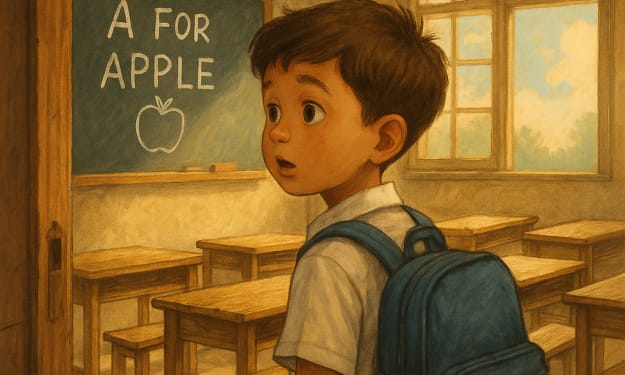
There is something magical about the silence of a school building after the bell rings — a silence that holds whispers of chalk dust, torn pages, forgotten friendships, and the shy smiles of first crushes. But when I look back at my school days, what strikes me most is not just the silence, or the lessons written on the blackboard, but the quiet lessons that were never part of any syllabus. My school was not famous. It didn’t appear in glossy magazines or education fairs. It was just a small government-run institution sitting humbly on the edge of our dusty town. The paint peeled off the walls like old memories, the fans whirred with a sound that resembled an elderly man trying to cough out a secret, and the benches carried the engraved names of generations of mischievous students who were never caught — but always remembered. The Headmaster Who Spoke in Proverbs Our headmaster was a man of few words — not because he was wise, but because his words always came in the form of Urdu proverbs. His response to every question was a saying that belonged in a 200-year-old handwritten book passed down from Mughal libraries. If someone asked for a holiday due to fever, he would say, “Jis tan laage, so tan jaane” — and still mark the student absent. If a teacher complained about noise in the classroom, his reply would be, “Unta ki maa kab tak khair manaye gi?” He was a living, breathing collection of cultural phrases, and although none of us understood half of what he said, we respected him because he carried his silence like a badge of authority. The Bench That Made You a Philosopher There was a specific bench in the corner of our classroom. If you were late, that's where you sat. The view from that bench was half-obstructed by a pillar, and the fan above it made more noise than wind. But somehow, sitting there made you think deeply about life, the structure of the ceiling, and why pigeons always chose our classroom for their daily meetings. It was on that bench that I wrote my first poem, fell asleep during history class, and once dropped an ink bottle that turned the floor into a modern art masterpiece. I still remember the teacher's reaction. She didn’t shout. She just stared, took a deep breath, and said, “This class has more drama than Doordarshan.” The Teachers Who Were Never in the Syllabus I sometimes feel our teachers were not real people. They were characters — written by an invisible playwright who had a deep sense of humor and tragic timing. There was Mr. Saeed, who taught math but believed it was a divine calling. He’d spend 30 minutes solving a problem on the board, and then erase it without giving the answer. If anyone dared to ask, he’d say, “Understanding is more important than answers.” None of us ever understood. Miss Najma, the English teacher, was a romantic trapped in a dusty classroom. She’d often quote Shakespeare while the boys in the last row giggled. “All the world’s a stage,” she once said, “but your performance is the worst I’ve seen.” She wore the same green sari every Monday, and we once gifted her a box of handkerchiefs on Teacher’s Day — thinking she might appreciate something less poetic and more practical. She smiled and said, “Even Shakespeare wept when he received kindness.” Midday Meals and Great Philosophies The canteen served samosas that could break teeth and chai that could melt hearts. We never had enough money for snacks, but we had friends with big hearts and shared everything. The samosa, broken into four uneven parts, symbolized justice in our world — the biggest piece always went to the one who was scolded by the teacher that day. Lunch hour was more than eating. It was about storytelling, gossip, and bad singing. Our favorite game was pretending to be teachers and imitating them. One boy mimicked the headmaster so well that he was almost suspended — until he used a proverb to defend himself. “Naach na jaane, aangan tedha,” he said. Even the headmaster laughed. The Blackboards That Held Our Dreams There is something timeless about blackboards. Whiteboards are clinical; screens are cold. But blackboards — they were alive. They breathed with the pressure of chalk and carried dreams written in cursive. I once wrote "I want to be a writer" on the bottom corner of a blackboard, during a break. Nobody noticed. The teacher erased it. But I remember that moment as the first time I admitted it to myself. That dream stayed, even when nothing else did. Examinations and Existential Crises Exams were less about knowledge and more about survival. Our invigilators walked with the silent authority of prison guards, and their eyes could see through pockets, socks, and even the back of your brain. Cheating was not easy, but it was common — not because we didn’t study, but because we believed in “group learning.” I once passed a science test purely on imagination. I described the digestive system like a traffic jam in Karachi. My answer was so confusing that the teacher wrote, “Creative, but scientifically dangerous.” But the fear of exams taught us time management, prayer, and the art of writing the same answer in ten different ways. Rainy Days and Muddy Shoes Rainy days were holidays in disguise. Not officially, but emotionally. The whole school slowed down. Shoes carried mud like medals, and puddles became territories to be conquered. One time, our classroom was flooded. We spent the whole day reading poems and watching raindrops race down the windowpane. That day taught us more about poetry than any textbook. Miss Najma recited Faiz that day. I didn’t understand the poem, but I remember the softness in her voice. It felt like kindness. The Library of Lost Books Our library was more like a treasure chest. Dusty, disorganized, and full of hidden gems. Nobody ever returned books on time, and the librarian was too sleepy to care. But that’s where I found Premchand, Ismat Chughtai, and Manto. I didn’t understand all the words, but the feelings stayed. I read stories that made me question the world — not just the past, but the rules we follow blindly. The library was our escape — from rules, from noise, and sometimes, from ourselves. Farewell, But Not Forgotten When the last day of school came, nobody cried. Boys don’t cry, we told ourselves. But that silence in the corridor — it said everything. We signed each other’s shirts with permanent markers, promising to meet again. Most of us never did. Some moved to other cities, others got married, some disappeared into the machinery of adulthood. But every once in a while, I walk past a school — any school — and I feel something rise in my chest. A kind of warmth, a quiet longing. A hope that the children inside are learning not just math or grammar — but the same quiet lessons we did. Lessons like: The value of friendship The power of laughter during hard times The strange beauty of failure And the simple truth that sometimes, the best teacher is time. Epilogue: The Essay I Never Submitted If I could return to that classroom, I wouldn’t erase the words I once wrote on the blackboard. I would write more. would write about the teacher who changed my life without knowing it. I would write about the fight I never apologized for. I would write about the day I felt invisible, and the classmate who saw me. would write not for grades or praise, but because those memories deserve a place in the world — not just in my mind.
By Sadiq aminabout a year ago in Education
Harvard vs. Trump: When a Pandemic Sparked a Battle Over Aid
Harvard vs. Trump: When a Pandemic Sparked a Battle Over Aid Back in 2020, while the world was struggling with the chaos of COVID-19, an unexpected showdown took place between Harvard University and the Trump administration. It wasn’t about politics in the usual sense—it was about money, students, and who deserved help when everything was falling apart.
By MIZANUR RAHMANabout a year ago in Education
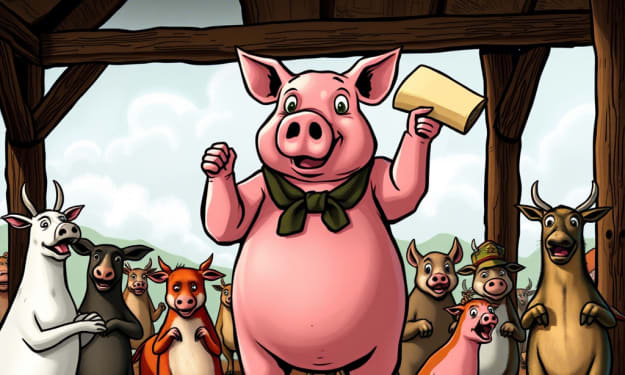
Animal Farm
Animal Farm by George Orwell is a short but powerful novel that tells a deep story using talking animals on a farm. On the surface, it seems like a fun tale about animals rebelling against humans. But underneath, it is a sharp and clever look at power, control, and the dangers of political corruption.
By Muhammad Hayatabout a year ago in Education
What Are Digital Marketing Services
In today’s fast-paced online world, digital marketing services are essential for businesses looking to grow, compete, and thrive. These services include a wide range of strategies designed to promote brands, reach new audiences, build loyalty, and boost sales through digital platforms like search engines, social media, email, and websites. As technology evolves and consumer behaviors shift, businesses that leverage digital marketing are better positioned to achieve long-term success.
By Rohit Chopraabout a year ago in Education
Cryptocurrency: The Money of the Future
Introduction The revolutionary digital payment system known as cryptocurrency operates independently of conventional banking. In contrast to conventional money, it is secured and transparent thanks to the decentralized technology known as "blockchain." Over the past decade, cryptocurrencies like Bitcoin and Ethereum have gained massive popularity, raising questions about their future role in global finance.
By Md nobin Mondol about a year ago in Education
Future-Proof Careers.
This is one of the biggest career decisions students will make. With technology (and the environment) and global markets changing rapidly, the future job market will be very different from today. To play it out safe, students must focus their choices on industries that are predicted to expand and adapt over the next 10 years. Here are some of the industries that are most likely to have the best future jobs.
By Pranta Bhowmikabout a year ago in Education
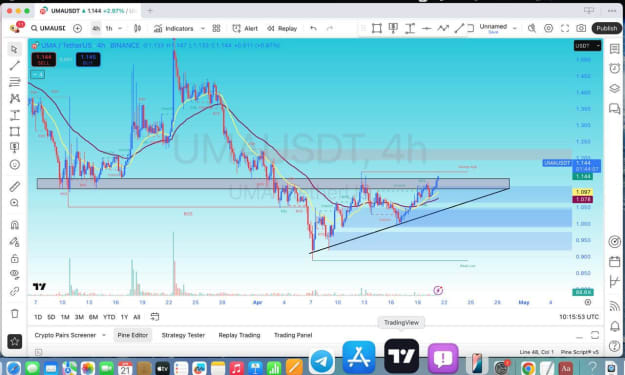
UMAUSDT (4H) Chart Analysis – Swing Trade Setup.
*UMA* is showing strong bullish momentum after forming a break of structure (BOS) and flipping multiple key zones. Price is now consolidating inside a major supply zone ($1.13–$1.15) and has formed clean higher lows with rising volume. If price sustains above this zone, it can trigger a strong continuation move. *Entry* – $1.135 to $1.145 (after candle close above) *Stop Loss* – Below $1.050 (under bullish structure invalidation) Target 1 – $1.200 Target 2 – $1.260 Target 3 – $1.320+ *🚨 Wait for clear breakout* confirmation above $1.15 with volume before entering for safe swing trade
By CryptoCurrency News about a year ago in Education