trade school
Trade school tips to keep you a step ahead; make the most out of your trade school experience as a soon-to-be electrician, dental hygienist, paralegal, nurse, graphic designer, and others.
Upcoming Dividend Stocks in India 2025 – Smart Picks for Steady Income
Introduction From an investing standpoint, dividend stock investments are one of the best methods for obtaining reward-earning passive income. It does not matter if you are a sophisticated investor or a newcomer because you will always look for stable returns; dividend stocks provide stability and earnings during times of turmoil in the market.
By Sharad.finowingsabout a year ago in Education
The Healing Value of Nutritional Nourishment
The Healing Power of Food Our overall health is most determined by what we eat. Food is not only fuel for the body — it is also a direct effecter to our mood, energy level, immunity and emotional health. Healing the body with nutrition is definitely a way you can control completely.
By Laila Sadiaabout a year ago in Education
Chet Lemon: From the Diamond to the Dugout
Chet Lemon, a name synonymous with excellence on the baseball field, is a figure whose contributions to the game extend far beyond his time in the outfield. Known for his exceptional defensive skills, dynamic bat, and leadership, Lemon’s journey through Major League Baseball (MLB) is one filled with hard work, perseverance, and passion for the sport. While his playing days are behind him, his legacy continues to resonate with fans, teammates, and the baseball community at large. This article takes a deeper dive into his journey from the diamond to the dugout and the lasting impact he left on the game.
By Muhammad Waqasabout a year ago in Education
The Book That Cost Me Nothing—But Changed Everything. AI-Generated.
The Book That Cost Me Nothing—But Changed Everything It was just sitting there. A small, beat-up paperback with a cracked spine, lying on the bench at the bus stop. I almost didn’t see it—until the wind flipped a page and made it flutter like a signal flag. I was late for work. My coffee was cold. The usual. But something about that book stopped me. Maybe it was the title: Man’s Search for Meaning by Viktor Frankl. I’d never heard of it. But I picked it up, shrugged, and tucked it into my bag. I didn’t know then how much that random decision would affect me. That night, I opened the book out of mild curiosity. The author was a Holocaust survivor and psychiatrist who spent years in concentration camps, losing nearly everyone he loved. But what struck me wasn’t just the horror of his story—it was the strength behind it. The message was clear: even in the darkest places, we can choose how we respond. We can find meaning in suffering. I’d been living in a state of quiet numbness for months. Wake up, work, eat, scroll, sleep. I wasn’t miserable, exactly. But I wasn’t alive, either. That book lit a slow, gentle fire under something frozen inside me. Frankl wrote, “When we are no longer able to change a situation, we are challenged to change ourselves.” I read that sentence five times. Then I read it again out loud. I started waking up earlier. Not to meditate or write or do something “productive”—just to be with myself for a few quiet moments. I stopped eating lunch at my desk. I started saying no to things I didn’t enjoy. None of this was dramatic. But it felt like coming back to life. It made me think: how many books had I ignored before this? How many silent teachers lined my shelves, unopened? I’d spent hundreds on streaming services, apps, subscriptions—seeking entertainment, distraction, information. But here was a book I hadn’t even bought, giving me something far more valuable: perspective. Books are strange that way. They don’t shout. They wait. Quiet, patient, full of worlds and wisdom. We don’t pay them monthly fees. They don’t auto-renew. But their value compounds in ways we often forget. Since that day, I’ve made a quiet vow to always finish a book I start, unless it truly doesn’t speak to me. I carry one with me wherever I go. And when I finish a good one, I pass it on—sometimes even leaving it at a bus stop. Because someone once did that for me, and it mattered. We live in a time of algorithms and instant answers. But a book slows you down. It invites you to listen, not scroll. To wrestle with ideas, not just consume them. And sometimes, if you’re lucky, it can rescue you from your own sleepwalking life. So yes, it was just a forgotten book. It cost me nothing. But it taught me everything. Since that day, my relationship with books has completely changed. I no longer see them as mere tools for school or entertainment. They're voices—sometimes quiet, sometimes insistent—that offer wisdom far beyond their pages. Every book now feels like an unopened letter from someone who might just understand what I need before I even know it myself. I’ve started visiting second-hand bookstores, not looking for anything in particular, but open to whatever finds me. There's something magical about the randomness of discovery—how the right title seems to show up when I need it most. And I think that’s the real value of a book. Not its price or popularity, but its ability to reach you when you least expect it, with just the right words. That one forgotten paperback reminded me how ideas live on—and how, sometimes, they wait quietly at a bus stop, just for
By Akhter khanabout a year ago in Education
Falling Forward again an again. AI-Generated.
Start writing...I used to believe success was a straight line—hard work, dedication, and eventually, the finish line. But the truth hit me like a cold wave after I was fired from my first job. I had done everything "right": graduated with honors, interned, networked. Still, I failed. And that failure? It saved me. The First Fall: Losing My Job I had just started at a tech startup, eager and bright-eyed. But I underestimated the pressure and overestimated my readiness. Within six months, I was let go. I was devastated. My confidence shattered, and I questioned if I was even cut out for the industry. But in that darkness, I started learning. I realized I had ignored feedback, been afraid to ask questions, and lacked the humility to grow. That job didn’t break me—it broke open the parts of me that needed growth. The Second Fall: A Startup Collapse Determined to bounce back, I launched my own digital product. I was convinced it would succeed. It didn’t. In less than a year, I was in debt and emotionally burned out. Failure, again. But this time, I had perspective. I started reflecting instead of retreating. I reached out to mentors. I studied business fundamentals I had ignored before. Slowly, I understood: every failure was refining my approach. The Breakthrough Years later, I co-founded another company—but this time with partners who complemented my weaknesses. We built slowly, with intention. And when success came, it wasn’t just sweet—it was built on a foundation of every mistake I had ever made. We often think failure is the opposite of success. It’s not. Failure is the training ground, the crucible, the uncomfortable classroom where success is quietly born. --- Closing Thought: If you're in the middle of a failure right now, pause. Don’t run from it. Study it. Grow from it. Because one day, you’ll look back and realize it was your greatest teacher—and your most loyal ally on the road to success
By Akhter khanabout a year ago in Education
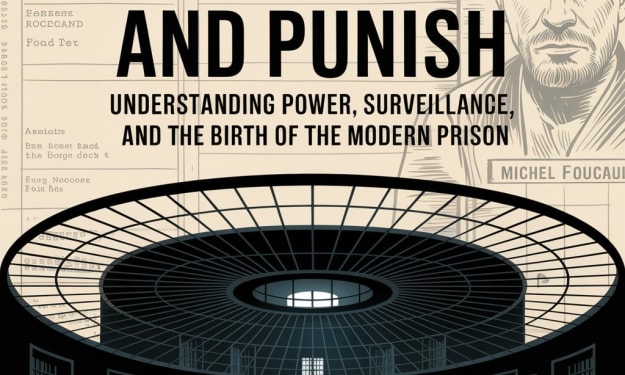
Discipline and Punish: The Birth of the Prison – A Detailed Summary and Analysis
Michel Foucault’s Discipline and Punish is a seminal work in modern philosophy and critical theory, examining the transformation of Western penal systems from public, violent spectacles to more subtle, institutional forms of discipline. Foucault traces this shift from the brutal execution of regicide Damien's in 1757 to the structured surveillance of 19th-century prisons, revealing how power operates not only through law and coercion but through internalized norms and invisible systems of control.
By Muhammad Huzaifaabout a year ago in Education
What is Debt to Equity Ratio?
Understanding this key term of debt to equity ratio is crucial for any finance student, investor, or business owner. This ratio assesses the company’s financial status and indicates the debt utilised in comparison to the equity owned by shareholders.
By Amit Pandeyabout a year ago in Education
Cup and Handle Pattern
One of the steps in technical analysis is looking at chart patterns, one of which is the Cup and Handle pattern. In the market, it is common for traders to examine this pattern to signal bullish indicators. Hence, in this blog, we will cover everything the cup and handle pattern has to offer, from its definition to how it functions, its benefits, risks, and how to apply it in trading practices.
By Amit Pandeyabout a year ago in Education