teacher
All about teachers and the world of teaching; teachers sharing their best and worst interactions with students, best teaching practices, the path to becoming a teacher, and more.
I Tried Studying Without Music for One Week — Here’s What Actually Happened
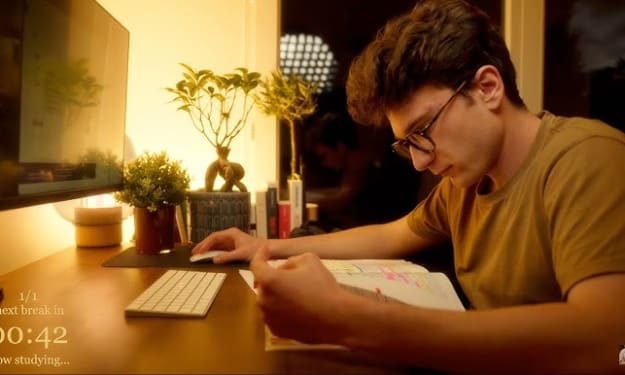
For years, I believed music made me more productive. Lo-fi beats while studying. Instrumentals while reading. Playlists carefully curated to help me “focus.” If there was silence, I filled it immediately. Silence felt empty. Uncomfortable. So when someone suggested studying without music, it sounded almost cruel. Still, curiosity won. I decided to study in complete silence for one full week. What happened surprised me. The First Day Felt Unbearable The silence was loud. Without music, every thought echoed. I became aware of the smallest sounds—the ticking clock, my breathing, the hum of electronics. My mind wandered constantly, searching for stimulation. I kept reaching for my phone out of habit. It felt like something was missing. But maybe what was missing wasn’t music. It was distraction. Music Was Hiding My Lack of Focus With music, I felt productive. Without it, I realized how scattered my attention really was. I noticed how often my mind drifted. How frequently I reread sentences. How quickly boredom appeared when there was nothing filling the gaps. Music wasn’t helping me focus. It was masking my inability to sit with one task. By Day Three, Something Shifted Around the third day, silence stopped feeling hostile. My thoughts slowed down. Reading felt smoother. I didn’t rush to escape boredom. Instead, my brain began to settle into the task in front of me. Studying felt… deeper. I wasn’t just consuming information. I was engaging with it. My Memory Improved Without Me Trying One unexpected change was memory. Without music occupying part of my attention, information stuck longer. I recalled concepts more easily. I spent less time reviewing and more time understanding. Silence created space. And in that space, learning actually happened. The Myth of “Productive Noise” Music isn’t bad. But we often use it to avoid discomfort. Silence forces us to confront: Boredom Mental restlessness Lack of clarity And those moments are where focus is built. Noise feels productive. Silence feels slow. But slow is where depth lives. The Biggest Lesson I Learned The problem wasn’t music. The problem was my dependence on constant stimulation. When I removed it, my brain didn’t collapse. It adapted. Focus isn’t something you add. It’s something you protect. What I Do Now I didn’t quit studying with music forever. But now, I choose silence when: Learning something complex Reading deeply Writing or thinking critically Music became a tool—not a crutch. Why This Matters In a world full of noise, silence feels unnatural. But focus doesn’t grow in chaos. It grows where there is space to think. Sometimes, the most powerful productivity hack isn’t an app, a playlist, or a system. It’s turning everything off.
By Waqas Ahmad11 months ago in Education
Mastering Algebra with Video Lessons
Introduction to Algebra Challenges Algebra introduces a new way of thinking that can feel unfamiliar and overwhelming for many students. The shift from straightforward arithmetic to solving equations with variables requires a deeper understanding of abstract ideas and mastering algebra, including video lessons and problem-solving techniques. Many learners find themselves stuck when faced with equations that involve multiple steps or unfamiliar symbols. Additionally, the emphasis on logical reasoning and pattern recognition can be a significant adjustment for those used to more direct calculations. Without the right support, this learning curve can lead to frustration and a lack of confidence.
By Marleze Blom11 months ago in Education
Read Across the States
During the month of March, we had a literacy night at my school. This year it was scheduled for March 14 (aka Pie Day) so the rooms were almost split between reading and mathematics. In the library, I decided to do a “Read Across the States” activity.
By Reb Kreyling11 months ago in Education
Best Laptop for Cyber Security
Cyber security isn’t just a career, it’s a battlefield. And in this fight, your laptop is your most powerful weapon. If you’re a student learning the craft, or a professional protecting networks, you need a machine built for speed, security, and reliability.
By Tab Delite11 months ago in Education
Could the Universe Be Finite? Searching for the Cosmic Edge
What Does “Finite Universe” Really Mean? At first glance, a finite universe sounds simple: a universe with a definite size. But in cosmology, finite does not necessarily mean having walls or edges like a box.
By shahkar jalal11 months ago in Education
The Physics of Gravity: Is It a Force or Geometry?
What Is Gravity? A Simple Definition At its most basic level, gravity is the phenomenon by which mass and energy influence motion. Any object with mass attracts other objects with mass. The larger the mass, the stronger the effect.
By shahkar jalal11 months ago in Education
Why We Forget 90% of What We Study — And How to Fix It
Most of us have experienced it. You study for hours. You highlight pages. You feel confident walking into the exam. And then—days or weeks later—it’s gone. Not all of it, but most of it. Names blur. Concepts fade. Facts disappear as if they were never there. This isn’t a personal failure or a sign that you’re “bad at studying.” It’s how the human brain naturally works. Understanding why we forget is the first step to learning how to remember. The Brain Was Never Designed to Remember Everything Our brains evolved to prioritize survival, not exam scores. Thousands of years ago, remembering where danger lived or where food could be found mattered far more than memorizing abstract information. As a result, the brain developed a powerful filtering system. Anything it considers unimportant or rarely used gets discarded. Psychologist Hermann Ebbinghaus discovered this in the late 1800s through what’s now called the Forgetting Curve. His research showed that without reinforcement, we forget: About 50% of new information within an hour Up to 90% within a week The brain isn’t broken—it’s efficient. Why Traditional Studying Fails Most students rely on methods that feel productive but are scientifically weak. 1. Passive Reading Reading notes again and again creates familiarity, not memory. Recognition is mistaken for understanding. 2. Highlighting Everything Highlighting too much gives the illusion of learning while bypassing active thinking. 3. Last-Minute Cramming Cramming forces information into short-term memory, where it quickly evaporates after the test. 4. Multitasking Studying with notifications, music with lyrics, or constant interruptions prevents deep encoding of information. The result? Information never makes it into long-term memory. How Memory Actually Works For information to stick, it must pass through three stages: 1. Encoding – How you take in information 2. Storage – How it’s organized in the brain 3. Retrieval – How easily you can recall it later Most studying fails at the encoding stage. If the brain doesn’t see information as meaningful or useful, it won’t store it. How to Fix It: Science-Backed Strategies That Work 1. Use Active Recall Instead of rereading, force your brain to retrieve information. Close your notes and explain the topic out loud Write what you remember from memory Use practice questions Struggling to remember is a good sign—it strengthens neural connections. 2. Space Your Learning Studying the same material across multiple days beats cramming every time. This method, called spaced repetition, signals to the brain that the information matters long-term. Small sessions. Repeated exposure. Lasting memory. 3. Teach What You Learn If you can teach a concept simply, you understand it. Pretend you’re explaining the topic to: A friend A younger student Yourself in a mirror Teaching exposes gaps in understanding faster than any test. 4. Connect New Information to What You Know The brain remembers patterns and relationships—not isolated facts. Ask: How does this relate to something I already know? Can I create an example from real life? The more connections you build, the stronger the memory. 5. Sleep Is Not Optional Memory consolidation happens during sleep. No amount of studying can replace: Adequate sleep Consistent rest cycles Sleep isn’t laziness—it’s part of learning. 6. Embrace Forgetting (Yes, Really) Forgetting isn’t the enemy. Every time you forget and then relearn, the memory comes back stronger. This process tells the brain: “This information keeps returning. Keep it.” Learning Isn’t About Time — It’s About Method Most people don’t forget because they’re lazy or unintelligent. They forget because they were never taught how learning actually works. When you study actively, space your learning, test yourself, and rest properly, forgetting slows down dramatically. You won’t remember everything—and that’s okay. But you’ll remember what matters.
By Waqas Ahmad11 months ago in Education
How Does the Universe End? 5 Scientific Scenarios (Explained)
1. Big Freeze (Heat Death): The Most Likely Ending What Is the Big Freeze? The Big Freeze, also known as Heat Death, is currently the most widely accepted scientific theory for the fate of the universe. According to this scenario, the universe continues expanding forever — but that expansion eventually leads to a cold, dark, and lifeless cosmos.
By shahkar jalal11 months ago in Education