teacher
All about teachers and the world of teaching; teachers sharing their best and worst interactions with students, best teaching practices, the path to becoming a teacher, and more.
Fully Funded Scholarships Schemes in 2024
Here are the top 10 funded scholarships, for students in 2024; Many African students dream of studying abroad but financial limitations can often stand in the way. Luckily there are funded scholarships that aim to make this dream a reality. These scholarships not cover only tuition fees, but also provide support for living expenses, travel and other related costs. In this article we will delve into the 10 funded scholarships available to African students in 2024 each offering a unique opportunity to receive a high quality education and valuable international exposure.
By Harvey Bramo Acquaah2 years ago in Education
What happen during a miscarriage
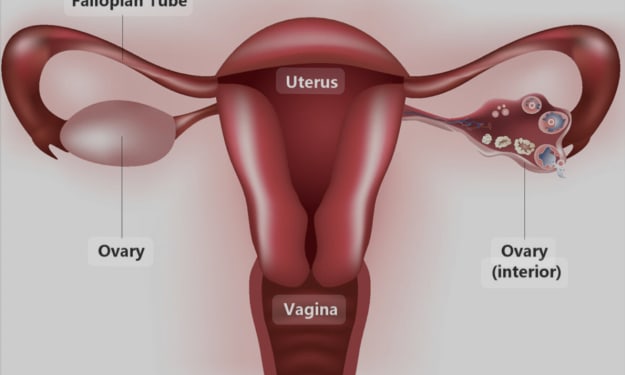
Approximately 23 million pregnancies result in miscarriage globally each year. Despite its prevalence, miscarriage remains a topic shrouded in taboo. The aftermath of such an experience can be isolating and emotionally distressing for some individuals. Misconceptions surrounding miscarriage only serve to perpetuate the stigma, causing many to unfairly blame themselves for the loss. However, it is important to note that the majority of miscarriages are unavoidable and stem from factors outside of an individual's control. These occurrences are a result of the intricate and delicate nature of the pregnancy process, which necessitates precise coordination between the fertilized egg and the uterus. In reality, out of every three fertilized eggs, only one will develop into a live birth. Therefore, it is crucial to delve deeper into the physiological changes that take place within the body during the initial 12 weeks of pregnancy, a period in which the majority of miscarriages occur. Pregnancy is sustained by a combination of hormones, including progesterone and estrogen produced by the ovaries, as well as human chorionic gonadotropin (hCG) released by the fertilized egg.Throughout the first half of each menstrual cycle, estrogen levels rise, followed by an increase in progesterone. These hormones communicate with the uterine lining to improve its blood supply and thicken its mucosa, creating an environment suitable for the growth of an early pregnancy. If an unfertilized egg reaches the uterus, these hormone levels naturally decrease, leading to contractions and the shedding of the uterine lining during menstruation. However, if the egg is fertilized, hCG is produced by its outermost layer. This hormone travels to the ovaries, stimulating the continuous release of progesterone and estrogen, which stops menstruation. hCG also attaches to receptors on the uterine lining to prevent rejection of the fertilized cell mass during implantation. This stage is critical, as up to one third of fertilized eggs fail to attach properly, often going unnoticed during a seemingly normal menstrual period. Successful attachment is just the beginning for fertilized eggs, as chromosomal abnormalities can lead to irregular development or halt embryo growth altogether. Despite common misconceptions, factors like stress, exercise, vaccination, or past birth control use rarely cause miscarriages, with the majority being attributed to genetic issues or other health factors beyond an individual's control. Some pregnancy losses may present with minimal physical symptoms, while others may involve a drop in hCG levels, followed by reduced progesterone levels, resulting in bleeding and cramping.In any scenario, there exist three treatment choices— two of which are also utilized for induced abortion procedures, when individuals decide to terminate a pregnancy. The initial option is commonly referred to as the "watch-and-wait" method. An individual waits for pregnancy hormones to decrease further, enabling the pregnancy tissue to be discharged along with the shedding uterine wall. This method is successful up to 90% of the time, but it may involve several weeks of unpredictable pain and bleeding. Some may select the second option, which involves taking the medications mifepristone and misoprostol in sequence. The first medication works hormonally by blocking progesterone receptors, while the second mimics a molecule that induces labor, triggering uterine contractions and causing the cervix to soften and dilate. Following the intake of the second medication, the process typically lasts 1 to 6 hours. It is often safely self-managed and can be carried out discreetly at home. The third potential treatment choice is vacuum aspiration. In this brief five-minute procedure, the healthcare provider numbs the cervix and then employs a thin tube connected to a syringe-like device to extract the pregnancy tissue. The selection of treatment is frequently based on the pregnant individual's medical background, timeline, expectations, and personal preferences, and all three methods have demonstrated to be secure and efficient. Nevertheless, without the medication or vacuum aspiration alternatives, an untreated or incomplete miscarriage can result in life-threatening infections and hemorrhage. Furthermore, since these are the same treatments utilized in induced abortion care, they may be more challenging to obtain and even criminalized in certain regions. Additionally, more than half of the global population does not have reliable access to essential basic healthcare services, such as reproductive health services. Pregnancy holds varying significance for individuals at different stages of life, and experiencing a pregnancy loss can be a profoundly distressing and challenging experience for many. It is crucial that individuals receive compassionate care and support during this trying period, and have access to critical life-saving treatments.
By Shan Willis2 years ago in Education
Our Graduation Project Was Chosen as the Best of the Term at the University
Hey everyone! In this post, I'll talk about the final or graduation project we did during our last year at the Computer Engineering Department of Ankara Yıldırım Beyazıt University. Without diving into the technical details, I'll give a general overview of the project and share some tips for students.
By Alparslan Selçuk Develioğlu2 years ago in Education
PEACOCK
Peacocks, the vibrant and captivating birds, are members of the Phasianidae family, which also includes pheasants and partridges. These birds are best known for the male's extravagant plumage, which they use in courtship displays. There are three primary species of peafowl: the Indian Peafowl (Pavo cristatus), the Green Peafowl (Pavo muticus), and the Congo Peafowl (Afropavo congensis). Indian Peafowl The Indian Peafowl, or blue peafowl, is the most recognizable species. Native to the Indian subcontinent, these birds have been introduced to various parts of the world. The male, or peacock, is particularly renowned for its stunning iridescent tail feathers, which can reach up to six feet in length and are decorated with eye-like patterns. These feathers are not the bird's actual tail but rather elongated upper tail coverts. During the breeding season, peacocks fan out these feathers to form a dazzling display to attract peahens. This courtship display, called "train," is accompanied by a series of calls and a dance. The peahens choose their mates based on the size, color, and quality of these trains. Researchers believe that the eyespots' symmetry and the feathers' condition are indicators of the male's genetic health. Peacocks are also known for their loud calls, which can be heard during the mating season. These calls serve multiple purposes, including attracting mates and warning other males to stay away from their territory. The peafowl’s call is often described as a high-pitched "may-awe," which can be quite startling in the wild. Green Peafowl The Green Peafowl, native to Southeast Asia, is less well-known but equally impressive. These birds are more slender and elongated compared to the Indian Peafowl. Their feathers are primarily green with a metallic sheen, and unlike the Indian Peafowl, both males and females have this iridescent plumage. However, males still possess the more elaborate and longer train used in mating displays. Green Peafowls are more elusive and are found in forested areas, often near water sources. Their populations are declining due to habitat destruction and hunting, and they are considered endangered. Conservation efforts are ongoing to protect these majestic birds and their habitats. Congo Peafowl The Congo Peafowl is the least known of the three species and is native to the dense rainforests of the Congo Basin in Africa. Unlike its Asian relatives, the Congo Peafowl lacks the long train of iridescent feathers. Both males and females have more subdued plumage, with the male having a short tail and the female possessing even shorter feathers. The males are slightly larger than the females and have a more vivid coloration. The Congo Peafowl is also a vulnerable species due to habitat loss and hunting pressures. Efforts to study and conserve this species are challenging due to their reclusive nature and the difficult terrain of their habitat. Habitat andThe Indian Peafowl (Pavo cristatus), commonly known as the peacock, is the national bird of India. This designation was officially made in 1963. The peacock was chosen for several reasons, including its rich cultural significance and its prominent presence in Indian art, mythology, and traditions. Diet Peafowls inhabit a range of environments, including forests, grasslands, and farmland. They are adaptable birds and can live in both wild and semi-wild conditions, such as in parks and estates where they have been introduced. These birds are omnivorous, feeding on a varied diet that includes seeds, fruits, insects, small reptiles, and even small mammals. Their foraging behavior involves scratching the ground with their feet to uncover food. In the wild, peafowls are often seen roosting in trees at night to protect themselves from predators. During the day, they are mostly ground-dwelling and can often be observed walking in groups. Their strong legs and sharp claws make them effective foragers. Cultural Significance Peafowls hold significant cultural and symbolic importance in many societies. In Hinduism, the peacock is associated with the god Krishna and is considered a symbol of beauty and grace. The bird is also linked with the goddess Saraswati, representing wisdom and learning. In Buddhism, the peacock symbolizes purity and the ability to thrive in difficult circumstances, much like the bird's vibrant plumage that stands out in its natural environment. In ancient Greek mythology, the peacock was sacred to Hera, the queen of the gods. According to myth, the eyes on the peacock's feathers are the eyes of the hundred-eyed giant Argus, whom Hera placed in the sky after his death. The peacock is also the national bird of India, symbolizing grace, beauty, and elegance. It appears in various art forms, including paintings, sculptures, and textiles. The bird's striking appearance has inspired countless artists and designers throughout history. Conservation and Challenges Despite their beauty and cultural significance, peafowls face several challenges in the wild. Habitat destruction due to deforestation, agricultural expansion, and urbanization poses a significant threat to their populations. In some regions, peafowls are also hunted for their meat and feathers, further contributing to their decline. Conservation efforts for peafowls involve habitat protection, legal measures to prevent hunting, and breeding programs. Protected areas and wildlife reserves play a crucial role in preserving the natural habitats of these birds. Additionally, public awareness campaigns and community involvement are essential in promoting the conservation of peafowls and their ecosystems. Conclusion Peafowls are extraordinary birds that captivate the imagination with their stunning plumage and vibrant displays. From the iconic Indian Peafowl to the elusive Green Peafowl and the mysterious Congo Peafowl, these birds showcase the incredible diversity of the avian world. Their cultural significance and ecological importance underscore the need for continued conservation efforts to ensure that future generations can appreciate the splendor of these magnificent creatures.
By Goleti thirumal 2 years ago in Education
Why you really want to attempt a meat conveyance administration for the best summer grill you'll at any point have
For the vast majority of us, it's not summer until the barbecue is started up and the protein is smoking. What's more, nowadays, you'll find that both the experience and the food have advanced. Alongside Wi-Fi-associated thermometers and pellet barbecues that make outfitting the flavorful force of smoke more straightforward than any time in recent memory, the actual meat is over and above anyone's expectations — which makes the most current secrecy of meat-based conveyance units a genuine satisfaction.
By Alfred Wasonga2 years ago in Education
Why individuals ought to be particularly cautious about food handling this occasion, as per a specialist
This Autonomy Day occasion happens as record-breaking heat waves have spread across many pieces of the US and the world, and the temperatures could be destructive. There's true capacity for record-breaking intensity and outrageous intensity risk for parts of the South and Southwest. California is probably going to be particularly hard hit, with highs passing 110 degrees Fahrenheit (43 degrees Celsius) in numerous areas.
By Alfred Wasonga2 years ago in Education
Six Generations of Computer
Computers, the remarkable machines that have revolutionized every aspect of modern life, have evolved through six distinct generations since their inception. Each generation brought significant advancements in technology, size, processing power, and usability, paving the way for the digital age we live in today. Let's delve into the fascinating journey of computer evolution across these six generations.
By Pushpendra Sharma2 years ago in Education
The Effect of Corrupt Government on Tertiary Institutions(Colleges/Universities) in under Developed Countries. Content Warning.
In developed countries, tertiary institutions such as colleges and universities are generally viewed as pillars of education, research, and innovation. However, even in these nations, the spectre of corrupt government practices can cast a long shadow over higher school articles delves into how governmental corruption impacts these institutions, exploring its effects on funding, academic integrity, research, and overall institutional reputation.
By MD MUJAHIDUL ISLAM2 years ago in Education