teacher
All about teachers and the world of teaching; teachers sharing their best and worst interactions with students, best teaching practices, the path to becoming a teacher, and more.
THE DIFFERENCE BETWEEN AI WRITING AND HUMAN WRITING . AI-Generated.
In a world where technology was advancing at an unprecedented rate, a young student I was struggling before to understand the difference between AI-generated writing and human writing. So I embark on the research to find the difference between ai writing and human writing I decided to conduct an experiment. I wrote a story by hand, pouring her heart and soul into the narrative. Then I used an AI writing tool to generate a second version of the story. When I compared the two versions, I was struck by the differences. The AI-generated story was polished and efficient, Alot of punctuation marks that made the story looked decorated and beatifying and it lacked the emotional depth and personal touch that my handmade story had. As I delved deeper into the world of writing, I discovered that there were many differences between AI-generated writing and human writing. *The Human Touch* Human writing is unique because it is infused with the writer's personality, emotions and experiences. When we write, we draw upon our own lives, observations and insights to create something original and authentic. In contrast, AI-generated writing is based on algorithms and data. While AI writing tools can analyze vast amounts of information and generate text quickly, they lack the emotional intelligence and personal experience that human writers bring to the table. *Creativity and Imagination* Human writers have the ability to think creatively and imagine new worlds, characters and scenarios. We can use our imaginations to craft unique and compelling stories that transport readers to new and exciting places. AI writing tools, on the other hand, are limited by their programming and data. While they can generate text quickly and efficiently, they often rely on familiar tropes and conventions rather than pushing the boundaries of creativity and imagination. *The Value of Revision and Editing* Human writers understand the importance of revision and editing. We know that writing is a process that requires patience, persistence and attention to detail. AI writing tools, on the other hand, can generate text quickly but they often lack the nuance and refinement that comes from human revision and editing. As I reflected on my experiment, I realized that while AI writing tools had their advantages, they could never replace the unique qualities of human writing. Human writing is a labor of love that requires creativity, imagination, and a willingness to take risks. It is a process that is infused with our personalities, emotions and experiences, it is what makes writing so rich and rewarding. So the next time you're tempted to use an AI writing tool, remember the value of human writing. Take the time to craft your own unique story and don't be afraid to make mistakes along the way. *The Future of Writing: A Balance Between Human and AI* As I continued to explore the world of writing, I began to realize that the future of writing would likely involve a balance between human and AI. While AI writing tools would continue to improve and become more sophisticated, they would never replace the unique qualities of human writing. Instead, AI would augment and support human writing, freeing writers to focus on the creative aspects of writing. And so many people don't know the difference between ai writing and human writing. I envisioned a future where writers would work alongside AI tools, using them to research, organize and edit their work. AI would help writers to identify grammatical errors, suggest alternative phrases and even provide insights into the writing process. But ultimately, the creative decisions would remain in the hands of human writers. They would use their imagination, creativity and emotional intelligence to craft stories that were unique, compelling and authentic. *The Benefits of Human-AI Collaboration* As l explored the possibilities of human-AI collaboration, I discovered several benefits through my research: 1. Increased efficiency: AI tools could help writers to research, organize and edit their work more quickly and efficiently. 2. Improved accuracy: AI tools could help writers to identify grammatical errors, suggest alternative phrases and even provide insights into the writing process. 3. Enhanced creativity: AI tools could provide writers with new ideas, suggestions and inspiration, helping them to overcome writer's block and stay creative. 4. Personalized feedback: AI tools could provide writers with personalized feedback, helping them to identify areas for improvement and develop their writing skills. *The Future of Writing Education* As I looked to the future, I realized that writing education would need to adapt to the changing landscape of writing. Students would need to learn how to work effectively with AI tools, using them to support and augment their writing. Writing education would need to focus on developing the skills that were unique to human writers, such as creativity, imagination and emotional intelligence. Students would need to learn how to use AI tools to support their writing, but also how to think critically and creatively, using their own unique perspective and voice. *Conclusion* As I reflected on my research, I realized that the future of writing was bright and full of possibilities. While AI writing tools would continue to improve and become more sophisticated, they would never replace the unique qualities of human writing. Instead, AI would augment and support human writing, freeing writers to focus on the creative aspects of writing. The future of writing would involve a balance between human and AI, with each playing to their respective strengths. As I looked to the future, I am excited to see what possibilities lay ahead. I knew that the world of writing would continue to evolve, but I am confident that the unique qualities of human writing would always be in demand. While AI writing tools would continue to improve and become more sophisticated, they would never replace the unique qualities of human writing. Instead, AI would augment and support human writing, freeing writers to focus on the creative aspects of writing and creativity will always remain in the hands and shoulders of humans.
By Henry Lucy2 years ago in Education
The Power of Writing. AI-Generated.
As a young girl, Maria had always struggled to express herself. She would get frustrated when trying to convey her thoughts and feelings to her family and friends. But everything changed when her teacher, Mrs. Johnson, introduced her to the world of writing. Mrs. Johnson encouraged Maria to write about her thoughts, feelings and experiences. At first, Maria was hesitant, but with Mrs. Johnson's guidance, she began to discover the power of writing. As Maria wrote, she found that her thoughts and feelings became clearer. She was able to process her emotions and gain a deeper understanding of herself. Writing became her outlet, her confidant and her best friend. One day, Maria wrote a story about her struggles in school. She poured her heart and soul into the story and when she finished, she felt a sense of pride and accomplishment. Mrs. Johnson read the story and was impressed by Maria's talent. But more importantly, Maria's writing had helped her to overcome her struggles. By putting her thoughts and feelings into words, she had gained a new perspective and found the confidence to succeed. As Maria continued to write, she began to realize the impact it had on her life. She was able to communicate more effectively with others and her writing became a way for her to connect with people on a deeper level. But the power of writing didn't stop there. Maria soon discovered that it could also be a powerful tool for change. She began to write about social issues that affected her community, such as poverty, inequality and injustice. Through her writing, Maria was able to raise awareness about these issues and inspire others to take action. She realized that writing was not just a form of self expression, but also a way to make a positive impact on the world. As Maria grew older, she continued to write and inspire others. She became a published author and her books were read by people all over the world. But more importantly, she never forgot the power of writing and the impact it had on her life. Maria's story is a testament to the power of writing. It shows how writing can be a tool for self expression, communication and change. Whether you're a student, a professional or simply someone who loves to write, the power of writing can transform your life. *The Benefits of Writing* 1. *Self expression: Writing allows you to express your thoughts, feelings and experiences in a unique and creative way. 2. *Communication : Writing helps you to communicate more effectively with others, whether it's through a letter, email or report. 3. *Problem-solving: Writing can help you to process your thoughts and feelings and gain a deeper understanding of yourself and the world around you. 4. *Creativity: Writing allows you to tap into your creative potential, whether it's through fiction, poetry or journalism. 5. *Personal growth: Writing can help you to develop a greater sense of self awareness, confidence and self-esteem. *Tips for Developing Your Writing Skills* 1. Start a journal: Writing in a journal can help you to develop your writing skills and process your thoughts and feelings. 2. Read widely: Reading can help you to develop your writing skills by exposing you to different writing styles, techniques and genres. 3. Practice regularly: Writing regularly can help you to develop your writing skills and build your confidence as a writer. 4. Seek feedback: Seeking feedback from others can help you to identify areas for improvement and develop your writing skills. 5. Be patient: Writing is a skill that takes time to develop. Don't be discouraged if you don't see improvement right away. Keep writing and you will eventually see progress. *The Impact of Writing on Mental Health* Writing has also been shown to have a positive impact on mental health. By putting thoughts and feelings into words, individuals can process and release emotions, gain perspective and develop a greater sense of self-awareness. Studies have shown that writing can: 1. Reduce stress and anxiety: Writing can help individuals process and release emotions, leading to a reduction in stress and anxiety. 2. Improve mood: Writing can help individuals develop a more positive outlook and improve their mood. 3. Enhance self esteem: Writing can help individuals develop a greater sense of self awareness and self esteem. 4. Support personal growth: Writing can help individuals process and reflect on their experiences, leading to personal growth and development. *The Power of Writing in Education* Writing is also a powerful tool in education. By incorporating writing into the curriculum, educators can help students develop their writing skills, critical thinking and creativity. Writing in education can: 1. Improve academic performance: Writing can help students develop their critical thinking and analytical skills, leading to improved academic performance. 2. Enhance creativity: Writing can help students develop their creativity and imagination. 3. Develop communication skills: Writing can help students develop their communication skills, including writing, speaking and presenting. 4. Support personal growth: Writing can help students develop a greater sense of self awareness and self-esteem. *Conclusion* In conclusion, the power of writing is undeniable. Whether it's for self expression, communication or personal growth, writing has the ability to transform lives. By incorporating writing into our daily lives, we can develop our writing skills, critical thinking and creativity. We can also improve our mental health, academic performance and communication skills. So, take up the pen and start writing. You never know where it may lead you.
By Henry Lucy2 years ago in Education
The Rock in Your Kidney
Ever heard of a kidney stone that could rival a boulder? The record-breaker tipped the scales at over a kilogram and measured a whopping 17 centimeters in diameter—nature’s own heavyweight champion of pain. Don’t worry, though; you haven’t swallowed a rock the size of a coconut. Instead, these formidable foes form quietly inside your body, only to launch a surprise attack when they decide to move.
By Eyo Otoabasi2 years ago in Education
Successful People’s Habits for Making the Right Decisions
Making the right decisions is a key factor in success. Every day, we make choices that shape our future. Successful people develop habits that help them make smart choices in their personal and professional lives. These habits are not just about intelligence; they involve patience, discipline, and experience. Good decision-making requires a balance of logic, emotions, and intuition. Below are some key habits that successful people follow when making decisions.
By Niranjon Chandra Roy2 years ago in Education
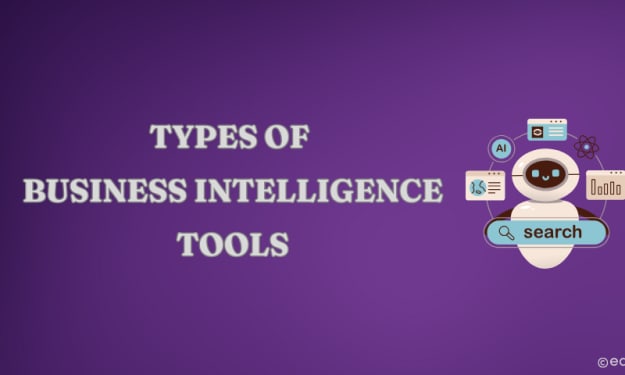
Types of Business Intelligence Tools
As a Senior Data Analyst, you understand the importance of using the right business intelligence (BI) tools. These tools help turn raw data into useful insights, making it easier to make smart business decisions. In this blog, we’ll explore different types of BI tools, their features, and how they can improve your Data Science and analytical work. By using the right BI tools, you can enhance data visualization, reporting, and predictive analysis to support better decision-making.
By Harish Kumar Ajjan2 years ago in Education
Key Responsibilities of a Mathematics Teacher. AI-Generated.
Mathematics teachers play a crucial role in shaping students' understanding of mathematical concepts, fostering problem-solving skills, and preparing them for academic and real-world challenges. Their responsibilities go beyond teaching equations and formulas; they inspire analytical thinking, logical reasoning, and a love for numbers. Below are the key responsibilities of a mathematics teacher.
By Jayson Mehra2 years ago in Education
The Future of Web Development: Trends to Watch in 2025
Fast development in web technology requires developers and businesses together with tech enthusiasts to follow changing trends in order to succeed. Several major changes along with innovations will transform our web building practices and web usage during the years leading up to 2025. The essential movements which will define web development take us into an understanding of its future direction.
By Meghashree2 years ago in Education
Failing Upwards: How Setbacks Can Lead to Success
Failure is often seen as the opposite of success, but in reality, it is one of the most crucial steps toward it. The concept of failing upwards highlights the power of learning from mistakes, embracing setbacks, and turning obstacles into opportunities. Many of the world’s most successful people have failed repeatedly before reaching their greatest achievements. Instead of viewing failure as a stopping point, they saw it as a stepping stone to something greater.
By Samriti Mattu2 years ago in Education
William Savary's Career Path in Investment Banking
William Savary's investment banking career is proof of his commitment, foresight, and unwavering quest for excellence in the industry. His path, which is replete with noteworthy turning points and life-changing successes, reflects his development as well as how investment banking has changed over the years. Savary's career has had a long-lasting effect on international finance, despite his modest beginnings and rise to prominence in the field. This article delves into the key moments and decisions that defined his career in investment banking.
By williamsavary2 years ago in Education
The Power of Diverse Leaders: Shaping the Future of Inclusive Success
In today’s interconnected world, leadership is evolving beyond traditional models to embrace diversity and inclusion. Organizations are increasingly recognizing that diverse leaders drive innovation, creativity, and sustainable success. By bringing unique perspectives and experiences to the table, diverse leadership fosters stronger decision-making, improved problem-solving, and a more inclusive workplace culture.
By Samriti Mattu2 years ago in Education
A Song, a Spell, and a Silver Prize: "Pyaare Dost" Episode 03 – The Winter Party
The enchanting universe of "Pyaare Dost" returns with another exciting quest, brimming with music, magic, and winter magic! Episode 03: The Winter Party sets our favorite Pet Pals on an amazing quest, where they have to employ their skills, teamwork, and wit to defeat the most challenging of challenges.
By BrandSoft Solutions2 years ago in Education