teacher
All about teachers and the world of teaching; teachers sharing their best and worst interactions with students, best teaching practices, the path to becoming a teacher, and more.
How 5G Can Change the World
In today's fast-paced world, technology is evolving faster than ever before. One of the most anticipated advancements is the widespread rollout of 5G technology. While many people associate 5G simply with faster internet on their smartphones, the truth is that 5G is much more powerful than that. It has the potential to transform industries, revolutionize daily life, and change the world in ways we are only beginning to understand.
By Abdul Nasir 2 years ago in Education
Cryptocurrency as a Payment Method
In the past decade, cryptocurrencies have evolved from a niche curiosity to a serious contender in the financial world. Digital assets like Bitcoin, Ethereum, and stablecoins, which were initially created as an alternative to conventional money, are increasingly being used as payment methods both online and offline. However, what draws people to crypto payments and what obstacles remain? Why Use Crypto for Payments?
By abdul hakim2 years ago in Education
2025's Top 10 Universities In The World
Global university rankings are essential for directing scholars, researchers, and students in the quickly changing field of higher education. Two of the most prestigious rankings, the Times Higher Education (THE) Rankings and the QS World University Rankings, have once again highlighted the universities at the forefront of innovation, research, sustainability, and global influence in 2025.
By Daily Article2 years ago in Education
The Influence of the Gut Microbiome on Overall Health
Abstract Microbiomes, complex communities of microorganisms in the gastrointestinal tract, play a central role in digestion, metabolism, and neurological function. The Symbiosis remnant in the microbial composition was associated with chronic diseases such as inflammatory intestinal illness and mental health disorders. This reassessment synthesizes current evidence on the mechanisms from which the other and the hospital victimology, emphasizing bilateral communication with the immune system, production of bioiathy, and intestinal modeling, derive. The last case trials of the last RCT justify the microbial relationships and conditions as the hardships cloud the compute and the UCRUMOTON CLOTHS. Therapeutic interventions, including probiotic and fecal transplants, highlight the potential of the microbiome as a target for the prevention of illness and treatment.
By Dr.abdul wahab2 years ago in Education
Tomorrow’s Utopia
The Bright Future: Innovation's Utopian Dream and Its Hidden Shadows The year is 2150. Humanity has transcended scarcity. Radical innovation, once a slow crawl through bureaucracy and doubt, exploded in the 21st century's final decades, giving rise to a world unrecognizable to those who came before. Energy flows freely from compact fusion reactors. Food is synthesized perfectly at the molecular level. Diseases have been eradicated by Nano-medicine. AI systems, once feared as existential threats, are now benevolent guides, managing cities, resources, and even mediating disputes. Poverty, hunger, and war are relics of a darker time.
By Tanveer Ahmad 2 years ago in Education
A Box, a Jersey, and a Goodbye
Start writing... He could still remember the moment she gave him that little box. It was wrapped with a tiny gold bow, and even though he was never the smartest one between them — that was always her — he could tell how excited she was. Thinking back, it was crazy how young they were then. It felt like a lifetime ago, yet somehow, it also felt like yesterday. Now, they sat together in his mom’s old 2008 Camry. The windows fogged up from the cold, Ohio winter air. Sure, the car wasn't anything fancy, especially parked in the CAK airport’s cell phone lot. But it still worked, and that was enough. When he first got the keys, it felt like the whole world was open to them. But a tank of gas can only take you so far, even in a Camry. He thought back to the day he opened that little box. She had laughed like a maniac as he ripped through the wrapping paper, not even stopping to notice the color. Inside was a jersey, rolled up neatly. She always teased him for burning his old LeBron jersey in anger years ago. He never regretted that, but this new jersey—this one he wore proudly every game that season. She had said things would be different now. And she was right. She was always right. He shifted in his seat, wanting to turn the heat up. She always insisted on arriving too early for flights—a habit she said she got from her dad. She was resting in the passenger seat, her skin glowing from one sunny semester spent down in Florida. Even surrounded by the harsh, frozen world of Ohio winter, she looked peaceful, like she belonged somewhere warmer. She had finally gotten that letter — the one she had dreamed about for so long. She called it her ticket out. And it truly was. She had always hated the cold, gray life of the Rust Belt. Only once before had he seen her smile that big. It seemed perfect that the acceptance letter’s colors were wine and gold. Without thinking, he scratched at the jersey he had thrown on over his hoodie when he went to pick her up. It felt right somehow. She stirred a little next to him. The clock on the dashboard told him it was almost time. “Morning, sunshine,” he said with a quiet smile. She checked her watch and leaned her head back against the fogged-up window. For a second, he hoped she would fall back asleep. Maybe if she stayed asleep, she wouldn’t have to leave. Maybe if time just stopped, things wouldn’t have to change. But she didn’t fall back asleep. She opened her eyes, and he shifted the car into drive. They drove in silence — the kind of silence that was never awkward between them. He liked it. She liked it, too. She always said she enjoyed just watching the world pass by. Sometimes, she would ask him where he thought all the other travelers were heading — the cars on the freeway, the planes overhead. He always guessed they were going to Cleveland or Cincinnati. She always guessed somewhere warm. Always. When they reached the airport’s departure lane, she reached for the door handle but hesitated. Their eyes met. In that moment, he noticed a shade of auburn in her eyes that he had never truly appreciated before. A perfect mix of gold and wine. He knew that look. He had seen it once before. And somehow, he knew he would never see it again. “Fly safe,” he said, voice cracking a little. “I will,” she answered with a soft smile. For a tiny moment, the excitement in her eyes flickered with something else — sadness, maybe. Then she stepped out of the car and disappeared into the airport. And just like that, she was gone. --- Author's Note: Most of my writing usually leans toward fantasy or science fiction. This time, I wanted to tell a simple, human story — no spaceships, no magic. Just two young people and a moment they’ll never forget. Even though I’m not a big basketball fan or from Ohio, this story was inspired by a song that made me feel something real. If you liked this piece, feel free to leave a like or a comment below. Every bit of support helps me keep writing (and keep my coffee cup full!). Want more heartfelt stories? Check out my best work linked below.
By Qaseem Ahmadzai2 years ago in Education
How the International Tutoring Market Is Quietly Transforming Education
In the past few years, tutoring has shifted from a simple after-school help to a global, dynamic industry. Students and families are no longer looking just for academic support; they're searching for personalized experiences, flexible schedules, and new ways to connect with learning. This quiet but powerful change is being led by entrepreneurs and educators who are rethinking what tutoring can mean — and who it should serve.
By Jamie Gold2 years ago in Education
The One Secret Your Brain Hides from You Every Day
Introduction: The Whisper You Can’t Ignore What if your brain is keeping a secret from you right now? Not a little white lie, but a truth so profound it could rewrite how you see yourself, your choices, and the world around you. Every day, your mind filters reality, hiding a powerful truth that shapes your life in ways you’d never suspect. This isn’t some sci-fi conspiracy—it’s science, psychology, and a touch of human magic. Want to know what your brain isn’t telling you? Keep reading, because this secret might just change everything.
By OptimalEdge2 years ago in Education
The Hidden Power of Your Words: How Writing on Vocal Can Change Your Life
Introduction: The Spark That Ignites a Revolution What if the words you scribble in your notebook, the thoughts you whisper to yourself at 2 a.m., or the stories you’ve never dared to share could change your life? Not just a little—dramatically. Imagine a platform where your voice isn’t just heard but celebrated, where your ideas could ripple across the globe, inspiring strangers, sparking debates, or even earning you a paycheck. That platform exists, and it’s called Vocal. But this isn’t just about a website—it’s about unlocking the power of you. Ready to discover why your words matter more than you think? Keep reading, because this might just be the push you’ve been waiting for.
By OptimalEdge2 years ago in Education
Scientists Discover "Olo" — A New Color Never Seen by Human Eyes Until Now
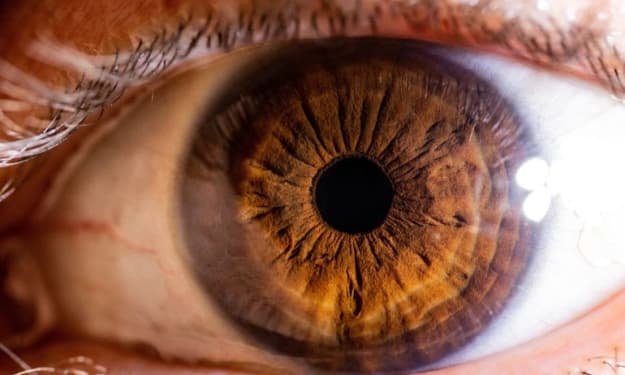
For centuries, humans have believed that the colors we see represent the full spectrum of visible light. But what if that wasn’t the whole story? In an astonishing breakthrough, scientists from the University of California, Berkeley, and the University of Washington School of Medicine have unveiled a discovery that could change the way we think about color forever. They have introduced a brand-new color experience—something never before seen by the human eye—called "olo." If you’re wondering what "olo" looks like or how it's even possible to perceive a "new" color, keep reading. This discovery is not only reshaping our understanding of vision but also opening exciting new possibilities for science, medicine, and technology. What Exactly Is "Olo"? "Olo" is described by researchers as a deeply saturated teal, a color unlike any we naturally experience. But here's the twist: "olo" cannot be seen under normal lighting or with regular human eyesight. To perceive it, scientists had to stimulate the human retina in a completely new way, isolating specific cells that are never stimulated alone under natural conditions. This new color was revealed using a device known as Oz, named after the Wizard of Oz, hinting at its almost magical capabilities. Through advanced laser technology, researchers targeted particular cells in the retina responsible for green light detection, allowing test subjects to experience "olo" for the first time. How Do Humans Normally See Color? To appreciate the significance of this discovery, it’s important to understand how human vision works. Our eyes detect colors using three types of cone cells, each sensitive to a specific range of light wavelengths: S-cones detect short wavelengths (blue). M-cones detect medium wavelengths (green). L-cones detect long wavelengths (red). Every color we perceive results from the combined stimulation of these cones. For instance, when both S and M cones are stimulated, we might perceive cyan. When all three cones are stimulated equally, we see white. However, the natural overlap between the cones means it’s impossible for one type, like the M-cone, to be stimulated entirely on its own under regular conditions. This overlap limits our color perception—until now. How Was "Olo" Discovered? The key to discovering "olo" was isolating the stimulation of just the M-cones without simultaneously triggering the S- or L-cones. This was achieved using the Oz device, which sends finely tuned laser pulses directly into the eye. Unlike traditional light sources that flood the retina with broad-spectrum light, the Oz device can pinpoint and activate individual photoreceptors with extraordinary precision. The result? A visual experience that exists outside the boundaries of normal human vision—leading to the sensation of seeing "olo." This technological feat builds on decades of research into color vision and laser-assisted retinal imaging. Originally, the Oz device was designed to study and diagnose eye diseases at a cellular level. However, its ability to isolate photoreceptor stimulation has now led to an unexpected—and groundbreaking—scientific revelation. Why Is This Discovery Important? At first glance, the idea of a "new color" might seem like just an interesting novelty. But its implications are much deeper. First, discovering "olo" challenges our understanding of how the brain interprets sensory information. It proves that the colors we see are not a direct representation of physical reality but a construct created by our neural wiring. With the right technology, it’s possible to unlock experiences that would otherwise remain hidden. Second, this research could lead to practical advances in medicine, particularly in treating color blindness and visual disorders. By learning how to manipulate the brain’s color-processing mechanisms, scientists might eventually develop new therapies that expand or restore color perception for individuals with visual impairments. Third, this work opens the door to futuristic applications in augmented reality (AR) and virtual reality (VR). Imagine a VR headset that can stimulate your retina in such a way that you experience colors beyond the visible spectrum, creating more immersive and mind-bending digital environments. Can We Ever See "Olo" Without Special Equipment? Unfortunately, no—at least not yet. "Olo" is only visible when the retina is stimulated in an extremely specific way that normal light cannot replicate. This means that experiencing this new color requires the use of specialized devices like Oz, which are currently limited to research settings. However, as technology continues to evolve, there may come a time when similar retinal stimulation devices become available for broader public use. Someday, "olo" could become a part of everyday life—or at least an experience available at science museums, art installations, or even through advanced gaming technology. What Does "Olo" Look Like? Those who have seen "olo" describe it as an intensely vibrant teal—richer and more saturated than any teal that can be printed, painted, or displayed on a screen. However, because it doesn’t exist within the standard color gamut of human vision, any attempt to reproduce it digitally would fail. This means that no photograph, painting, or video can capture the experience of "olo." It must be seen to be believed—and for now, it remains a color known only to a few who have had their retinas specially stimulated. Final Thoughts: A New Frontier in Human Experience The discovery of "olo" is more than just a scientific curiosity; it represents a new frontier in human perception. By demonstrating that there are aspects of reality beyond the reach of our natural senses, it reminds us how much we still have to learn about the world—and ourselves. As research continues, "olo" could pave the way for further exploration of sensory experiences, offering tantalizing possibilities for medicine, technology, and even art. In a world where it often feels like everything has already been discovered, finding something genuinely new is rare—and magical. Thanks to the brilliant work of these pioneering scientists, we can now say that even the colors we see are not the full story. Stay tuned—because the future of color is just getting started.
By NextGen Mobile Tech2 years ago in Education
Diabetes Research in 2025: Exploring Personalized Medicine and Advanced Technologies Effectively
Introduction Millions of people worldwide suffer with diabetes, a serious health condition. Diabetes research is advancing quickly in 2025, particularly in the fields of advanced technology and personalized treatment. Better health and a higher quality of life are the results of these advancements in diabetes management for both physicians and patients. This article examines the most recent developments in diabetes research, emphasizing how new technology and tailored treatment are transforming our knowledge of and approach to treating the disease.
By Dr.abdul wahab2 years ago in Education