teacher
All about teachers and the world of teaching; teachers sharing their best and worst interactions with students, best teaching practices, the path to becoming a teacher, and more.
Nutritional value and various kinds of advantage of eating eggs
Eggs have forever been a wellspring of sustenance for individuals. They are a urgent and important element for cooking. Not to fail to remember their extraordinary synthetic arrangement, this is fundamental for the vast majority baking responses.
By Mohammad Nasim2 years ago in Education
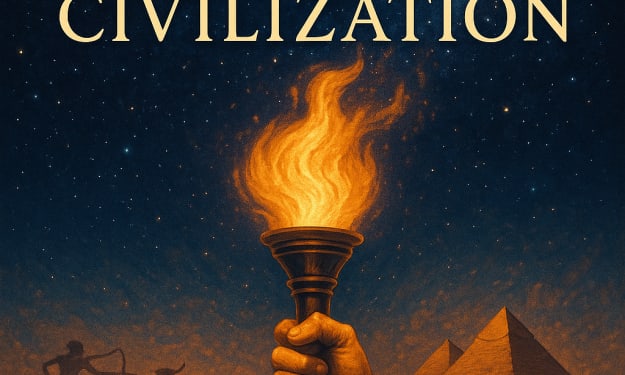
"The Flame of Becoming: A Story of Humanity"
In the silence before time, there was only darkness — a void without thought, without breath. Then came the spark. From a single cosmic eruption, stars were born, flung like seeds into an endless garden. Among these stars, in a forgotten corner of one spiral galaxy, a small sun ignited. Around it danced planets — one of which, blue and trembling with oceans, would become the cradle of a miracle. Earth, over ages, sculpted herself. Mountains broke the sky, rivers carved the land, and winds whispered the first lullabies. From this restless soil, life rose — first as trembling cells in shallow seas, then crawling, swimming, leaping, and finally, standing tall. Among these beings, there emerged a strange creature — frail in flesh but fierce in fire. They were not the strongest, nor the fastest, but they carried something no other beast possessed: curiosity. They looked up not just to see, but to wonder. They asked questions the stars did not answer. These were the first humans. They lit fires not just for warmth, but for stories. Around flickering flames, they painted their dreams on cave walls — of spirits in the sky, of beasts they hunted, of fears they could not name. Fire became their companion, not just of survival, but of imagination. They wandered across continents, carried by hunger, hope, and the need to know what lay beyond the next hill. They built villages near rivers and sang songs to the moon. They tamed wild beasts and planted seeds, learning slowly the rhythm of the earth. Each act was a step — hesitant, sometimes faltering — toward something greater. With time, they learned to speak not just in sounds but in symbols. Words gave shape to thought, thought gave shape to belief, and belief gave shape to civilization. They carved laws in stone, built temples that touched the sky, and asked the heavens for meaning. They fought wars — for land, for gods, for pride. They spilled blood, destroyed, conquered, and wept. Yet even in ruin, they rebuilt. The flame of becoming flickered, but never died. Empires rose and fell like the tides. Great minds emerged, questioning everything — “What is truth?” “What is the soul?” “What lies beyond the stars?” These questions burned in the minds of dreamers: Socrates under the Athenian sun, Buddha beneath the Bodhi tree, Confucius walking among students in ancient China. Each sparked a new light in the growing fire of knowledge. From scrolls to printing presses, from telescopes to rockets, humanity stretched beyond its limits. It split the atom, decoded the gene, stepped on the moon, and mapped the invisible web of the cosmos. Yet for all its triumphs, it still stood fragile — for war remained, hunger lingered, and the earth groaned under the weight of its children’s ambition. But humanity is not defined by its falls — it is defined by its rising. Even in its darkest hours, a quiet defiance endures — a belief that tomorrow can be brighter. In the slums where children learn to read by candlelight, in the labs where scientists labor to cure the incurable, in the forests where protectors shield the last ancient trees — the flame continues. It lives in those who forgive after great pain, who plant trees knowing they will never sit in their shade, who build bridges instead of walls. It is in the artist's brush, the teacher’s chalk, the activist’s cry, the mother's lullaby. Humanity is not a straight line. It stumbles, it forgets, it learns again. But in each generation, there are those who carry the fire forward — not of destruction, but of creation, connection, and compassion. And now, as it stands on the brink of new frontiers — artificial minds, distant planets, vast networks of knowledge — it must decide not just what it can do, but what it should do. Will it remember that it came not from machines or greed, but from stardust and stories? Will it protect the only world it has known, or trade wonder for control? Will it build futures where all can belong, or create illusions of progress while leaving millions behind? These are the questions of the next chapter. And though the answers are uncertain, the flame remains — fragile yet fearless. It burns in you. Because you are the latest bearer of this ancient fire — the same fire that once warmed the hands of a child in a cave, that lit the scrolls of Alexandria, that guided the sails of explorers, and that now illuminates screens and hearts across a connected world. The story of humanity is not yet finished. It is still being written — with every act of kindness, every question asked, every hand held, every injustice challenged, every boundary crossed not with conquest, but with courage. This is the flame of becoming. Guard it well.
By Arjumand Said2 years ago in Education
Asthma in India: A growing health crisis needing urgent attention
Asthma in India: A Growing Health Crisis Needing Urgent Attention Asthma, a chronic respiratory condition, is emerging as a significant public health challenge in India. Despite being preventable and manageable, the country bears a disproportionate burden of asthma-related morbidity and mortality. With over 34 million individuals affected, India accounts for approximately 13% of the global asthma cases.
By Abjol Hussain Laskar2 years ago in Education
The Light That Changed the World
The Glowing Marvel: A Journey Inside the Humble Light Bulb Have you ever stopped for a moment to truly appreciate the light bulb? A small glass sphere. A glowing filament. A simple flick of a switch—and the darkness disappears. We use them every day, rarely thinking about the miracle hidden inside. But if you dive into the story of the light bulb, you’ll find a tale filled with curiosity, failure, triumph, and transformation. The humble light bulb is not just a utility—it’s a symbol of human progress, resilience, and brilliance. A World Before Light Imagine living in the 1800s. As the sun set, the world would be swallowed by darkness. People depended on candles, oil lamps, and gas lights to see at night. These sources were dim, dangerous, expensive, and unreliable. Nights were long, productivity was limited, and life paused after sunset. Society was bound by the natural cycle of day and night. But all of that changed with one spark. The Long Road to Illumination The invention of the light bulb wasn’t the work of one man in a single night. It was the result of decades of experiments and contributions from inventors across the world. In 1802, Humphry Davy created the first electric light by connecting wires to a battery and passing current through a strip of platinum. It was bright—but far from practical. In the following years, many others tried to improve this concept. British scientist Warren de la Rue, American inventor Joseph Henry, and English physicist Joseph Swan all made notable attempts. But it was Thomas Edison, in 1879, who gave us the first commercially viable, long-lasting light bulb. Edison didn’t just invent the light bulb—he invented the system that made it useful. Power generation, distribution, sockets, switches—he imagined it all. That’s what made his contribution revolutionary. Lighting Up the World Edison’s bulb burned for over 1,200 hours. The world was never the same again. Factories began running night shifts. Students could study after sunset. Shops remained open longer. Streets were lit, crime decreased, and public life expanded into the night. Cities sparkled with artificial daylight, and human civilization took a leap forward. All of this, thanks to a tiny object that fits in the palm of your hand. Evolution of a Genius Invention The journey didn’t stop with Edison. The incandescent bulb, though groundbreaking, used a lot of energy. Over time, scientists developed better alternatives. Halogen bulbs lasted longer and burned brighter. Fluorescent lamps were more energy-efficient. CFLs (Compact Fluorescent Lamps) became a common sight in homes. And today, LED bulbs dominate the market—offering unmatched efficiency, lifespan, and flexibility. Modern LED bulbs can change color, adjust brightness automatically, and even sync with music or your mood. Some are controlled via smartphones, others respond to voice commands. Yet, their core purpose remains the same: to push away the darkness. The Symbolism of the Bulb The light bulb is more than a technological marvel—it’s a cultural icon. It represents ideas, innovation, and inspiration. In cartoons, when a character has an idea, a light bulb pops up above their head. In daily speech, we say “a light bulb went off in my mind” to describe sudden insight. The bulb is a symbol of clarity. Of thought. Of possibility. Inside the Glass Look closer, and you’ll find incredible precision and engineering. A filament made of tungsten, coiled tightly, heats up to thousands of degrees Celsius and glows. It’s surrounded by inert gases like argon to prevent burning. The glass is not just a cover—it protects, insulates, and magnifies the glow. All these components, working in perfect harmony, give us clean, safe, and instant light. Such brilliance in such a small form! Light for the Future Today, lighting is smarter and greener. Solar-powered bulbs bring light to villages without electricity. Emergency bulbs charge during the day and light up during power cuts. Some bulbs even kill bacteria or help plants grow indoors. In the near future, light bulbs might become sources of internet via Li-Fi technology, or help regulate sleep by adjusting color temperatures naturally. From humble beginnings to high-tech marvels, the bulb’s journey mirrors our own—as humans, ever evolving, ever reaching for more.
By Noman Afridi2 years ago in Education
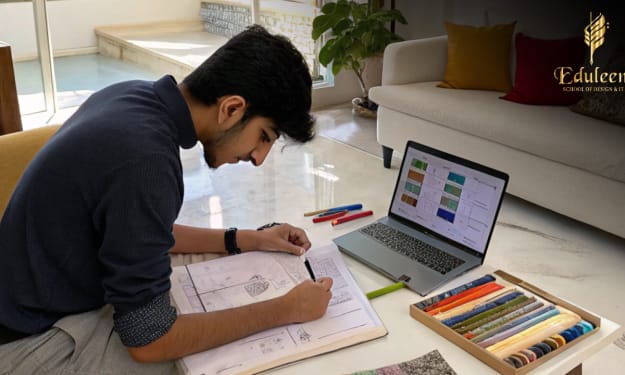
Interior Design Courses in Indiranagar, Bangalore: Transforming Passion into Profession
Nestled in the vibrant heart of Bangalore, Indiranagar is more than just a bustling neighborhood; it's a hub for creativity and innovation. For aspiring designers, this locale offers a unique blend of traditional aesthetics and modern design sensibilities. Enrolling in Interior Design Courses in Indiranagar, Bangalore provides an opportunity to immerse oneself in a community that values artistic expression and practical application.
By Designz_Amaze2 years ago in Education
From Shadows to Spotlight.
In a little town, where individuals knew each other by title, lived a boy named Daniel. He was calm, modest, and regularly favored to stay unnoticed. In school, he would sit at the back of the classroom, trusting the educator wouldn’t call on him. He had a voice, but he dreaded utilizing it. The thought of talking in front of a swarm sent shudders down his spine.
By Fayaz ahmad2 years ago in Education