student
From balancing your course load to forging relationships with classmates to extracurricular involvement, these are the tried and true methods to nail your career as a student.
Stop Negative Thinking
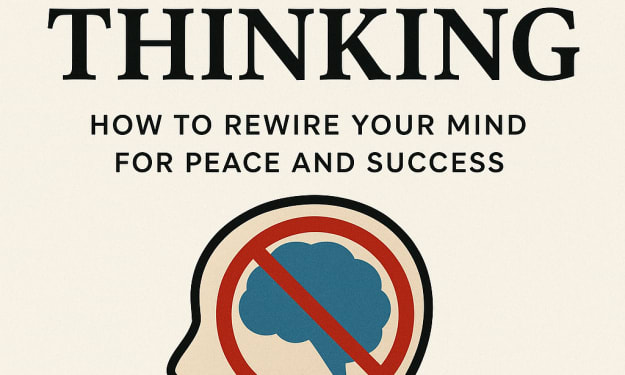
Negative thinking is more than just occasional worry or stress. It’s a pattern of thoughts that focuses on failure, self-doubt, and pessimism. These thoughts can affect your decisions, emotions, and even your physical health. Exercise: Write down recurring negative thoughts for one week. Seeing them on paper helps you understand their frequency and triggers. The Root of Negativity Most negative thoughts stem from fear, past experiences, social conditioning, or low self-esteem. Identifying the source is the first step to control them. Example: If you fear public speaking due to a past embarrassing moment, acknowledging it helps reduce its power. How Negative Thinking Affects Your Life Negative thoughts influence your relationships, career, and happiness. Chronic negativity can lead to stress, anxiety, depression, and missed opportunities. Tip: Notice moments when you self-sabotage due to negative thinking and journal about them. Awareness is Power Before you can stop negative thoughts, you must recognize them. Start by pausing and asking yourself: “Is this thought helping me or hurting me?” Exercise: Practice mindfulness for 5 minutes daily, observing your thoughts without judgment. Challenge Your Thoughts Not every thought is true. Negative thinking often distorts reality. Question your assumptions: “Is this fact or my interpretation?” Example: Thinking “I always fail” is not accurate—focus on evidence of your successes. Replace Negativity with Positivity Once you identify negative thoughts, replace them with positive or neutral alternatives. This doesn’t mean ignoring problems—it means focusing on solutions. Exercise: Turn “I can’t do this” into “I will try and learn from this.” Practice Gratitude Gratitude shifts focus from what’s wrong to what’s right. Daily gratitude can rewire your brain for positivity. Exercise: List 3 things you’re grateful for every morning or night. Surround Yourself with Positivity People, media, and environments influence your thinking. Engage with uplifting content and supportive individuals. Tip: Limit time on negative news or social media accounts that trigger stress. The Power of Self-Talk Your inner dialogue shapes your reality. Speak to yourself kindly, encouragingly, and with patience. Exercise: Each time you catch yourself thinking negatively, say a positive affirmation out loud. Mindfulness and Meditation Mindfulness keeps you grounded in the present moment, reducing worry and rumination. Exercise: Meditate for 10 minutes, focusing on your breath. Let negative thoughts pass without attachment. Visualize Success Visualization helps rewire the brain. See yourself achieving goals, overcoming challenges, and handling stress calmly. Exercise: Spend 5 minutes imagining a positive outcome for a current challenge. Break the “What If” Cycle “What if” thinking fuels anxiety. Focus on what is rather than what could go wrong. Exercise: Replace “What if I fail?” with “I will do my best and learn.” Develop Resilience Challenges are inevitable. Resilience helps you bounce back instead of spiraling into negativity. Tip: Reflect on past challenges and how you overcame them. Recognize your inner strength. Limit Comparisons Comparing yourself to others fuels self-doubt. Everyone’s journey is unique. Exercise: Write your achievements and progress, however small, and celebrate them daily. Cultivate Optimism Optimism is a habit. Expect good outcomes, focus on solutions, and trust your abilities. Exercise: Start each day by writing one positive intention: “Today I will focus on…” Physical Health and Mental Clarity Exercise, sleep, and nutrition impact mental patterns. A healthy body supports a healthy mind. Tip: Daily movement—even 10 minutes—reduces stress hormones and clears mental clutter. Learn from Mistakes Mistakes are not failures—they are feedback. Negative thinking often magnifies mistakes unnecessarily. Exercise: For every mistake, write down the lesson learned and one positive takeaway. -Use Affirmations and Journaling Affirmations reinforce positive thought patterns. Journaling clarifies thinking and reduces mental chaos. Exercise: Start each day with 3 affirmations: “I am capable. I am worthy. I choose positivity.” Seek Support When Needed Sometimes, negativity is deep-rooted and requires help. Therapy, coaching, or support groups can provide guidance. Tip: Talking about your thoughts with someone you trust can lighten mental burden. Make Positivity a Lifestyle Stopping negative thinking is ongoing. Integrate habits from this book daily. Over time, positive thinking becomes second nature. Action Plan: 1. Track your thoughts. 2. Practice gratitude and mindfulness. 3. Replace negative thoughts with solutions. 4. Celebrate small victories.
By Fazal wahid about a year ago in Education
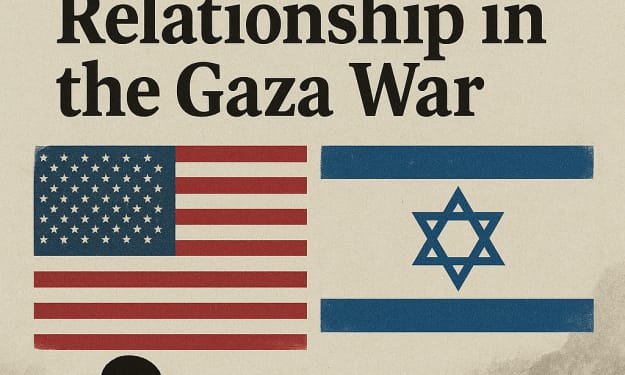
When Alliance Meets Fracture: The U.S.–Israel Relationship in the Gaza War
For decades, the alliance between Israel and the United States has been described as “unshakeable.” But as the war in Gaza enters its third year, the nature of that alliance is being tested — not only by the strategic realities on the ground, but by questions of power, agency, morality and diplomacy. A Two-Way Street of Support — and Dependence The U.S. has long backed Israel militarily and diplomatically. In the recent war with Hamas, the U.S. dispatched naval and air assets, sped up weapons transfers, and repeatedly used its veto power at the United Nations Security Council to shield Israel from unanimous censure. For Israel, that backing has provided strategic reassurance. But for many observers, it has blurred the lines of independence and accountability. The notion that Israel is somehow a “client state” of the U.S. has been floated increasingly in the media and diplomatic discussions. That language sparked push-back this week, when Israeli Prime Minister Benjamin Netanyahu dismissed the idea as “hogwash,” and U.S. Vice President J.D. Vance publicly reaffirmed that Israel is an ally — not a vassal. From Solidarity to Strain The 2023 October 7 attack by Hamas marked a dramatic escalation. Israel opened a major military campaign in Gaza, and the U.S. response was swift and unequivocal. What followed, however, has strained the alliance in less visible ways. One key shift: American public opinion. A recent survey by the Pew Research Center found that 39% of U.S. adults say Israel is going too far in its military operation against Hamas — up from 27% in late 2023. Meanwhile, only 16% say Israel is taking about the right approach. On the Israeli side, the government is simultaneously pushing post-war plans—such as annexation bills for the West Bank—that complicate U.S. diplomacy. For the United States, the war is increasingly being viewed through the lens of global reputation, humanitarian credibility and balance in the Middle East. The Ceasefire and the Diplomatic Tightrope In mid-October 2025, a cease-fire brokered by the U.S., Egypt, Qatar and others came into effect in Gaza. As part of the deal, discussions shifted from open warfare to reconstruction, disarmament of Hamas (or at least containment), and the question of Gaza’s future governance. The U.S. is now visibly trying to reverse some of the narrative that it simply arms Israel and stands by. Yet the cease-fire remains fragile. Vice President Vance admitted the path ahead is “very hard.” Meanwhile, Israel is resisting certain elements of American-backed plans—particularly the idea of a multinational peace-keeping or reconstruction force in Gaza, or Turkish involvement in it. Aid, Accountability and the Humanitarian Question One of the thorniest issues is humanitarian access. The International Court of Justice (ICJ) this week issued a non-binding opinion that Israel must allow the UN relief agency UNRWA to operate freely in Gaza, and uphold its obligations as occupying power. Israel disputes the findings, citing allegations of UNRWA links to Palestinian militant groups. From the U.S. perspective, supporting Israel while remaining credible on human rights and international law is becoming a balancing act. Israeli military campaigns have created mounting civilian casualties and infrastructure destruction in Gaza. Publicizing support too visibly could undermine U.S. standing, while withdrawing too early risks alienating a key regional ally. The Strategic and Geopolitical Stakes Beyond U.S.–Israel bilateral ties, the war is part of a larger Middle Eastern chessboard. Iran, Hezbollah in Lebanon, regional Arab capitals, and global competitors like Russia and China all have stakes. The U.S. is seeking to shift its posture: less boots on the ground, more diplomatic architecture for stability. Analysts say the war has offered the U.S. an opportunity to begin “disentangling” from decades-old Middle East wars and refocusing on global competition. Meanwhile, Israel wants to ensure that its future security does not become hostage to U.S. domestic politics. Netanyahu’s messaging—strongly asserting Israel’s independence—reflects concerns that political shifts in Washington might lead to strategic surprises. Where the Alliance Stands Today At its core, the U.S.–Israel alliance remains intact: shared democratic identity, heavy U.S. arms transfers, and close coordination on intelligence and defense. But the nature of the relationship is under evolution: The U.S. is less willing to simply rubber-stamp Israeli policy without added caveats around humanitarian law and long-term strategy. Israel is more insistent on acting as a sovereign actor—especially when it comes to Gaza’s future—and resisting what it perceives as external dictates. U.S. public opinion and congressional sentiment are shifting; political cost for backing Israel unconditionally is rising. Both parties now face increased pressure—from allies, adversaries and global civil society—to define the “after-war” scenario in Gaza, the West Bank and Israeli security beyond Hamas. Looking Ahead: Pitfalls and Prospects The biggest risk is that the cease-fire unravels, dragging the U.S. visibly back into direct confrontation. Equally risky: that Gaza remains a frozen zone of humanitarian crisis and reconstruction limbo. Either outcome could fracture the U.S.–Israel alliance if seen as failure. On the positive side, the alliance could emerge stronger if the U.S. helps steer a viable political-economic reinvestment in Gaza, supports Israeli legitimate security needs, and simultaneously pushes for meaningful Palestinian governance reform. The alternative is drift: Israel operating unilaterally, the U.S. shifting focus elsewhere, and the Middle East becoming even more fragmented. For platforms like Vocal, this moment offers a rich story: not just of war, but of alliances, shifting power dynamics, public opinion, and moral accountability. As the war evolves, so too must the narrative about who holds agency, what values guide intervention, and how partners like the U.S. and Israel redefine their relationship in a changing world. Conclusion The U.S.–Israel relationship in the Gaza war has moved from mutual certainty into nuanced tension. In an era of great-power competition and complex regional alignments, each side is recalibrating. The U.S. cannot simply fund and defend; Israel cannot simply fight and rebuild. The question now is how they act together to shape peace rather than war—and whether their alliance can adapt to the demands of this moment.
By Fazal wahid about a year ago in Education
Desert Planets and Their Unique Climate Systems: Worlds of Dust, Heat, and Endless Wind
When we imagine distant planets beyond our Solar System, most of us picture Earth-like worlds—blue oceans, drifting clouds, and sprawling continents. But astronomers now believe that one of the most common types of terrestrial planet in the galaxy may look nothing like our home. Instead, many rocky exoplanets are likely desert planets: dry, dusty, and extreme. Their climates are harsh, their landscapes barren, yet they are scientifically fascinating—and, surprisingly, some might even be habitable.
By Holianyk Ihorabout a year ago in Education
Hunting for Alien Life: The Search for Atmospheric Biosignatures on Distant Worlds
Just a few decades ago, the idea of planets orbiting other stars lived mostly in science fiction. Today, astronomers have confirmed more than five thousand exoplanets—burning-hot gas giants, frozen mini-Neptunes, super-Earths cloaked in clouds, and even rocky worlds that remind us of home. Yet the true holy grail remains undiscovered: evidence of life beyond Earth.
By Holianyk Ihorabout a year ago in Education
The World You See Isn’t Real-And That’s Okay
Picture this: I’m nine, sprawled on the grass in my backyard, staring at a sky so blue it feels like it’s lying to me. My dog, Rusty, is chewing on a stick nearby, oblivious to the fact that I’m wrestling with a question too big for my kid brain-what’s really out there? The clouds drift, morphing into dragons and castles, and I wonder if they’re real or just my eyes playing tricks. That moment, that childish curiosity, never left me. It’s the same spark that drove me to listen to Professor Donald Hoffman on The Diary of a CEO, where he dropped a bomb: the world we see? It’s not real. It’s a headset, a virtual reality our brains cooked up to keep us alive. And honestly? That idea feels like a lightning bolt and a warm hug all at once.
By KWAO LEARNER WINFREDabout a year ago in Education
Cataloging NEOs Down to 140 Meters: NASA and ESA’s New Planetary Defense Mission
Not long ago, the idea of defending Earth from an asteroid sounded like pure science fiction. It was something you’d expect from a Hollywood disaster movie, not a space agency budget proposal. But today, protecting our planet from near-Earth objects (NEOs) has become a serious, well-funded scientific priority. NASA and the European Space Agency (ESA) have now set a bold shared goal: to detect and catalog at least 90% of all NEOs that are 140 meters or larger. Simply put, they want to find nearly every space rock big enough to erase a major city from the map.
By Holianyk Ihorabout a year ago in Education
How Sunlight Spins Space Rocks: New Insights into the YORP Effect
For decades, astronomers believed that the spins of asteroids were shaped almost entirely by violent collisions and gravitational encounters. That story is now changing. As telescopes grow sharper and space missions more precise, scientists are uncovering the surprising truth: sunlight itself can gradually twist, tilt, and even tear apart asteroids. This subtle, long-term influence is known as the YORP effect, and it is rapidly becoming one of the most intriguing topics in planetary science.
By Holianyk Ihorabout a year ago in Education
The Girl Who Followed Her Teacher’s Path
Once upon a time, in a quiet little town, there lived a 12-year-old girl named Amina. She was a bright student, always curious, full of dreams, and eager to learn. Every morning, she waited near the old oak tree for her teacher, Mr. Daniel, who rode his bicycle to school. Mr. Daniel was not just a teacher; he was a mentor who believed that education could truly change lives. Every day, as they rode to school together, he would share small lessons — not only about books, but about kindness, honesty, patience, and believing in yourself. Amina admired him deeply. She loved how patient he was with every student, and how he never gave up on anyone, no matter how hard things got. For her, school was not just a place to study; it was a place to grow, a place where dreams took shape and confidence was nurtured. One morning, as the sun painted the sky with golden rays, Mr. Daniel turned to Amina and said, “Education is not just about learning facts; it’s about learning how to live with respect, courage, and kindness.” Amina held those words close to her heart, and from that day on, she promised herself that she would always try to live by them. Years went by, and Amina became one of the best students in her school. She won several awards and certificates for her hard work and dedication. But what made her happiest was the simple praise from Mr. Daniel. Whenever he said, “I always knew you could do it,” Amina felt a deep joy that no trophy or medal could ever replace. His words reminded her that true success comes not from recognition, but from effort and integrity. After finishing high school, Amina earned a scholarship to a prestigious university far from her little town. Life became busy, with new classes, challenges, and friendships, but she never forgot her teacher’s bicycle rides, his stories, and the lessons he taught her under the morning sun. Those memories were a guiding light during her toughest days. Ten years later, Amina returned to her old town. The school still stood there — aged and weathered, but full of memories and warmth. She walked through the familiar gate, now as Miss Amina, a new teacher ready to inspire young minds. When she entered the classroom for the first time, her heart was full of gratitude. She remembered the shy little girl she once was, and the man who showed her the way with patience and love. That day, she placed an old photo of her class on the teacher’s desk. Mr. Daniel was standing in the middle, smiling proudly with his students. Tears filled her eyes. “Now,” she whispered softly, “it’s my turn to guide others — just like you guided me.” Her students loved her gentle voice and inspiring stories. Amina became known as one of the kindest and most motivating teachers in the district. Every time she rode her bicycle to school, the children would wave at her — just like she once waved at her own teacher. She realized that the lessons of respect, patience, and learning could ripple through generations if shared with care. Amina had finally followed her teacher’s path, proving that true education is not about how much you know, but how much you share. She had learned the most important lesson of all: “A teacher’s love and guidance can shape the future, one heart at a time.” And somewhere, beyond the clouds, her teacher was surely smiling, proud that his lessons had lived on through her, leaving a legacy that would continue for years to come.
By Ten Brothers wri8ersabout a year ago in Education
Cardio Pulmonary Resuscitation. AI-Generated.
CPR (Cardiopulmonary Resuscitation) is a life-saving technique used in emergencies when someone’s heart stops beating or they stop breathing. It helps keep blood and oxygen flowing to the brain and other vital organs until professional help arrived
By Muhammad Asifabout a year ago in Education
Rich Dad Poor Dad: What the Rich Teach Their Kids About Money That the Poor and Middle Class Do
grew up with two fathers. One taught me how to work for money. The other taught me how to make money work for me. One said, “Go to school, get good grades, and find a safe job.”
By Fazal wahid about a year ago in Education
BioSuit: The Next-Generation Space Suit That Fits Like a Second Skin
When we picture an astronaut, most of us imagine a bulky white suit — stiff, heavy, and inflated like a balloon. It’s an icon of space exploration, but also a symbol of how difficult it is to move freely in the vacuum of space. For decades, astronauts have battled against the rigidity of their suits just to bend an arm or take a step.
By Holianyk Ihorabout a year ago in Education