student
From balancing your course load to forging relationships with classmates to extracurricular involvement, these are the tried and true methods to nail your career as a student.
Wormholes: Gateways Through Spacetime or Just Science Fiction?
1. What Is a Wormhole? A wormhole, sometimes called an Einstein–Rosen bridge, is a hypothetical tunnel-like structure connecting two separate points in spacetime. Imagine folding a piece of paper and punching a hole through it—the hole allows you to move from one side to the other instantaneously, bypassing the distance across the paper. Wormholes are similar in concept, but instead of paper, they exist in the fabric of spacetime itself.
By shahkar jalal11 months ago in Education
The Light of Hope
My name is Farid. I was born in a small, remote village where life was hard, and poverty was a constant companion for most families. My parents worked tirelessly, yet we barely had enough to eat. Every day was a struggle, and I had to walk several kilometers to school through uneven paths, often under the scorching sun or in the pouring rain. Despite the hardships, I loved learning. School was my escape, a place where I could dream about a future beyond my village. But one day, my routine took an unexpected turn that would change my life forever. While walking home from school, I noticed an elderly woman sitting by the roadside. She looked frail, her hands worn from decades of work, and her eyes told a story of suffering and pain. I hesitated for a moment, but then I approached her and asked if she needed help. With a quivering voice, she said, “My son is very sick, and I do not have money to take him to the doctor.” Her words struck me harder than any storm I had ever faced. Her eyes, filled with despair, pierced straight through my heart. At home, I shared the woman’s plight with my family. We were struggling ourselves, with barely enough to cover our basic needs. Yet, something inside me refused to stay silent. I resolved that I would find a way to help, even if it meant taking small steps every single day. After school, I began doing small jobs around the village. I helped neighbors clean their homes, ran errands, and sold fruits at the market. Each coin I earned felt like a small victory, and though progress was slow, I clung to hope. Day after day, I worked tirelessly, sometimes feeling exhausted, sometimes feeling discouraged. But the thought of the sick boy and his mother pushed me forward. Months passed. I slowly saved enough money to take the boy to the doctor. His mother accompanied us, her eyes filled with gratitude and disbelief. The treatment was expensive, but seeing the boy’s health improve day by day was priceless. When he finally recovered, the woman, tears streaming down her face, held my hands and said, “My child is alive because of you.” That moment filled my heart with a warmth I had never felt before. Helping that boy and his mother changed something in me. I realized that even the smallest effort could create a ripple of hope. My life felt brighter, more purposeful. But the story didn’t end there. The people in my village began noticing my efforts. A teacher came to me one day and said, “Farid, you have a heart that brings hope to others. If you continue your education, you can bring great change to your village.” Encouraged by these words, I returned to school with renewed determination. I worked hard, and over the years, I completed my education, going far beyond what anyone in my village had dreamed possible. Eventually, I was able to build opportunities for the people around me—a small hospital, a proper school, and jobs for those in need. The same elderly woman would visit me from time to time, smiling, and say, “Your efforts have brought light to our entire village.” Today, I understand that hope is never lost, no matter how dark the world seems. Even the smallest act of kindness can illuminate someone’s life. I learned that struggles are a part of life, but perseverance, compassion, and determination can create miracles. Every day, I continue to help others, knowing that one heartwarming act can spark change. My journey taught me that the power of love, hope, and effort is limitless. And as long as we hold on to hope, even in the darkest moments, we can light the way for others and ourselves. No matter how impossible life may seem, one act of courage, one gesture of kindness, or one selfless effort can transform lives forever. And that is the story I carry with me every day—the story of hope, resilience, and the incredible power of the human heart.
By Abubakar khan 11 months ago in Education
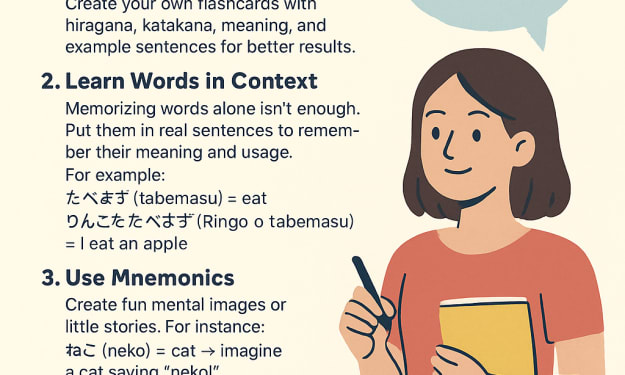
How to Memorize Japanese Words Fast...... Content Warning. AI-Generated.
Learning Japanese is one of the most exciting experiences, but it can also be a bit overwhelming, especially when it comes to memorizing new words. Don’t worry — you’re not alone. Many learners struggle with vocabulary, but the good news is that there are proven strategies to make it easier, faster, and even fun. Today, I’m sharing actionable tips to help you memorize Japanese words quickly and retain them naturally.
By Way To Japan11 months ago in Education
How to Improve Leadership Skills as a Student
Leadership isn’t just for CEOs, politicians, or famous personalities. It starts early, in classrooms, clubs, sports teams, and even small group projects. As a student, developing leadership skills can set you apart, help you succeed academically, and prepare you for the real world. But leadership isn’t something you’re born with—it’s a skill you can nurture, practice, and refine over time. Whether you want to lead a school club, organize a community project, or simply become more confident in group activities, understanding how to improve leadership skills as a student can make a huge difference in your personal and professional life. --- 1. Understand What Leadership Really Means Many students confuse leadership with authority. Being a leader isn’t about bossing others around or having a title—it’s about inspiring, guiding, and motivating people toward a common goal. True leaders: Listen actively Encourage others Make decisions thoughtfully Lead by example Before trying to become a leader, reflect on your current strengths and weaknesses. Ask yourself: Do I motivate people? Can I communicate my ideas clearly? Do I handle challenges calmly? Self-awareness is the first step in becoming a strong, effective leader. --- 2. Improve Your Communication Skills A leader is only as effective as their ability to communicate. Being able to express ideas clearly and listen actively is essential. Tips to enhance communication: Practice public speaking by joining debate clubs or presentations Work on body language: maintain eye contact and open posture Be clear and concise in writing and speaking Learn to listen before responding; understanding others is as important as being understood Strong communication builds trust, resolves conflicts, and ensures everyone is on the same page—key aspects of leadership. --- 3. Take Initiative and Responsibility Leadership is about action. Don’t wait for opportunities to come to you—create them. Examples: Volunteer to organize group projects or events Start a study group or community initiative Take responsibility for mistakes instead of blaming others Students who actively seek opportunities to lead demonstrate confidence and commitment. Initiative shows others that you are ready to take responsibility, a core trait of effective leaders. --- 4. Develop Teamwork Skills No leader works alone. Learning to work well in a team is essential. Leadership is not about dominance—it’s about collaboration. Respect everyone’s ideas, even if they differ from yours Assign tasks based on each team member’s strengths Encourage participation and foster a positive environment Handle disagreements calmly and constructively When your team succeeds, you succeed. A student leader understands that the collective effort outweighs individual recognition. --- 5. Learn Time Management and Organization A leader’s effectiveness is often linked to how well they manage their time. Students juggling studies, extracurriculars, and leadership roles need organization skills. Use planners or digital apps to schedule tasks Set priorities and deadlines Break big projects into smaller, manageable tasks Avoid procrastination Being organized helps you meet goals efficiently and sets a strong example for your peers. Leaders inspire through both action and discipline. --- 6. Seek Feedback and Reflect Leadership is a continuous learning process. No one is perfect, and every experience is an opportunity for growth. Ask teachers, peers, or mentors for constructive feedback Reflect on what worked and what didn’t after completing a project Adapt strategies based on feedback to improve future performance Reflection and feedback develop emotional intelligence, which is crucial for understanding team dynamics and improving leadership skills. --- 7. Build Confidence and Emotional Resilience Leadership often involves making tough decisions and facing challenges. Confidence and resilience allow you to handle stress, overcome obstacles, and keep your team motivated. Face small challenges to build courage Learn from failures rather than fearing them Maintain a positive mindset and encourage others Confidence inspires trust. When your peers believe in you, they are more likely to follow your lead. --- 8. Learn from Role Models Observe leaders around you—teachers, senior students, or even famous personalities. Notice how they communicate, solve problems, and motivate people. Read biographies of great leaders Attend workshops or leadership seminars Watch motivational speeches and analyze the strategies used Role models provide guidance and inspiration, helping you understand practical leadership in action. --- Conclusion Improving leadership skills as a student isn’t about earning a title; it’s about developing habits, attitudes, and skills that inspire others and drive results. By improving communication, taking initiative, working effectively with teams, managing time, seeking feedback, and building confidence, you can become a leader in any sphere of student life. Remember, leadership is a journey, not a destination. Start small, stay consistent, and embrace every opportunity to learn. The skills you cultivate today will not only help you in school but will also prepare you for lifelong success. Leadership is not just what you do—it’s who you become.
By Muhammad Reyaz11 months ago in Education
5 Daily Habits That Will Make You More Productive and Mentally Strong
Feeling tired, distracted, or unmotivated? In today’s fast-paced world, staying productive and maintaining mental strength can feel like a challenge. Many people struggle with procrastination, stress, or a lack of focus, which affects both personal and professional life. The good news is, small daily habits can completely transform your productivity and mental resilience. By building consistent routines, you can accomplish more, feel calmer, and tackle challenges with confidence. Here are five habits that can make a real difference in your life. --- 1. Start Your Day with a Morning Routine How you start your day sets the tone for the rest of it. A structured morning routine can energize your mind and body, making you more prepared to face the day’s challenges. Waking up early is the first step. Early mornings are usually quiet, giving you uninterrupted time to focus on yourself. Include simple habits like stretching, drinking a glass of water, and planning your day. Stretching relaxes your muscles and improves blood flow, while hydrating first thing in the morning boosts your energy levels. Planning your day, even for 5–10 minutes, allows you to prioritize tasks and reduces the chances of feeling overwhelmed later. Having a morning routine doesn’t need to be complicated. Even small rituals, like reading an inspiring quote, practicing gratitude, or making a quick to-do list, can positively impact your productivity and mental health. When your day starts intentionally, your mind feels focused, and your stress levels decrease. --- 2. Prioritize Your Tasks One of the biggest productivity killers is trying to do everything at once. Not all tasks are equally important, and spending time on low-priority work can drain your energy and focus. A simple yet effective approach is to identify the top three tasks that are most important each day and focus on completing them first. This habit, often referred to as “Eat That Frog” after Brian Tracy’s productivity principle, helps you tackle difficult or important tasks early when your mind is fresh. Completing key tasks first also gives you a sense of accomplishment and motivates you to keep going. Additionally, breaking larger tasks into smaller, manageable steps makes them less intimidating and more achievable. By prioritizing effectively, you gain control over your day, reduce stress, and improve your efficiency, leaving more time for creative thinking and problem-solving. --- 3. Take Short Breaks Many people think working nonstop is a sign of dedication, but it often leads to burnout and decreased productivity. Short, regular breaks are crucial for maintaining focus and mental clarity. Experts recommend the Pomodoro Technique, which involves working for 25–50 minutes and then taking a 5–10 minute break. During breaks, step away from your desk, stretch, walk, or do something relaxing. These pauses allow your brain to reset, improve concentration, and enhance creativity. Over time, regular breaks prevent exhaustion and keep your motivation high throughout the day. Remember, productivity isn’t about working harder—it’s about working smarter. Incorporating short breaks ensures that your energy is maintained, and your mind remains alert, which is key to both efficiency and mental well-being. --- 4. Practice Mindfulness or Meditation Stress and distractions are unavoidable in modern life, but mindfulness and meditation are powerful tools to maintain mental strength. Spending even 5–10 minutes a day in meditation or deep breathing exercises can significantly improve your focus, emotional stability, and decision-making skills. Mindfulness is about being fully present in the moment and observing your thoughts without judgment. This practice reduces anxiety, enhances mental clarity, and helps you respond to challenges rather than react impulsively. Start small—sit quietly, focus on your breath, or try guided meditation apps. Over time, mindfulness will help you manage stress better, increase your patience, and improve overall mental resilience. People who practice mindfulness regularly often experience higher productivity and greater satisfaction in both work and personal life. --- 5. Reflect and Journal Reflection is a powerful habit that strengthens both your mind and emotional health. At the end of each day, take a few minutes to reflect on what you accomplished, what challenges you faced, and what lessons you learned. Writing in a journal helps you track progress, release stress, and gain perspective on your life. Journaling doesn’t have to be complicated. You can list your achievements, express gratitude, or note down challenges and solutions. This habit improves self-awareness, helps you identify patterns in your behavior, and keeps your goals in focus. By reflecting daily, you develop a mindset of growth and resilience. It also encourages you to celebrate small victories, which boosts motivation and self-confidence. Over time, journaling can become a key tool for personal development and mental strength. --- Conclusion You don’t have to adopt all five habits at once. Start small by picking one or two habits and gradually add more over time. Consistency is more important than perfection. Small, deliberate actions every day lead to significant improvements in productivity and mental health. By practicing a structured morning routine, prioritizing tasks, taking short breaks, engaging in mindfulness, and reflecting through journaling, you can transform not only your daily productivity but also your overall mental resilience. Remember, small steps every day can lead to big results. Start today, and take control of your time, energy, and mental well-being.
By Muhammad Reyaz11 months ago in Education
The Solar System — Hidden Mysteries You Never Knew
1. The Birth of the Solar System — A Cloud of Cosmic Dust The Solar System formed about 4.6 billion years ago from a massive cloud of gas and dust called the solar nebula. When a nearby supernova triggered the collapse of this cloud, gravity pulled the material inward to form the Sun.
By shahkar jalal11 months ago in Education
Black Holes — Gateways to the Unknown
What Is a Black Hole? A black hole is a region in space where gravity is so strong that nothing can escape, not even light. The boundary around a black hole is called the event horizon, a point beyond which escape is impossible.
By shahkar jalal11 months ago in Education
A Complete Guide on Ravensbourne University in London
The Ravensbourne University is a public institution founded in 1962. It is on the Greenwich peninsula, London, UK. It is a society of more than 4,000 students from different countries and regions. This institute focuses on practising digital media and designing courses. It is open to UGs and non-professionals, too. All the courses are taught by experts to give real-life learning. Ravensbourne University London gives very skilled graduates. Also, they have connected with more than 100 firms to stay updated with new trends.
By Ritik Kumar11 months ago in Education