student
From balancing your course load to forging relationships with classmates to extracurricular involvement, these are the tried and true methods to nail your career as a student.
How Indian Schools Are Bridging the Urban-Rural Educational Divide
The education system in India has witnessed significant changes in recent years. One of the biggest challenges faced by schools in India is bridging the gap between urban and rural education.
By Anshuman Uniyal2 years ago in Education
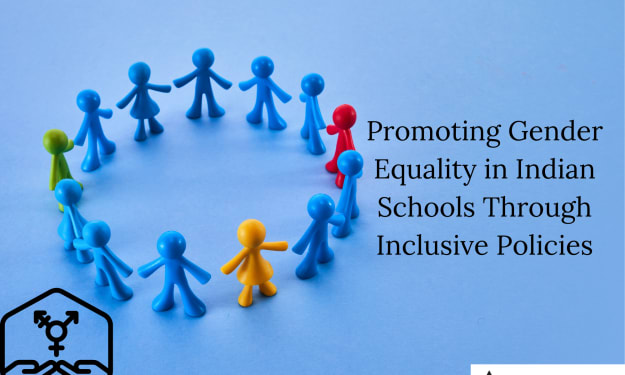
Promoting Gender Equality in Indian Schools Through Inclusive Policies
Gender equality has become a cornerstone for shaping a progressive and fair society. In schools in India, this aspect holds immense significance as they are foundational institutions where young minds are nurtured.
By Anshuman Uniyal2 years ago in Education
How International Schools in India Are Integrating Global and Local Curricula
Are you wondering how schools are preparing students for a globalized world without losing touch with local traditions? The answer lies in how International Schools in India are striking the perfect balance between global curricula and local cultural values.
By Krishna Kandpal2 years ago in Education
Education and Training: The road to Success . Content Warning. AI-Generated.
Education and Training: A Better Road to the Future Education and training form the bases of development and growth. They empower individuals to reach their potential, enable them with skills that can be used to better the world, and fundamentally promote knowledge and innovation. In this article, we explore the importance of education and training, its key benefits, and how they will shape a bright future for individuals and societies.
By Asifbashir2 years ago in Education
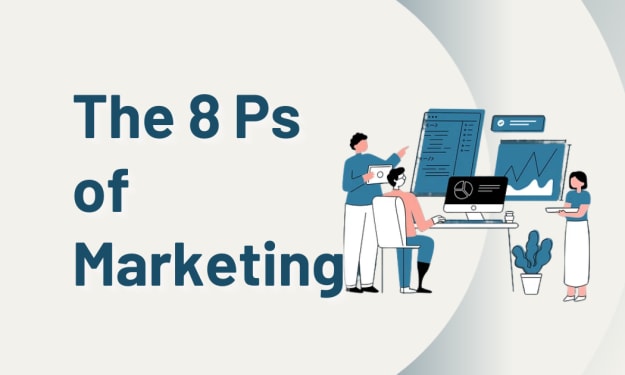
From Product to Process: Understanding the 8Ps of Marketing. AI-Generated.
Introduction to the 8Ps of Marketing The 8Ps of Marketing is a modern extension of the traditional 4Ps framework (Product, Price, Place, Promotion), which provides a more comprehensive approach to building successful marketing strategies. As markets evolve and consumer behavior becomes more dynamic, businesses must adopt a holistic view of marketing. The 8Ps framework addresses this need by incorporating additional elements critical for success in today’s competitive and interconnected world.
By Zameer Ahmed Shaikh2 years ago in Education
What is the best way to buy an Arduino Uno in Delhi?
It is unlikely that you can buy an original Arduino Uno for ₹350, as the original device from Arduino typically costs significantly more (around ₹1,500–₹2,500 in India, depending on where you purchase it). However, there are several Arduino-compatible clones available in the market that can be purchased for around ₹350–₹700. These are often manufactured locally or by third-party companies and provide similar functionality.
By wholesale wala2 years ago in Education
Why Traditional Education is Failing Us
Education is often touted as the cornerstone of societal progress and individual success. Yet, as we delve deeper into the twenty-first century, there's a growing realization that the traditional educational system is not just outdated but fundamentally flawed. The time has come for a radical transformation—a learning revolution that can cater to the diverse needs of today's learners and prepare them for the unpredictable future. First and foremost, the rigid structure of traditional education stifles creativity and critical thinking. In a system where success is measured by standardized tests and memorization, there is little room for students to explore their interests or develop innovative solutions to real-world problems. This cookie-cutter approach not only disengages students but also fails to nurture the unique talents and passions that each individual possesses. Moreover, the traditional education system is predominantly focused on rote learning—an antiquated method that emphasizes the retention of information over the understanding and application of knowledge. This approach is ineffective in an era where information is readily accessible at our fingertips. What students need instead are skills like problem-solving, adaptability, and the ability to synthesize information from various sources. These skills are essential for thriving in a fast-paced, ever-changing world, yet they are glaringly absent from most curricula. The lack of personalization in traditional education is another major issue. Every student learns differently, and a one-size-fits-all approach inevitably leaves many behind. Students with different learning styles, interests, and paces often struggle to keep up or find themselves bored and unchallenged. The current system does not accommodate these differences, resulting in a significant number of students feeling alienated and disconnected from their educational experience. Additionally, the emphasis on grades and exams creates a high-pressure environment that can lead to severe stress and anxiety. This focus on performance over learning can have detrimental effects on students' mental health, undermining their overall well-being and their love for learning. Education should be a joyful, enlightening journey, not a relentless race for top marks. Furthermore, traditional education often fails to prepare students for the practical demands of the modern workforce. Skills like collaboration, digital literacy, and emotional intelligence are critical in today's job market but are rarely taught in conventional classrooms. Instead, students are often left to fend for themselves, navigating the transition from academia to the professional world without adequate preparation or support. In light of these issues, it is clear that we need a paradigm shift in how we approach education. A learning revolution is necessary—one that values creativity, critical thinking, and lifelong learning over rote memorization and standardized testing. This new approach should be student-centered, personalized, and adaptable, fostering an environment where every learner can thrive. To achieve this, educators and policymakers must embrace innovative teaching methods and technologies. Project-based learning, for instance, allows students to work on real-world problems and develop practical skills. Blended learning models, which combine online and in-person instruction, can provide the flexibility and personalization that traditional classrooms lack. Moreover, incorporating emotional and social learning into the curriculum can help students develop the resilience and interpersonal skills needed for success in both their personal and professional lives. Ultimately, the goal of education should be to empower individuals to reach their full potential and contribute meaningfully to society. This cannot be achieved through a system that prioritizes conformity and rote learning over creativity and critical thinking. The future of education lies in a holistic, student-centered approach that prepares learners for the complexities of the modern world. As we move forward, it is imperative that we challenge the status quo and advocate for a learning revolution. The stakes are too high to settle for a system that no longer serves the needs of our students or our society. It's time to reimagine education and create a brighter, more inclusive future for all learners.
By Adepoju Toheeb Ojo 2 years ago in Education
Learn to Code in 30 Days
Have you ever dreamt of creating your own software, building your own website, or even developing an app? Well, the good news is you can! Learning to code might seem like a daunting task at first, but with the right mindset and approach, you can make significant progress in just 30 days. Whether you’re looking to change careers, enhance your current skill set, or simply satisfy your curiosity, this beginner’s guide will help you embark on your programming journey. First and foremost, it’s important to understand why learning to code is beneficial. In today’s digital age, coding is a valuable skill that opens up a world of opportunities. It not only enhances problem-solving skills but also promotes logical thinking and creativity. Moreover, coding can lead to lucrative career opportunities in a variety of fields, from web development and data science to artificial intelligence and cybersecurity. Now, let’s dive into the steps you can take to start learning to code in 30 days. The first step is to choose a programming language. There are many languages to choose from, such as Python, JavaScript, and Ruby. For beginners, Python is often recommended due to its simplicity and readability. Once you’ve chosen your language, it’s time to find the right resources. There are countless tutorials, courses, and books available online that can help you get started. Websites like Codecademy, Coursera, and Udemy offer comprehensive courses that are designed for beginners. Next, you need to set aside time each day to practice coding. Consistency is key when it comes to learning a new skill. Even dedicating just 30 minutes a day can make a big difference over time. Start with the basics, such as understanding syntax and writing simple programs. As you become more comfortable, gradually move on to more complex topics. Don’t be afraid to make mistakes – they are a natural part of the learning process. Another important aspect of learning to code is to build projects. Projects provide a hands-on way to apply what you’ve learned and to see your progress in action. Start with small projects, such as creating a personal website or building a simple calculator. As you gain more experience, challenge yourself with larger projects. Building projects not only reinforces your learning but also provides a portfolio that you can showcase to potential employers. In addition to practicing on your own, it’s beneficial to join a community of learners. Online communities, such as forums and social media groups, provide a supportive environment where you can ask questions, share your progress, and learn from others. Being part of a community can keep you motivated and provide valuable insights from fellow learners and experienced programmers. To further enhance your learning, consider participating in coding challenges and hackathons. These events provide an opportunity to test your skills, learn new techniques, and collaborate with other coders. They also offer a fun and competitive way to push your limits and achieve your coding goals. Finally, it’s important to stay positive and motivated throughout your learning journey. Learning to code can be challenging, but it’s also incredibly rewarding. Celebrate your achievements, no matter how small, and keep reminding yourself of why you started. Surround yourself with supportive people who encourage your growth and success. In conclusion, learning to code in 30 days is an achievable goal with the right mindset and approach. By choosing a programming language, practicing consistently, building projects, joining a community, and staying motivated, you can kickstart your programming journey and unlock a world of opportunities. So, why wait? Start your coding adventure today and discover the endless possibilities that await you.
By Adepoju Toheeb Ojo 2 years ago in Education