student
From balancing your course load to forging relationships with classmates to extracurricular involvement, these are the tried and true methods to nail your career as a student.
Google Workspace Help & Support: Everything You Should Know
In the evolving digital era, Google Workspace customer service has become a lifeline for businesses relying on Google's cloud-based ecosystem for day-to-day operations. From Gmail to Google Meet, Docs to Drive, seamless productivity tools now demand equally efficient support systems. Whether you're facing downtime, configuration errors, or security issues, knowing how to access Google support can make all the difference.
By Dare Devil2 years ago in Education
Know IELTS Writing Task 1: Types, Assessment & Marking
In IELTS Writing Task 1, you're presented with a visual—such as a graph, chart, table, or diagram, and asked to describe and summarize its key details. You must write a minimum of 150 words, though writing around 160–170 words is generally recommended for a well-developed response. This task evaluates your ability to interpret visual data accurately and concisely. Since Writing Task 1 contributes significantly to your overall IELTS score, thorough preparation is essential. Coaching classes can support you throughout the process—from IELTS exam fees registration to providing structured course materials. This article explores the seven types of Writing Task 1 visuals and the assessment criteria. Let's dive in.
By Nikita Masih2 years ago in Education
A Guide On How To Write MBA Assignment On Corporate Taxation
An MBA is a graduate degree relating to business administration. It is for students seeking management skills. They choose an MBA programme to enhance creativity skills and resourcefulness. There are varied branches of MBA that help in career growth. The course curriculum covers a variety of subjects like marketing, finance, taxation etc. However, it comes with a lot of assignments. They are to test command on the subject as well as analytical skills.
By Mary Taylor2 years ago in Education
Scientists Detect Potential Signature of Life on a Distant Planet: A Breakthrough in Astrobiology
The search for extraterrestrial life has taken a thrilling leap forward, as recent studies suggest that astronomers may have detected a possible biosignature—a chemical sign of life—on a distant exoplanet. While definitive proof of alien life remains elusive, this discovery marks one of the most compelling hints yet that we may not be alone in the universe. The James Webb Space Telescope’s Groundbreaking Discovery The James Webb Space Telescope (JWST), NASA’s most powerful space observatory, has been at the forefront of exoplanet research since its launch in 2021. In 2023–2024, JWST turned its gaze toward K2-18 b, a Hycean (hydrogen-rich) exoplanet located about 120 light-years away in the constellation Leo. Key Findings from K2-18 b Detection of Dimethyl Sulfide (DMS): JWST’s spectroscopic analysis revealed traces of dimethyl sulfide (DMS), a molecule that, on Earth, is only produced by living organisms (primarily marine phytoplankton). This finding is particularly exciting because no known non-biological process can generate DMS in significant quantities. Presence of Other Key Molecules: The telescope also detected methane (CH₄) and carbon dioxide (CO₂), which, in the right ratios, could suggest biological activity. However, these gases can also be produced by geological processes, so their presence alone is not conclusive evidence of life. Why This Discovery Matters If confirmed, DMS in K2-18 b’s atmosphere would be the strongest potential biosignature ever detected outside our solar system. However, scientists remain cautious, as: Signal Strength is Weak: The detection is not yet definitive and requires follow-up observations. Alternative Explanations Exist: Unknown atmospheric chemistry or instrument errors could mimic a biosignature. Other Promising Biosignature Detections While K2-18 b is currently the most intriguing candidate, other exoplanets and even planets in our own solar system have shown potential signs of life. 1. The Controversial Case of Phosphine on Venus In 2020, researchers reported detecting phosphine (PH₃) in Venus’s clouds—a gas that, on Earth, is linked to microbial life. However, subsequent studies suggested the signal could have been sulfur dioxide (SO₂), a common volcanic gas. The debate continues, highlighting the challenges of biosignature confirmation. 2. TRAPPIST-1 e and LHS 1140 b: Earth-like Candidates - JWST has also examined TRAPPIST-1 e and LHS 1140 b, two rocky exoplanets in their stars’ habitable zones. - Scientists are searching for oxygen, methane imbalances, or other biomarkers, but no definitive results have been published yet. Challenges in Confirming Extraterrestrial Life Despite these exciting leads, proving the existence of life beyond Earth is an immensely difficult task. Key challenges include: 1. False Positives from Non-Biological Processes - Many molecules considered biosignatures (like methane or oxygen) can also be produced by geological or photochemical reactions. - For example, Mars releases methane from volcanic activity, not necessarily life. 2. Technological Limitations - Current telescopes, including JWST, can only detect strong atmospheric signals. - Earth-like biosignatures (such as those from microbial life) are much harder to identify than those from an advanced biosphere. 3. Distance and Data Interpretation - Most exoplanets are hundreds or thousands of light-years away, making detailed study difficult. - Scientists must rely on indirect methods, such as studying starlight filtered through a planet’s atmosphere. Where Does the Search for Alien Life Go From Here? The detection of potential biosignatures on K2-18 b is just the beginning. Future missions and technologies will enhance our ability to hunt for life: 1. Upcoming Space Telescopes - Habitable Worlds Observatory (HWO): Planned for the 2030s, this NASA mission will directly image Earth-like exoplanets and analyze their atmospheres with unprecedented precision. - European Extremely Large Telescope (ELT): This ground-based telescope (operational by 2028) will provide high-resolution spectra of exoplanet atmospheres. 2. Follow-Up JWST Observations - More JWST data on K2-18 b could confirm or refute the DMS detection. - Additional exoplanet surveys will expand the list of potential habitable worlds. 3. The Search for Technosignatures - Beyond biosignatures, projects like SETI (Search for Extraterrestrial Intelligence) are scanning for radio signals or laser transmissions from advanced civilizations. Conclusion: Are We on the Verge of a Historic Discovery? While the potential detection of DMS on K2-18 b is groundbreaking, scientists emphasize that extraordinary claims require extraordinary evidence. Until follow-up observations provide irrefutable proof, the discovery remains a tantalizing hint rather than confirmation of alien life. However, with JWST’s ongoing missions and next-generation telescopes on the horizon, humanity may be closer than ever to answering one of its oldest questions: Are we alone in the universe? For now, the search continues—and each new finding brings us one step closer to a possible cosmic revolution.
By Niranjon Chandra Roy2 years ago in Education
Can You Write an Assignment without any External Help?
Writing an assignment can be really difficult as well worrisome. Students are often asked to show that they understand things well, think clearly, and explain their ideas nicely, all while finishing their work on time. Some students get help from friends, tutors, or tools on the internet. Others attempt to complete it alone. But this brings up a big question—can someone do good work without getting help from others?
By Mary Taylor2 years ago in Education
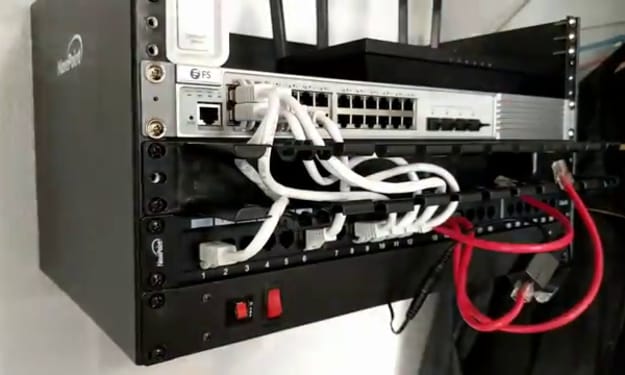
vpi and vci for tp-link
Cells are transmitted in order, and the ATM network uses Virtual Path Identifier and Virtual Channel Identifier (VPI/VCI) numbers in the ATM header to forward them efficiently. A switch reads the header, compares the VPI/VCI to its switching table to determine the correct output port and new VPI/VCI, and then forwards the cell.
By Hermano Badete2 years ago in Education
Depression: The Silent Illness That’s Affecting Millions
Depression: The Silent Illness That’s Affecting Millions It’s not just sadness — it’s a daily battle most people never see In a world full of noise, depression is a silence that screams the loudest. It hides behind smiles, daily routines, and “I’m fine” replies. While some illnesses are visible, depression lives quietly inside — but its effects can be just as dangerous, if not more. Today, depression is one of the most common mental health issues globally. According to the World Health Organization, more than 280 million people suffer from it. Yet many still don’t recognize it as a “real” illness. That’s why it’s often called the invisible disease. What Is Depression — Really? Depression is not just “feeling sad” for a day or two. It’s a long-term mental health condition that affects how a person thinks, feels, and behaves. It can lead to emotional and physical problems — and make even simple tasks like getting out of bed feel impossible. Common signs include: Feeling hopeless or empty Losing interest in things once enjoyed Changes in sleep or appetite Low energy or fatigue Difficulty concentrating Feeling worthless or guilty Thoughts of death or suicide It’s different from everyday sadness — it’s deeper, heavier, and stays for weeks or months. Why Is Depression So Common Today? There are many reasons why depression is increasing worldwide: Social Pressure: The pressure to look “perfect” on social media. Isolation: People are more “connected” online but lonelier in real life. Work Stress: Long hours, job insecurity, and financial problems. Unresolved Trauma: Childhood abuse, loss, or emotional neglect. Chemical Imbalance: Depression can also be caused by changes in brain chemistry. It can affect anyone — rich or poor, young or old, male or female. It does not care about your status or success. The Stigma That Keeps People Silent: One of the biggest reasons people don’t seek help is stigma. They are afraid of being called “weak,” “crazy,” or “dramatic.” In many cultures, especially in South Asia, mental health is not taken seriously. People are told to “get over it,” “pray more,” or “just be strong.” But depression is not a weakness. It’s a medical condition — and like any illness, it needs understanding and treatment. How to Help — Or Get Help? If you or someone you know is going through depression: Talk to Someone: Share your feelings with a trusted friend or family member. Seek Professional Help: Therapists and psychiatrists are trained to help. Don’t Isolate: Even when it’s hard, try to stay connected with people. Exercise and Diet: Regular movement and a balanced diet can help lift mood. Avoid Self-Judgment: Depression is not your fault. It’s not a character flaw. In some cases, depression doesn’t come alone. It often walks hand in hand with anxiety, insomnia, or even physical pain. People may visit doctors again and again for headaches, chest tightness, or stomach problems, never realizing the root cause lies in their mental health. This makes early diagnosis even more difficult. That’s why awareness is so important — not just for those suffering, but for families, teachers, employers, and friends. Recognizing the signs and showing compassion can save lives. Depression may be silent, but support doesn’t have to be. Your kindness, patience, and understanding can become someone’s turning point.
By Hazrat Bilal2 years ago in Education
The Room No One Entered" . AI-Generated.
At the end of the long, creaking hallway in the Ashford estate stood a door. Dark wood, warped with time, its bronze handle dulled by age, yet untouched. The wallpaper around it had peeled away like curling paper, and cobwebs clung to the frame like stubborn sentinels. Everyone in the family called it simply: the room no one entered.
By Anwar khan 2 years ago in Education
The Rise of Remote Work: How to Stay Productive in a Virtual World". Content Warning. AI-Generated.
The shift to remote work has been one of the most profound changes to the global workforce in recent years. Fueled by the COVID-19 pandemic, remote work became a necessity for millions of workers around the world. However, even as the pandemic recedes, the appeal of flexible work arrangements remains strong. Today, remote work is not just a temporary solution but a long-term trend that many employees and businesses have fully embraced.
By Anwar khan 2 years ago in Education