student
From balancing your course load to forging relationships with classmates to extracurricular involvement, these are the tried and true methods to nail your career as a student.
The Future of Education
The future of education is undergoing a transformative shift that reflects rapid technological advancement, evolving societal needs, and global connectivity. As we look ahead, it is clear that education will become more personalized, inclusive, and digitally driven. Traditional classrooms are gradually giving way to hybrid and virtual environments that emphasize skills over rote memorization, collaboration over isolation, and creativity over conformity. This essay explores the key trends shaping the future of education, highlighting the roles of technology, pedagogy, accessibility, and lifelong learning.
By Bobi Dutch2 years ago in Education
Arab Billionaires and Their Royal Lifestyles
The Arab world, particularly the Gulf Cooperation Council (GCC) countries—Saudi Arabia, the United Arab Emirates, Qatar, Kuwait, Bahrain, and Oman—has long been associated with immense wealth, often derived from vast oil reserves, strategic investments, and family dynasties. Among the wealthiest individuals in this region are billionaires who not only wield economic power but also live opulent lifestyles steeped in royal traditions and cultural heritage. Their fortunes are frequently intertwined with royal lineages, and education plays a pivotal role in shaping their modern global personas.
By Bobi Dutch2 years ago in Education
Best CLAT Mock Test Strategies to Boost Your Preparation
When it comes to cracking the CLAT exam, the pressure can feel overwhelming. The multiple subjects, the vast syllabus, and the ticking clock all add to the challenge. But here’s the truth: the key to conquering this beast lies in practice—specifically, CLAT Mock Test. These practice tests are more than just a tool; they are the bridge between where you are and where you want to be. Ready to get the best out of your CLAT mock test prep? Let’s dive in!
By Ayush Sharma2 years ago in Education
The Biggest Myth in Education
In the landscape of modern education, a multitude of beliefs—some rooted in evidence, others in tradition—continue to shape how we approach teaching and learning. Among these, perhaps the most pervasive and damaging myth is the belief that intelligence is fixed—that individuals are born with a certain intellectual capacity and that their ability to learn is largely predetermined by genetics. This idea, often implicit in school systems and societal expectations, has profound consequences for students, educators, and the broader goals of education. Contrary to this myth, extensive research in neuroscience, psychology, and pedagogy reveals that intelligence is malleable, shaped by environment, effort, and opportunity. Understanding and rejecting this myth is essential for fostering inclusive, equitable, and high-achieving educational environments.
By Bobi Dutch2 years ago in Education
The Man Who Killed Millions and Saved Billions
Fritz Haber, a name etched deeply in both scientific achievement and moral controversy, stands as one of history’s most paradoxical figures. Born in Breslau, Prussia (now Wrocław, Poland) in 1868, Haber’s contributions to chemistry earned him a Nobel Prize and led to innovations that have fed billions. Yet, he is also known as a key figure behind the development of chemical weapons in World War I. His life encapsulates the immense power of science to transform humanity—both for good and for ill.
By Bobi Dutch2 years ago in Education
The Secret of Synchronization in Education
In an era defined by technological advancement and educational reform, one of the most transformative yet understated concepts is synchronization in education. This idea—of aligning various components of the learning process—holds the potential to revolutionize how students learn, teachers teach, and institutions function. Education Pro, a metaphor for modern, optimized learning platforms or philosophies, thrives on this secret ingredient. Synchronization in education is not merely about timing; it's about coherence, mutual understanding, technological integration, and harmonious collaboration that collectively drive effective learning outcomes.
By Bobi Dutch2 years ago in Education
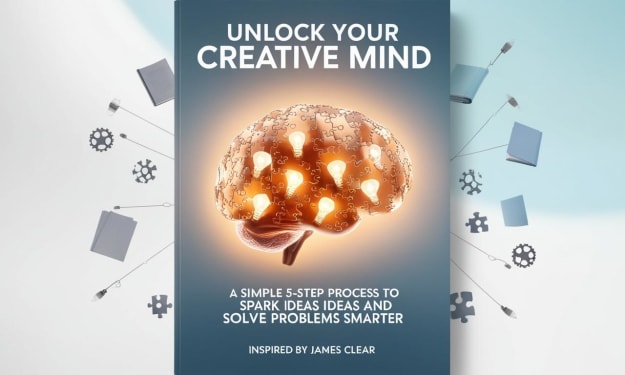
"Unlock Your Creative Mind: A Simple 5-Step Process Anyone Can Follow"
5 Simple Steps to Boost Your Creativity By James Clear (Rewritten for clarity and simplicity) Creativity is one of the most powerful skills you can have. It helps you solve problems, come up with new ideas, and think in fresh ways. Whether you’re working on a big project, trying to improve your life, or just looking for better ways to do everyday things, creative thinking can be a game-changer.
By Muhammad Farhad Khan2 years ago in Education
The Model Context Protocol: Forging a Unified Lexicon for Machine Synchronicity
Prologue to MCP’s Ethos What MCP Signifies and Why Its Emergence Is Pivotal Picture convening a roundtable where each attendee speaks a cryptic dialect, requiring a distinct interpreter to unravel meaning. That cacophony encapsulated the AI realm pre-MCP. Unveiled by Anthropic in the twilight of 2024, the Model Context Protocol emerged as a semantic emissary—a lingua franca meticulously devised to bind disparate AI engines, utilities, and architectures into a congruent, articulate dialogue.
By Muhammad Aizaz2 years ago in Education
Black Holes: The Gateways That Devour Time and Space
Introduction: A Cosmic Mystery that Haunts the Universe Imagine a place in the universe where time stops, space twists upon itself, and even light—the fastest traveler in existence—fails to escape. This is not science fiction. This is the real, mind-bending phenomenon of a black hole. Black holes are among the most mysterious and awe-inspiring entities in the cosmos. Born from the death of massive stars, they challenge our understanding of physics, reality, and even time itself. As if pulled from the pages of a science fiction novel, black holes are real, terrifying, and endlessly fascinating. --- What Is a Black Hole? The Basics Beyond the Shadows At its core, a black hole is a region of space where gravity is so strong that nothing—not even light—can escape its pull. This happens when a massive amount of matter is compressed into an incredibly small area. The result? A singularity—a point of infinite density surrounded by an event horizon, the boundary beyond which nothing returns. The "event horizon" is like a one-way door in space: once something crosses it, it’s lost forever. But what happens inside? No one knows for sure. This boundary marks the line where science, speculation, and imagination blur. --- A Journey Through Time: How Black Holes Are Born Black holes begin their lives as massive stars. When such a star runs out of fuel, it collapses under its own gravity, creating a supernova explosion. If the remaining core is dense enough, it compresses into a black hole. There are different types of black holes: Stellar Black Holes: Formed from collapsing stars. Supermassive Black Holes: Found at the centers of galaxies, including our Milky Way. Intermediate and Mini Black Holes: Hypothetical types with masses between stellar and supermassive. Each type holds secrets yet to be fully understood. --- Time Stops and Space Twists: Einstein’s Gift to the Mystery Albert Einstein’s theory of general relativity predicted black holes long before we could observe them. According to this theory, gravity isn't just a force—it's the bending of space and time (spacetime) around a mass. Black holes are where this bending becomes extreme. Time near a black hole slows dramatically. If you were to hover just outside a black hole (impossible in reality), time would move slower for you compared to someone far away. In essence, black holes allow a glimpse into the strange relationship between gravity and time. --- The Event Horizon: The Point of No Return The event horizon is the invisible boundary around a black hole. Once anything—matter, light, or even information—passes this limit, it’s gone forever. For decades, scientists have debated what happens to information that falls in. This debate sparked the famous “Information Paradox”—a puzzle that questions whether the universe loses information when something enters a black hole. Stephen Hawking himself wrestled with this mystery, proposing groundbreaking theories that still fuel research today. --- Peering into the Darkness: How We Detect Black Holes If black holes are invisible, how do we know they exist? Through their gravitational effects and the light emitted by matter falling into them, we can detect and study them. Here’s how: Accretion Disks: Matter spirals into a black hole, heating up and glowing brightly in X-rays. Gravitational Lensing: Black holes bend light around them, magnifying distant objects. Gravitational Waves: When black holes collide, they send ripples through spacetime itself—waves that we can now detect. In 2019, the world witnessed the first-ever image of a black hole’s shadow, thanks to the Event Horizon Telescope. A true triumph of human curiosity. --- Wormholes and White Holes: Science or Science Fiction? Black holes have inspired bold ideas about the structure of the universe. Some theories suggest that black holes might connect to wormholes—tunnels in spacetime that could allow travel across vast distances or even time itself. Then there’s the idea of white holes—hypothetical opposites of black holes that expel matter instead of absorbing it. While these ideas remain speculative, they push the boundaries of science and stir the imagination. --- Black Holes and the Fate of the Universe Black holes might play a role in the destiny of the universe. Some scientists believe that: They could help shape galaxies. They may eventually evaporate over trillions of years through Hawking radiation. In the far future, black holes might be the last surviving objects in the cosmos. Are black holes merely cosmic garbage bins? Or are they key players in the cosmic cycle of death and rebirth? --- Emotional Reflection: The Human Side of Cosmic Curiosity There’s something deeply poetic about black holes. They are the ultimate unknown—beautiful, terrifying, and mesmerizing. They remind us of how small we are in the vast universe and how much we’ve yet to understand. Humanity has always been drawn to the unknown, and black holes represent the frontier of both our scientific knowledge and our philosophical wonder. We stare into the darkness and, in return, discover light—of knowledge, creativity, and imagination. --- Conclusion: Into the Abyss with Open Eyes Black holes aren’t just cosmic monsters that swallow stars—they’re gateways into the very fabric of reality. They challenge what we think we know about space, time, and existence. They’re not merely terrifying—they’re beautiful in their mystery. As our technology improves, so does our ability to peer deeper into the universe’s darkest corners. And perhaps one day, we’ll not just understand black holes—we’ll journey through them. Until then, they remain the silent, spinning hearts of mystery in the cosmos—forever devouring, forever fascinating.
By Babar Azam2 years ago in Education
Soviet-Era Spacecraft Crashes Back to Earth After 53 Years Stuck in Orbit
A piece of Cold War space history has finally met its fiery end as Kosmos 482, a Soviet-era spacecraft stranded in orbit since 1972, has re-entered Earth’s atmosphere after 53 years. The derelict probe, originally intended for a Venus landing, spent over half a century circling Earth before succumbing to gravity. While most of the spacecraft likely burned up upon re-entry, experts suggest that some fragments—designed to survive Venus’s extreme conditions—may have reached the ground.
By Niranjon Chandra Roy2 years ago in Education