student
From balancing your course load to forging relationships with classmates to extracurricular involvement, these are the tried and true methods to nail your career as a student.
"How Education Shapes an Individual's Personality"
Education is one of the most powerful forces shaping an individual's personality. From the early stages of formal schooling to lifelong learning, the experiences, knowledge, and skills acquired through education influence not only our intellectual development but also our character, values, and behavior. In this article, we explore how education, both inside and outside the classroom, plays a pivotal role in shaping who we become, guiding our emotional intelligence, social interactions, and overall identity.
By Shamshair Khan Hasan Zaiabout a year ago in Education
"A Memory Built of Wood and Dust"
The first time I saw it, I thought I had wandered into a dream. It was late—the kind of late when the world feels more like a memory than a place. I had been aimlessly drifting through a fog so thick it felt alive when I came upon the old house. The door stood ajar, its edges warped and splintered by time, and against my better judgment, I crossed the threshold. The room greeted me like an unwelcome guest. The walls, a glistening teal, shimmered faintly with moisture, their texture reminiscent of rotting bark. It was the color of decay, yet strangely animate—its surface seemed to pulse beneath the flickering light of a single, grime-caked lamp. The dim glow pooled weakly on the frayed edges of a faded rug, its intricate patterns barely discernible beneath layers of filth and time. I hadn’t intended to linger, but something in the space refused to let me go. It was the amber light from the window, I think, that held me captive. The panes glowed like molten glass, casting a warmth the room itself denied. Beyond them, there was only darkness—an endless void that devoured the horizon. The furniture sagged under the weight of years, as if exhausted by the burden of endless waiting. A couch slumped in the corner, its cushions cratered as though someone had sat there for an eternity and never risen. The fireplace yawned like a blackened maw, cold and hollow, its mantel adorned with objects too strange to touch. Above it, books lined a crooked shelf—their titles faded, their spines brittle with disuse. As I stepped further in, the air thickened, enveloping me in a stifling embrace. I rested my hand on the back of a wooden chair near the table—its surface rough, its warmth unsettling, as if someone had just left it moments before. Yet a layer of undisturbed dust betrayed the truth. I should have turned back. But there was something eerily familiar about the room. Not comforting, like the echo of a childhood home, but haunting—like the remnants of a nightmare too vivid to forget. I stared at the glowing window, half-expecting a figure to appear, but nothing moved. Then I heard it—a soft creak, subtle as a breath. It came from the corner where shadows gathered thickest. My heart surged. I stepped back, but the room held me fast. I could feel its pull—its yearning to be noticed, remembered. “You’ve been here before,” a voice whispered, barely more than a rustle of wind through dry leaves. I turned, but saw no one. Only the room. And then I understood. The house wasn’t haunted—I was. The room was a mirror, a vessel holding everything I had tried to forget: sorrow, loss, guilt. It had always been there, festering in silence, waiting to be acknowledged. I don’t know how long I remained. The world outside receded, replaced by the amber glow and the rhythmic creak of the house’s breath. When I finally stepped back into the night, the fog had lifted. But the room stayed with me, etched into my memory like a scar that would never fade. Somewhere, it still waits—darker now, older. Waiting for me to return.
By Nasir Khanabout a year ago in Education
Why Registered Behavior Technicians (RBTs) Are So Important in Schools
The need for Registered Behavior Technicians, or RBTs, is growing quickly—especially in schools. More schools now use a method called Applied Behavior Analysis (ABA) to help students with autism and other learning or behavior challenges. Because of this, RBTs are becoming a big part of the school team.
By Muhammad Qasimabout a year ago in Education
"Finding Peace: Simple Ways to Reduce Stress"
In our fast-paced, constantly connected world, stress has become more than just an occasional inconvenience—it’s often a regular part of daily life. From deadlines and financial pressure to social expectations and personal challenges, it’s easy to feel overwhelmed. While we can't always control the sources of stress, we can control how we respond to them. Learning how to manage stress effectively is key to maintaining both mental and physical well-being.
By Muhammad Saeedabout a year ago in Education
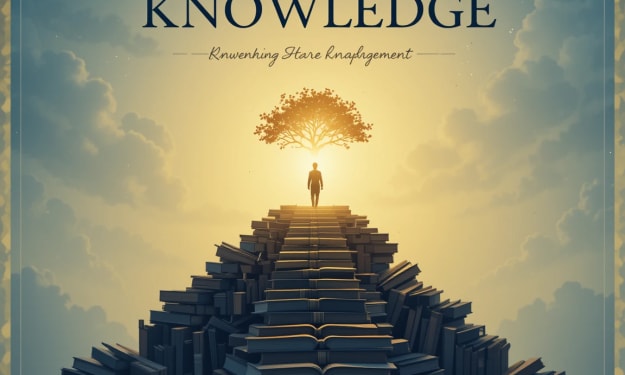
Insightful Knowledge
It often begins with a question. Sometimes whispered in quiet frustration, other times screamed into the void of life’s uncertainties: “Is there more to this?” For many, the question fades beneath the noise of daily routines. But for some, it becomes a spark—a call to look deeper into the mind and further into the self. That’s where true personal development begins: in the realm of curiosity.
By Taslim Ullahabout a year ago in Education
AI Tools You’re Not Using But Should Be in 2025
Introduction: AI is Growing Fast – Are You Keeping Up? In the past few years, artificial intelligence (AI) has gone from science fiction to something many people use every day. You've probably heard of ChatGPT or seen AI art on social media. But there’s more to AI than that.
By Mehtab Ahmadabout a year ago in Education
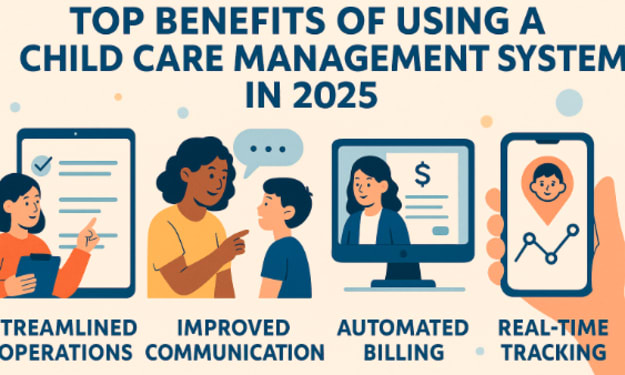
Top Benefits of Using a Child Care Management System in 2025
Running a daycare or child care center can be challenging. From keeping records to managing staff and tracking children’s progress, there's a lot to handle. This is where a Child Care Management System comes in. In 2025, more child care centers are using this smart technology to make work easier, save time, and provide better care for children.
By Susan Clintonabout a year ago in Education
the brightest lights often come from the darkest places.
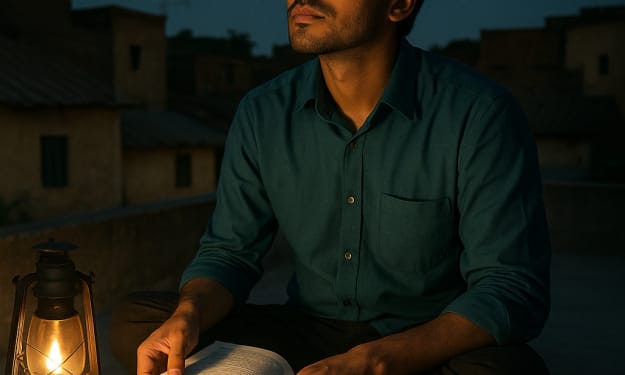
Faizan came from a small town in southern Punjab, Pakistan—Bahawalnagar, a place where dreams are often buried under poverty and silence. But Faizan’s dream wasn’t ordinary. He wanted to become a doctor—not just to wear the white coat or earn a name, but to fulfill the promise his father had whispered in his ear countless times since childhood. His father worked as a compounder in a small clinic—low pay, long hours, but high hopes. He often told Faizan, “You will go far, my son. You will do what I never could.” Faizan was a bright student, topping every class. His teachers adored him, and neighbors would call him “Doctor sahab” even before he held a stethoscope. But life had other plans. In his second year of college, Faizan’s father suffered a massive heart attack. The nearest hospital was hours away, and they barely made it in time. Though his father survived, he was no longer able to work. At just 18, Faizan found himself carrying the weight of his entire family—his sick father, his mother, and a younger sister still in school. He began tutoring local children to bring in a few hundred rupees. He studied during the day, worked in the evenings, and took care of the house at night. When the electricity would cut out—as it often did—he’d light a candle and continue reading his medical books on the rooftop. The day of the national medical entrance exam—MDCAT—he barely made it to the test center. He hadn’t slept properly in days, and he sat for the paper with a splitting headache. When the results came out, he had failed. His heart broke. He thought of giving up. Everyone around him said, “People like you don’t become doctors.” But his mother looked him in the eyes and said, “My prayers are alive, Faizan. You can’t give up yet.” Determined, he took a gap year. But this time, he couldn’t afford coaching classes. He started working part-time at a local doctor’s clinic—cleaning up, assisting in small procedures, and learning everything he could while saving for books. He would come home exhausted, eat a piece of roti with tea, and dive into his textbooks. One year later, he gave the MDCAT again. This time, he topped the list. He got admission into the most prestigious medical college in Pakistan—King Edward Medical University, Lahore. When he left for Lahore, his mother packed a jar of homemade pickles and a tiffin full of love. “This is not just food,” she said. “It’s my hope that you won’t forget where you came from.” Life in Lahore was an entirely different world—fast, competitive, intimidating. He struggled to understand English lectures. Many of his classmates came from English-medium schools and wealthy backgrounds. He often felt small, like an outsider in his own dream. He’d cry in his dorm room at night, wondering if he belonged. But every time he thought of quitting, he remembered the dusty streets of Bahawalnagar, his father’s wrinkled hands, and his mother’s silent prayers. That gave him the strength to go on. In his final year, another storm hit. His father’s health worsened, and he was admitted to a hospital back home. Faizan now juggled ward rotations, assignments, and emotionally draining phone calls from his family. During the last two weeks before his final exams, he studied next to his father's hospital bed, his notes spread across the side table. His father, barely conscious, would open his eyes and weakly say, “Are you still studying, doctor sahab?” Those words stayed with him. When results were announced, Faizan had not only passed—he had ranked among the top five students in the university. Today, Faizan is a practicing surgeon in a government hospital. He lives modestly, still sends money back home, and still calls his mother every night. Whenever a poor patient comes to him and says, “Doctor sahab, I can’t afford this treatment,” Faizan smiles and says: “I was once you. I got here on prayers. Now let me help you without asking for anything in return.” His story is not just about becoming a doctor. It’s about refusing to break, even when life tries to shatter you. It’s about remembering where you came from and lifting others when you rise. Faizan’s life is a reminder that the brightest lights often come from the darkest places.
By Doctor marwan Dorani about a year ago in Education
The Strategic Value of Hiring an AI Programmer in 2025
As artificial intelligence continues to disrupt traditional business models, the companies that thrive will be those that harness AI to improve performance, decision-making, and customer engagement. But AI adoption isn’t about simply deploying off-the-shelf software. It’s about crafting intelligent systems that are tailored to your specific workflows, goals, and data—and that’s where the ai programmer comes in.
By sarawilson1about a year ago in Education
"Where the Child Still Lives"
There is a place where memories float gently, like fallen leaves on a quiet stream. That place lives within you—still breathing, still calling. Once, it was a paper boat you folded with your small hands, letting it drift along puddles that mirrored the sky. You didn’t know then that you were launching hope.
By Muhammad Hamza Safiabout a year ago in Education
How many days a week of preschool is best?
The optimal number of days per week for preschool varies based on several factors, including a child's age, personality, developmental stage, and the family's needs. Whether your child attends three, four, or five mornings each week is ultimately a personal choice influenced by the specific needs of both the child and the family. Children need a balance of free play and structured learning environments.
By KidzVille Learning Centerabout a year ago in Education
Through Books and Other Media
In the dim glow of a modest library lamp, Arman sat cross-legged on the floor, thumbing through a book older than his grandfather’s tales. Dust danced in the air, caught in the golden stream of sunlight that filtered through cracked windows. The walls were lined with thousands of volumes—silent sentinels of wisdom and wonder—each whispering stories of civilizations, revolutions, dreams, and questions still unanswered.
By Taslim Ullahabout a year ago in Education