student
From balancing your course load to forging relationships with classmates to extracurricular involvement, these are the tried and true methods to nail your career as a student.
Technology and innovation
Once upon a time, in a bustling African city named Kilimba, lived a young woman named Aisha. Aisha was a brilliant and ambitious computer science graduate, passionate about harnessing the power of technology to make a positive impact in her community. She had witnessed the transformative effects of technology firsthand and dreamed of bridging the digital divide that separated her city.
By Dodos Dieudonne3 years ago in Education
HOW STUDENTS CAN CONTINUE LEARNING AND GROWING DURING VACATIONS
Vacations are an excellent time for students to relax and recharge after a long school year. However, it is also important for students to continue learning and growing during vacations to prevent the summer slide and maintain academic progress. Here are some tips recommended by Gurukul World School, the best CBSE school in Mohali on how students can continue to learn and grow during vacations.
By Gurukul World School | Best Mohali School3 years ago in Education
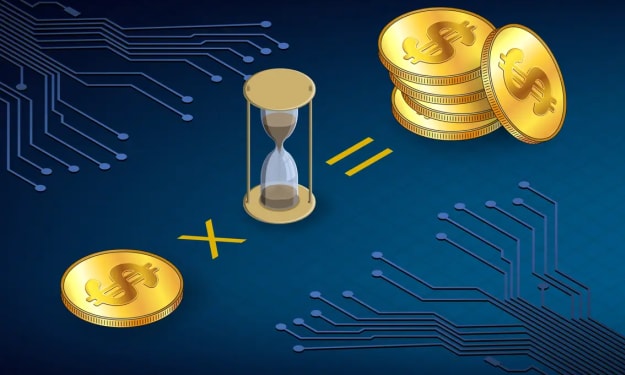
Re-staking: Maximizing Your Crypto Investments
Introduction Cryptocurrencies have revolutionized the financial landscape, offering decentralized and secure transactions. As the popularity of digital currencies continues to soar, investors are constantly seeking ways to optimize their holdings. One such strategy gaining traction is re-staking. In this article, we delve into the concept of re-staking, exploring its benefits, risks, and how to implement it effectively. Whether you're a seasoned investor or a curious newcomer, understanding re-staking can help you make informed decisions and maximize your crypto investments.
By mayank singh3 years ago in Education
NCERT Books Class 12 (Science Stream) - Chapter-wise Collection and Book Descriptions
Introduction: The NCERT books Class 12 Science stream cover Mathematics, Physics, Chemistry, and Biology. These books are designed to follow the prescribed curriculum and provide a comprehensive understanding of each subject. With a chapter-wise arrangement, clear language, and practice exercises, these books aid in building a strong foundation, developing problem-solving skills, and preparing students for exams and future academic pursuits.
By Gaurav Mehra3 years ago in Education
Tokenization
Title: Tokenization: Unlocking New Possibilities with Blockchain-Based Assets Introduction (150 words) The advent of blockchain technology has revolutionized various industries, and one of its most transformative applications is the tokenization of assets. Tokenization refers to the process of representing real-world assets, such as real estate, art, or commodities, as digital tokens on a blockchain network. By converting physical assets into digital tokens, tokenization enables fractional ownership, increased liquidity, and enhanced accessibility. In this article, we will explore the concept of tokenization, its benefits, and the potential it holds for unlocking new possibilities in various sectors. I. Understanding Tokenization (300 words) Tokenization involves converting the ownership rights of an asset into a digital token that resides on a blockchain network. These tokens can be programmed with certain functionalities, such as smart contracts, to automate transactions and enforce predefined conditions. By leveraging blockchain's immutable nature and decentralized infrastructure, tokenization ensures transparency, security, and traceability of asset ownership. II. Benefits of Tokenization (400 words) A. Fractional Ownership: Tokenization allows for fractional ownership, enabling investors to own a portion of an asset rather than the whole. This fractional ownership model makes it possible for smaller investors to participate in markets that were previously inaccessible due to high entry barriers. B. Increased Liquidity: Traditionally illiquid assets, such as real estate or fine art, can become more liquid through tokenization. Tokens can be traded on secondary markets, facilitating faster and more efficient transactions. This increased liquidity opens up new opportunities for investors and reduces the time and costs associated with traditional asset transfers. C. Enhanced Accessibility: Tokenization also promotes accessibility to previously exclusive investment opportunities. By dividing assets into smaller units, individuals who were previously excluded from investment markets can now participate and benefit from diverse asset portfolios. D. Programmable Assets: Tokens on a blockchain can be programmed with smart contracts, allowing for automated execution of predefined conditions. For instance, real estate tokens can automatically distribute rental income to token holders, eliminating the need for intermediaries and reducing administrative overhead. III. Tokenization in Different Industries (600 words) A. Real Estate: Tokenizing real estate assets can democratize access to property investments, lower transaction costs, and provide increased liquidity. Fractional ownership of properties can also enable investment diversification and reduce risks associated with a single property. B. Art and Collectibles: Tokenization can revolutionize the art market by enabling fractional ownership of artwork. It allows art enthusiasts to invest in high-value pieces, while artists gain exposure to a broader investor base. Additionally, tokenization provides transparency in provenance, ensuring the authenticity and traceability of artworks. C. Commodities and Natural Resources: Tokenizing commodities like gold, oil, or diamonds can simplify trading and settlement processes, reduce fraud, and increase market efficiency. It enables smaller investors to participate in the commodity market and brings transparency to the supply chain, ensuring ethical sourcing. D. Intellectual Property: Tokenizing intellectual property, such as patents or copyrights, can streamline licensing and royalty distribution. Smart contracts can automate the payment process, ensuring that creators receive fair compensation and reducing the need for intermediaries. E. Supply Chain Management: Tokenization can enhance supply chain management by tracking and verifying the movement of goods. By tokenizing each stage of the supply chain, stakeholders can trace the origin, quality, and authenticity of products, thereby mitigating counterfeit risks and promoting consumer trust. Conclusion (150 words) Tokenization holds immense potential in unlocking new possibilities across various industries. By leveraging blockchain technology, it enables fractional ownership, increased liquidity, enhanced accessibility, and programmability of assets. Real estate, art, commodities, intellectual property, and supply chain management are just a few areas where tokenization is making significant strides. As the technology matures and regulatory frameworks.
By Yash Sinha3 years ago in Education
Understanding Natural Language Processing
Natural Language Processing (NLP) is a branch of artificial intelligence (AI) that focuses on the interaction between computers and human language. It encompasses a range of techniques and algorithms that allow computers to process and understand natural language input.
By Abdullahi Mustapha 3 years ago in Education
Best Ways to Amplify Writing Skills for a Quality Paper
Language is crucial to deliver correct information to the receiver. However, you must also know how to write it down to maintain accuracy in your write-up. It is the writing skill where you deliver complex facts in a manner that readers of every age group can easily understand it. But because of your unpolished talent, your content misses out on this factor, and you seek paper help to improve it. You cannot obtain it as you need time and constant efforts to amplify it. Furthermore, if you think that one task will show you signs of improvement, you are wrong.
By Febian Cole3 years ago in Education
Smart Contracts
Introduction: The introduction sets the stage for the article by highlighting the significance of blockchain technology and its application in the form of smart contracts. It briefly explains that smart contracts are self-executing agreements written in code and emphasizes their potential to streamline business transactions. 1. Understanding Smart Contracts: In this section, we provide a comprehensive understanding of smart contracts. We define smart contracts and explain their principles, features, and how they work. The section aims to establish a solid foundation for readers who may be unfamiliar with the concept. 2. Advantages of Smart Contracts: Here, we delve into the numerous advantages that smart contracts offer to businesses. We explore how they enhance efficiency and reduce costs by automating processes. The section also emphasizes the trust and security provided by smart contracts, eliminating the need for intermediaries and reducing the risk of fraud. Additionally, we highlight the enhanced transparency and auditability achieved through the use of smart contracts. 3. Use Cases of Smart Contracts: This section illustrates the practical applications of smart contracts across various industries. We explore their potential in supply chain management, financial services, real estate, intellectual property rights, healthcare, and government services. By presenting specific use cases, readers can understand how smart contracts can streamline transactions in different sectors. 4. Challenges and Limitations of Smart Contracts: While smart contracts offer numerous benefits, this section addresses the challenges and limitations associated with their implementation. We discuss legal and regulatory issues surrounding smart contracts, potential vulnerabilities due to immutability and bugs, scalability concerns, and the need for widespread adoption and integration. 5. Smart Contract Platforms: Here, we introduce readers to popular smart contract platforms such as Ethereum, Hyperledger Fabric, R3 Corda, Stellar, and EOSIO. We briefly explain the features and characteristics of each platform to help readers understand the options available for developing and deploying smart contracts. 6. Implementation Considerations: This section explores important factors to consider when implementing smart contracts. We discuss contract design and development, the role of oracles and data feeds in connecting smart contracts with real-world data, security considerations, and the need for auditing. Additionally, we touch upon governance and the challenges associated with upgrading smart contracts. 7. Future Outlook and Conclusion: In the final section, we present a forward-looking perspective on smart contracts. We discuss potential developments such as interoperability and standardization, integration with the Internet of Things (IoT), the importance of legal frameworks and regulations, and the ethical and social implications of widespread adoption. The conclusion emphasizes the transformative potential of smart contracts in revolutionizing business transactions and encourages businesses and governments to embrace this technology. By providing a detailed explanation of each section, the article aims to offer a comprehensive overview of smart contracts and their impact on streamlining business transactions. It covers the fundamental concepts, advantages, use cases, challenges, implementation considerations, and future outlook, enabling readers to gain a deeper understanding of this transformative technology.
By Yash Sinha3 years ago in Education
How To Use Gutenberg To Make A WordPress Theme
Gutenberg has given the world of theme creation a new way to make WordPress themes. We no longer have to use shortcodes and custom page templates to show information. Instead, we can now use Gutenberg blocks to make layouts that are complicated and flexible. This means that styles can be more modular, easier to change, and more versatile.
By Sumeet Shroff3 years ago in Education