student
From balancing your course load to forging relationships with classmates to extracurricular involvement, these are the tried and true methods to nail your career as a student.
"Chasing Sunsets: The Beauty of Adventure and Nature"
Once upon a time, there was a young woman named Emily who had always been fascinated by the beauty of nature. She loved to explore the great outdoors and was always on the lookout for new adventures. Emily was raised in a small town in the countryside where she spent most of her childhood playing in the fields and exploring the nearby woods. She loved the fresh air, the smell of the earth, and the sound of the birds. As she grew older, her love for nature only grew stronger, and she began to seek out new places to explore. One day, Emily decided to take a hike in the nearby mountains. She packed a backpack with all the essentials and set out on her journey. As she climbed higher and higher, Emily was amazed by the breathtaking views of the landscape around her. She saw lush green forests, sparkling streams, and towering mountains in the distance. Despite the challenging terrain, Emily continued to climb, taking in every sight and sound around her. She was determined to reach the top, no matter how difficult it might be. As she climbed, she felt a sense of accomplishment and pride in herself. She knew that she was capable of achieving anything if she set her mind to it. As she reached the top of the mountain, Emily was rewarded with a stunning view of the sunset. The sky was painted in hues of orange, pink, and purple, and the clouds looked like they were on fire. Emily couldn't help but feel overwhelmed by the beauty of it all. She sat down on a rock, took a deep breath, and took in the view. As she sat there, taking in the view, Emily realized that this was what life was all about. It was about taking risks, exploring new places, and appreciating the beauty of the world around us. She felt a sense of gratitude for being able to witness such a beautiful sight, and she knew that she would never forget this moment.
By Jeranz Colansi3 years ago in Education
Introduction to Budgeting
An overview of what budgeting is and why it is important for personal finance. Budgeting is the process of creating a plan to manage your money. It involves setting financial goals, estimating your income, tracking your expenses, and allocating your resources effectively. Budgeting is a fundamental tool for personal finance management, as it helps you take control of your money, make informed financial decisions, and work towards your long-term objectives.
By Tammy Maseko3 years ago in Education
Triumph Over Illness
Once upon a time in a small town nestled among rolling hills, there lived a young woman named Lily. Lily had always been known for her vibrant spirit and infectious laughter. She cherished life and took great care of her physical and mental well-being. However, fate had other plans for her.
By Nurain Sodeeq 3 years ago in Education
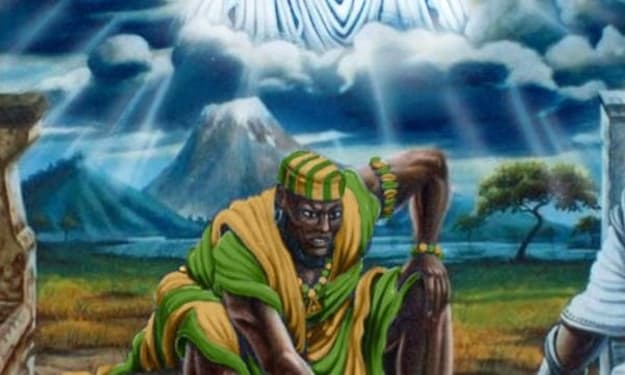
Yoruba Influence on Judaism
One of the most fallacious arguments I have encountered is the premise that Africans should reject Christianity because it is a European religion. This is a function of ignorance. But let us not take my word for it. Let us look into Scripture. Judaism, Christianity and Islam are often called Abrahamic religions. But in truth, Abraham is the father of the Israelites. However, Judaism originated with Moses. Moses left Mizraim (the word Egypt does not exist in Scripture. The place now called Egypt is referred to as Mizraim) and went to live with Black Africans in Midian. While there, he was accommodated by the Black African priest of Midian named Reuel, who gave Moses his daughter, Zipporah, as his wife-Exodus 2:21. This man became Moses’s mentor and taught him much of what he knew about God. Scripture says: “Moses listened to his father-in-law and did everything he said.”-Exodus 18:24. If you look at the laws that Moses taught the children of Israel, you will notice that they are similar to your own Black African tribal laws that existed long before our contact with Europeans. Deuteronomy 25:5 is an example: “If brothers are living together and one of them dies without a son, his widow must not marry outside the family. Her husband’s brother shall take her and marry her and fulfill the duty of a brother-in-law to her.” This custom is an ancient African custom that has been practised amongst the Edekiri (the actual name of the language wrongly called Yoruba by Bishop Samuel Ajayi Crowther). If you ask an Olukunmi (an alternate name for the people wrongly called Yoruba) elder, he will tell you that this practice has been customary for Omoluabi, as well as other Edekiri people from the Igala to the Itsekiri. Pre-colonially, the most widely used name for the people now in the Southwest of Nigeria was not Yoruba. Their language is Edekiri, but the people referred to themselves as Omoluabi. This word evolved from omo-ti-olu-iwa-bi, meaning the child that the lord of character begat. Many people, including many modern-day ‘Yoruba’ intellectuals, believe that Oluwa means Lord. No, it does not. Oluwa connotes Lord, but it does not mean lord. It is actually a compound word, Olu Iwa, which means Lord of Iwa, meaning character or good morals. Olu-Iwa is believed in Yoruba mythology to be the scriptural Noah. Another example is Leviticus chapter 4, which prescribes animal sacrifices for sin. “If the anointed priest sins, bringing guilt on the people, he must bring to the Lord a young bull without defect as a sin offering”-Leviticus 4:3. “The assembly must bring a young bull as a sin offering and present it before the tent of meeting.”-Leviticus 4:14. This is a standard pre-colonial practice amongst many African ethnicities, but especially with the people now known as Yoruba, who still practice it today. Almost every sin, if not every sin, was purged by the Omoluabi with animal sacrifices. This is too widely known for me even to try to convince anyone. Watch Nollywood movies! Another common customary practice of the Omoluabi that we see in Scripture is prostrating to elders and persons in authority, which the people now called Yoruba refer to as doable, which literally means bow down low or to the ground. The doable practice is almost as unique to the people referred to as Yoruba as is, say, the Talking Drum. And you see it in Scripture. Let us examine some Scripture: “Abraham looked up and saw three men standing nearby. When he saw them, he hurried from the entrance of his tent to meet them and BOWED LOW to the GROUND.”-Genesis 18:2. “Then she fell on her face, BOWING TO THE GROUND and said to him, “Why have I found favour in your sight that you should take notice of me, since I am a foreigner.”-Ruth 2:10. “When Abigail saw David, she quickly got off her donkey and BOWED DOWN before David with her face to the ground.”-1 Samuel 25:23. “Then Bathsheba BOWED DOWN with her face to the ground, prostrating herself before the king, and said, “May my lord King David live forever!”-1 Kings 1:31. Two men were central to introducing cultural and religious practices to the ancient Hebrews. They were Abraham and Moses. And they have something in common. They both lived in Africa. Abraham sojourned in Africa with his wife. We see this in Genesis 12:10: “Now there was a famine in the land, and Abram went down to Egypt to live there for a while because the famine was severe.” Moses was born and brought up in Africa. We see this in Exodus 2:3 and and Exodus 2:10: “Then she placed the child in it and put it among the reeds along the bank of the Nile.” “When the child grew older, she took him to Pharaoh’s daughter and he became her son.” Now, please ignore the word Egypt. It is a word that does NOT exist in the original Scripture. European translators inserted it there for reasons best known to them. The question you should be asking is, who are the people that lived in Mizraim, the land that is now referred to as Egypt? Psalm 78:51 gives us a clue. That verse reads: “He struck down all the firstborn of Egypt, the first fruits of manhood in the tents of Ham.” Notice that the ‘Egyptians’ were people of the ‘tents of Ham.’ Now, who is this Ham? We see his origins in Genesis 5:32: “After Noah was 500 years old, he became the father of Shem, HAM and Japheth.” Ham was Noah’s son. Now, pause for a minute and ask yourself what name the Yoruba call themselves. They refer to themselves, internally, as Omoluabi, a short form of Omo-ti-olu-iwa-bi, meaning the child that the lord of character begat. Now, who do the Yoruba say that this Olu-Iwa is? Noah! Now, who does Scripture say gave birth to Ham? Noah! And for those who may doubt these dots I am connecting, ask yourself what the name of Ham’s first son was. Genesis 10:6 says “The sons of Ham were Cush, Mizraim, Put, and Canaan.” Ham’s first son was Cush. What does Cush mean in Hebrew? Cush means Black! Please do not take my word for it. Google the meaning. Research it. The meaning of the name of his second son (Mizraim) is Egypt. If you read that verse (Genesis 10:6) in the New International Version and the English Standard Version, Mizraim is rendered as Egypt. Go ahead, read it. And what was the name of Cush’s first son? You see it in Genesis 10:8: “Cush was the father of Nimrod.” Now, that name Nimrod is a bastardisation. His real name is Namrud in Aramaic and Arabic. From where the European translators of Scripture into English got the name Nimrod, I would not know. But the name found in the Pentateuch is Namrud. Please do not take my word for it. Google it. Or go to a reference library. Long before they had contact with Arabs or Europeans, the people now referred to as Yoruba had an oral history of their origins, which they traced to Odùduwà (also known as Oòdua), who they cite as the son of Lamurudu, a priest/King from the Middle East. The Hebrews and Arabs call him Namrud, and the Yoruba have Lamurudu. Could this be a coincidence? Not at all. In Yoruba, the words N and L are interchangeable. For example, some Yoruba people pronounce Limota as Nimota. And others say ki ni owi (what did you say?), while others say ki’lo wi, meaning the same thing. So, Lamurudu could as well be pronounced Namurudu. Now, what is the difference between Namurudu and Namrud? So, it is not a coincidence that many of the practices you see in the Old Testament are similar to Yoruba customs. Because the men through whom God introduced these customs, i.e. Abraham and Moses, lived with the ‘tents of Ham’ in modern-day Egypt. When I see people bearing Moses, I feel sorry for them. The name Moses does not appear in Scripture. It is a made-up name, just like the name Jesus. The actual word in Scripture is Moshe. And the exact name for our Lord and Saviour is Yeshua. The name Moshe is of Mizraim (Egyptian origin). I am going to quote Exodus 2:10 from the Hebrew Bible, translated directly into English: “And the boy grew, and she brought him to the daughter of Pharaoh and he was a son to her, and she called his name Moshe (aka Moses), because she said, “I took him from the waters.” If you go to Israel, they don’t bear Moses. They bear Moshe. For instance, the famous Israeli Minister of Defence was named Moshe Dayan. That name Moshe, as you just read in Exodus 2:10, means, “I took him from the waters.” Now, what is the Yoruba (Edekiri) word for picking up something? It is Mo shá. That name Moshe is virtually indistinguishable from Mo shá, or Mosha. The people in present-day Egypt are not the original inhabitants of Egypt. They are Arabs who came to Egypt after the Muslim conquest of Egypt between 641 AD – 654 AD. Again, please don’t take my word for it. Research it. The original inhabitants of Mizraim (ancient Egypt) were conquered by Nebuchadnezzar and scattered from their land deeper into Africa. We see this in Jeremiah 46:2: “Concerning Egypt: This is the message against the army of Pharaoh Necho king of Egypt, which was defeated at Carchemish on the Euphrates River by Nebuchadnezzar, king of Babylon, in the fourth year of Jehoiakim, son of Josiah king of Judah.” And also in Jeremiah 46:13: “This is the message the LORD spoke to Jeremiah the prophet about the coming of Nebuchadnezzar king of Babylon to attack Egypt:” And how do we know that they went deeper into Africa? Well, it is common sense. Nebuchadnezzar came from Babylon to the East of modern-day Egypt. Therefore, they could not have escaped to the East, as that would put them right in front of Nebuchadnezzar’s army and or the kingdoms of Judah and Israel and the Edomites. They could not escape to the North because of the natural obstacle of the Mediterranean Sea. The only option they would have had was to escape westward, towards modern-day Sudan and West Africa, or southwards, towards modern-day Ethiopia. And since the people of modern-day Ethiopia have probably been in that geographical location for over 3000 years, by process of elimination, it means the best likelihood is that they escaped westward into West Africa. It seems doubtful to you. Are you even aware that the original name for the place now called Jerusalem is actually Jebus? It is right there in Joshua 18:28: “Zelah, Eleph, Jebus (which is Jerusalem), Gibeath, and Kirjath: fourteen cities with their villages. This was the inheritance of the children of Benjamin according to their families.” Who are those Jebus? The name Jebus that you read about in The Bible refers to a tribe now known as Ijebu in Southwest Nigeria. I have just blown your mind. I know. It sounds like blasphemy. Heresy. But please let me land! The Ijebu do not call themselves I-J-E-B-U the way you, an outsider, would pronounce all syllables. They call themselves J-E-B-U, with the I before jebu silent. In the King James Version, the town is known as Jebus. You see that in 1 Chronicles 11:5: “And the inhabitants of Jebus said to David, Thou shalt not come hither. Nevertheless, David took the castle of Zion, which is the city of David.” While the people of Jebus are referred to as Jebusites, we see this in Genesis 10:16: “the Jebusite, the Amorite, and the Girgashite.” Basically, what the European translators did was confuse you by adding ite to the name of a kingdom to describe the people of the domain. So, for example, if Kano, Benin, or Monaco were mentioned in the KJV, the people would have been Kanites, Benites, and Monacites. The method by which the ancient Israelites consulted God, called divination, is almost identical to the Yoruba method of divination, known as Odu Ifá. When people hear of Odu Ifá, used by the Ijebu and borrowed by their Yoruba neighbours (Ijebu and Yoruba are different ethnicities), they immediately think it is witchcraft or sorcery. Nothing like that. Odu Ifá is simply divination by the casting of lots. A practice used in both the Old and New Testaments of Scripture-John 19:24, Acts 1:26, Leviticus 16:8. Now, I am not asking you to start practising the divination aspect of Odu Ifá. Deuteronomy 18:9-10 preached against divination to any god except the God of Abraham, Isaac, and Jacob. And I do not know to whom the Odu Ifá diviners consult, and I do not want to mislead people. However, I accept the scientific aspects of our culture. The simplest way to summarise what Odu Ifá is is to say that it is just pattern recognition of a series of binary codes. Many people of Yoruba origin, both literate and illiterate, find themselves exceptionally gifted in mathematics. It is an evolutionary trait inbuilt in them from millennia of Ifá divination by their ancestors.
By Gbénga Ikúpenikan3 years ago in Education
Causes of Inflation and Their Influence on the United States Economy.
Introduction: Inflation is a critical economic phenomenon that affects the purchasing power of consumers, the profitability of businesses, and the overall stability of an economy. Understanding the causes of inflation is essential for policymakers, economists, and individuals alike. In the case of the United States, various factors contribute to inflation, including changes in money supply, demand-pull inflation, cost-push inflation, and inflation expectations. This essay aims to explore these causes and their influence on the U.S. economy.
By Verónica Mbuggoh3 years ago in Education
Cultural Geography: Unveiling the Tapestry of Human Diversity
Cultural Geography provides an intriguing lens to study the intricate connection between human beings and their surroundings. It explores the many ways that cultures are shaped on their own and influence the environments they reside in. This article will go on a fascinating exploration of the essential notions, the significance of, and essential aspects of World Cultural Geography.
By Tom Latham3 years ago in Education
Rediscovering Joy
Sarah woke up to another day filled with fatigue and pain. It had been years since her diagnosis of fibromyalgia, a chronic illness that had gradually eroded her spirit. She used to be vibrant and full of life, but now she felt like a mere shadow of her former self.
By Benjamin Fredrick Oluwaseun3 years ago in Education
Atmosphere of Earth
Nature is a constant source of awe and wonder, captivating us with its stunning beauty and inexplicable phenomena. One such spectacle that never fails to mesmerize is the display of electricity in nature. From crackling lightning bolts to shimmering auroras, nature's electrifying spectacle leaves us spellbound, reminding us of the immense power and mystery that lie within the natural world. Perhaps the most dramatic and awe-inspiring manifestation of nature's electrical power is the lightning storm. Thunderclouds, charged with electrical energy, unleash their fury in brilliant flashes of light and booming thunder. The sheer intensity and unpredictability of lightning strikes make them a truly electrifying sight. Whether witnessed from a safe distance or experienced up close, the raw power and beauty of lightning leave an indelible impression. Each lightning bolt carries thousands of volts of electricity and can reach temperatures hotter than the surface of the sun. The discharge occurs when the electrical potential difference between the negatively charged base of the cloud and the positively charged ground becomes too great to resist. The resulting lightning bolt illuminates the sky, casting an ethereal glow over the landscape. The crackling sound that accompanies each strike adds to the sensory experience, amplifying the sense of wonder and excitement. Another captivating display of nature's electrical power can be witnessed in the form of the auroras. These mesmerizing lights dance across the polar skies, painting the darkness with vibrant hues of green, red, and purple. The auroras, also known as the Northern and Southern Lights, are the result of charged particles from the sun colliding with the Earth's magnetic field. As the particles interact with the atmosphere, they emit light, creating a breathtaking visual spectacle. The auroras are a reminder of the interconnectedness of our planet with the vast cosmic forces beyond. They serve as a testament to the delicate balance and harmonious relationship between the Earth and the universe. Standing beneath the shimmering curtains of light, one cannot help but feel a profound sense of wonder and humility in the face of nature's grandeur. Beyond lightning storms and auroras, nature showcases its electrifying spectacle in various other forms. St. Elmo's Fire, for instance, is a fascinating phenomenon where luminous plasma discharges appear on pointed objects during storms. Glowing underwater creatures, such as bioluminescent plankton or deep-sea jellyfish, illuminate the oceans with their radiant displays. Fireflies, with their enchanting glow, light up summer nights, adding a touch of magic to the darkened landscapes. The electrifying wonders of nature remind us of the delicate balance between power and beauty, chaos and order. They inspire awe, curiosity, and a deep appreciation for the intricate workings of the natural world. They remind us that even in the face of tremendous power, there is room for wonder and enchantment. In a world increasingly dominated by technology, it is easy to forget the raw and untamed power that resides in the natural world. Nature's electrifying spectacles bring us back to a time when humans were more intimately connected to the Earth and its elements. They invite us to step outside, to look up at the sky, and to embrace the electrifying beauty that surrounds us. Nature's electrifying spectacle is a reminder that we are part of something greater, something beyond ourselves. It teaches us humility, respect, and a deep reverence for the forces that shape our world. So, the next time you witness a lightning storm, gaze at the shimmering auroras, or marvel at the glowing creatures of the night, take a moment to pause and reflect on the electrifying wonders of nature, for they are a testament to the astonishing power and captivating beauty that exist within our natural world.
By Isaac Smith 3 years ago in Education
Enhancing Security: The Benefits of Cybersecurity
Cybersecurity has become an essential aspect of our digital age, where the interconnectedness of systems and reliance on technology have created new vulnerabilities. In this article, we will explore the multifaceted benefits of cybersecurity measures. From safeguarding sensitive data to protecting critical infrastructure and ensuring business continuity, cybersecurity offers numerous advantages. By mitigating risks, preventing financial losses, preserving reputation, and fostering trust, cybersecurity empowers individuals, organizations, and even nations to navigate the digital landscape with confidence and resilience.
By Anisa Abubakar3 years ago in Education
Chat GPT for business
Open AI (Artificial Intelligence) created the ChatGPT app, a revolution in the internet world. You should know that CHatGPT is a trained transformer before creating a full form chat. In this system, you can create a chat with ChatGPT and ask any questions from simple questions to quantum physics. So we are here with complete information on how to use ChatGPT so that you can easily get answers to your queries. Once you get the process of using Chat GPT, you can use the portal and get a lot of information with 100% accuracy. Readers can explore ChatGPT features here and then use it to their advantage. Also, once you get the hang of using it, you can download the Chat GPT app and then log in to use the features. The benefits of this app include advanced question answers, working on various projects, essay writing and more. Use the Chat GPT login link given here to get brief information about this artificial intelligence program.
By løvely sakthi3 years ago in Education