student
From balancing your course load to forging relationships with classmates to extracurricular involvement, these are the tried and true methods to nail your career as a student.
Why Do We Sneeze?
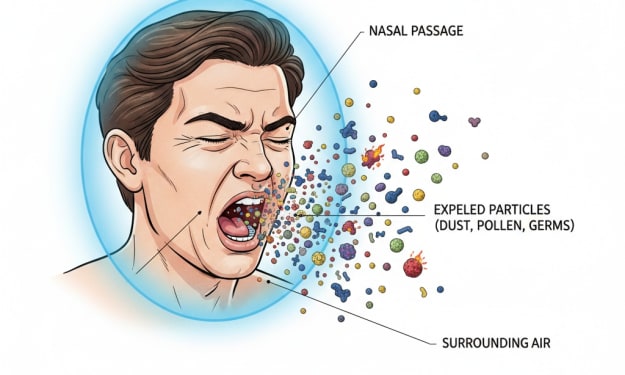
Sneezing is something we all experience, whether it’s triggered by a cold, allergies, or even just a sudden whiff of pepper. It might feel like an inconvenience in the middle of a meeting or while you’re eating your favorite food, but sneezing is actually one of the body’s most fascinating and powerful defense mechanisms. This simple action tells us a lot about how our body works to protect itself from potential harm. Let’s dive into the science of sneezing, why it happens, and some interesting facts that make this common reflex more extraordinary than we think. --- What Exactly Is a Sneeze? A sneeze is the body’s way of expelling irritants from the nose or throat. The medical term for sneezing is sternutation, and it happens when the body senses something unwanted inside the nasal passages. When tiny particles such as dust, pollen, bacteria, or even strong odors enter the nose, the sensitive lining of the nasal cavity gets irritated. To protect the respiratory system, the brain sends a signal that triggers a sudden, powerful release of air through the nose and mouth. This explosive action clears out the irritants, helping to keep the airways safe and clean. --- The Science Behind Sneezing Here’s what happens step by step when you sneeze: 1. Irritant enters the nose – Dust, pollen, smoke, or germs trigger sensitive nerve endings. 2. Signal to the brain – The trigeminal nerve carries a message to a part of the brain called the medulla. 3. Preparation – The brain coordinates muscles in the chest, diaphragm, throat, and face to get ready. 4. The release – Air is forced out at incredible speed, sometimes reaching up to 100 miles per hour. Along with air, mucus droplets are expelled, carrying away the irritants. Sneezing is essentially an automatic cleaning system designed by the body to protect the lungs. --- Why Do We Sneeze? Common Causes 1. Dust and Allergens Allergens like pollen, animal dander, or mold can trigger the immune system to react. Sneezing is the body’s way of fighting these invaders. 2. Infections A common cold or flu often brings sneezing. The body attempts to push out viruses and bacteria. 3. Strong Smells Perfumes, smoke, or spicy food can irritate nasal passages and trigger sneezing. 4. Sudden Light (Photic Sneeze Reflex) Surprisingly, around 1 in 4 people sneeze when they step into bright sunlight. This is called the photic sneeze reflex, and scientists believe it’s linked to crossed signals in the brain between the optic and trigeminal nerves. 5. Temperature Changes Moving from a warm room to a cold environment, or sipping a very hot or very cold drink, can sometimes spark a sneeze. --- Interesting Facts About Sneezing You can’t sneeze in your sleep: During sleep, the nerves involved in sneezing are at rest. Sneezes spread far: Tiny droplets can travel several feet, which is why covering your mouth and nose is so important. Myth busted: Your heart does not stop when you sneeze. It only changes rhythm slightly due to pressure in the chest. Animals sneeze too: Dogs, cats, and even iguanas sneeze as part of their defense systems. --- Sneezing and Social Etiquette While sneezing is natural, it’s also a key way germs spread. That’s why it’s essential to cover your nose and mouth with a tissue or your elbow when sneezing. Washing hands afterward is equally important, especially during flu season. What seems like a small act can go a long way in protecting others. --- Should You Ever Be Worried About Sneezing? Most of the time, sneezing is harmless and simply a sign of the body defending itself. However, if sneezing is frequent and accompanied by other symptoms like congestion, itchy eyes, or a runny nose, it could point to allergies. Persistent sneezing with fever may also signal an infection that needs medical attention. --- Conclusion Sneezing may feel like just another everyday annoyance, but in reality, it’s a clever design of the human body that helps us stay healthy. From clearing out dust and allergens to fighting off germs, sneezing is proof that even the smallest actions in our bodies have a big purpose. So, the next time you sneeze, instead of being annoyed, take a moment to appreciate this remarkable reflex.
By Muhammad Shahramabout a year ago in Education
Value-Based Leadership in Healthcare: Balancing Profitability with Patient Outcomes
Healthcare is one of the most critical industries in the world. It impacts lives and drives a significant part of the global economy. Hospitals, clinics, and healthcare systems often face a stiff challenge: staying profitable while keeping patient outcomes at the center of every decision. This is where value-based leadership in healthcare plays a decisive role. It focuses on creating a system where profit does not come at the cost of patient well-being but instead aligns both goals.
By Craig Kentabout a year ago in Education
The Ultimate Guide to Writing a Successful MBA Dissertation
It is crucial to learn what an MBA dissertation is about before you can get going. It is basically an extensive piece of writing that provides your insights on a particular subject in your area of study. Dissertations, in contrast to routine essays, call for in - depth research, critical thinking and also the application of theoretical knowledge to real life problems. The purpose? To demonstrate your capability to research independently, gather data and present results coherently. Your dissertation is much more than simply a report you have to turn in; it can be the start of a brand new profession you are going to want to have.
By Lucy Rowellabout a year ago in Education
How to Use AI & VR to Generate Unique Learning Experience?
The mix of AI and VR has pushed learning to new heights. Education is now making students industry-ready rather than having theoretical knowledge. Learners are no longer limited to textbook learning. Similarly, if you require expert aid, you can use assignment helper services.
By Mary Taylorabout a year ago in Education
Top-Rated Law Dissertation Help | Ace Your LLB, LLM & PhD Research. AI-Generated.
Writing a law dissertation can feel like standing in court without a defense — stressful, complicated, and overwhelming. From choosing the perfect topic to conducting detailed legal research, drafting chapters, and meeting tight deadlines, students often struggle to manage everything on their own. That’s where law dissertation help comes in.
By Martin Jackabout a year ago in Education
How I Turned My Free Time Into Real Online Income
The Turning Point I still remember the evening when I was scrolling endlessly through my phone, wasting hours on social media. Life felt repetitive—wake up, work, come home tired, and sleep. But one day, I asked myself: “What if I could use this free time for something meaningful, maybe even profitable?” That single thought became the seed of my journey into online earning. And honestly, I never thought small steps could lead to such steady results.
By Umar Farooqabout a year ago in Education
Your Brain vs. Your Body
“The Brain Uses More Energy Than You Think” e Power-Hungry Brain: Why Your Mind Consumes So Much Energy When you think about the parts of your body that use the most energy, you might imagine your muscles during exercise or your heart pumping blood tirelessly. Surprisingly, the organ that demands the most energy is not your biceps or your lungs—it’s your brain. Even though the brain makes up only about 2% of your body weight, it consumes roughly 20% of the body’s total energy. That’s a fascinating fact of biology and one that raises an important question: why does such a small organ use so much power? A Tiny Organ with Massive Power The human brain weighs around 1.4 kilograms (3 pounds) on average, yet it contains about 86 billion neurons. These neurons are like tiny electrical circuits, constantly communicating with one another. To send signals, neurons rely on rapid electrical impulses, and they also need chemical messengers called neurotransmitters to pass messages between them. All of this activity requires an enormous amount of energy. In fact, most of the energy consumed by the brain is used not for thinking hard or solving problems, but for simply keeping its communication system running. Neurons are “on duty” all the time, even when you’re asleep. That’s why your brain never truly rests. The Fuel That Keeps You Thinking The brain’s favorite fuel is glucose, a type of sugar found in the foods we eat. When you consume carbohydrates, your body breaks them down into glucose, which then travels through your bloodstream. The brain absorbs this glucose and uses it to produce energy. Without a steady supply of glucose, your brain cannot function properly, which is why you might feel dizzy, confused, or irritable if you skip meals. What’s even more fascinating is that your brain is picky about its fuel. While your muscles can use fats and proteins in addition to glucose, your brain mostly sticks to sugar. In extreme situations, like fasting or starvation, the brain can adapt and use ketones (produced when the body burns fat), but glucose remains its primary and preferred source. Thinking vs. Resting: Does Mental Work Burn Calories? Many people wonder: if the brain uses so much energy, does thinking harder burn more calories? The short answer is—only a little. While doing complex math problems or concentrating on a puzzle might increase brain activity slightly, the difference in calorie burn is tiny compared to what your brain already uses at rest. For example, even when you’re relaxing, daydreaming, or sleeping, your brain is still busy controlling breathing, regulating temperature, processing memories, and more. That’s why the brain’s baseline energy consumption is already so high. The Evolutionary Advantage Why did human brains evolve to be so energy-hungry? Scientists believe it’s because our brains are what set us apart as a species. The human brain is incredibly advanced, capable of language, abstract thinking, planning, creativity, and problem-solving. These abilities gave early humans a survival edge. However, there was a trade-off: growing such a powerful brain required more calories. That’s one reason why our ancestors developed hunting, cooking, and farming—to meet the high energy demands of their brains. Taking Care of Your Brain’s Energy Needs Since the brain relies so heavily on glucose and oxygen, maintaining good overall health is essential for keeping it in top condition. Eating a balanced diet rich in whole grains, fruits, and vegetables provides steady fuel. Exercise improves blood flow to the brain, ensuring it gets enough oxygen and nutrients. Even staying hydrated matters, as dehydration can make it harder for your brain to think clearly. A Final Thought The next time you feel mentally drained after a long day of work or study, remember this: your brain is a small but mighty energy powerhouse, quietly burning through calories to keep you alive, alert, and capable of amazing thought. It may weigh just a fraction of your body, but in terms of energy demand, it’s the true champion.
By Muhammad Shahramabout a year ago in Education
1:57
Three electric fans stir the air to keep the staleness at bay. A radio squawks at my left elbow, "Dorm 1 to Moulton," and I lose interest in the mundane conversation. Behind filing cabinets and covered windows, a TV bleeps out expletives for whatever afternoon talk show the inmates are watching or left playing for background noise. 1:57 is that time of day when I find out if my next two hours will be spent teaching or waiting for my day to end.
By Mack D. Amesabout a year ago in Education
The Truth About Zinc Supplements: A Doctor's Guide to Choosing Right (2025)
Why choose Zinc? Zinc supplements are among the most frequently misunderstood nutritional aids, despite being crucial for over 300 bodily functions, from immune support to DNA synthesis. Although many people reach for zinc at the first sign of a cold, most don't realise they're often choosing the wrong form or dosage for their specific health needs. This article will guide you in selecting the right zinc supplement, ensuring an informed choice regarding the form and dosage tailored to your unique requirements, to help you harness zinc's full potential.
By HealthDigitalabout a year ago in Education