product review
Product reviews for those who yearn to learn; a breakdown of the best back-to-school supplies, test prep manuals, online study tools and other resources for students and teachers alike.
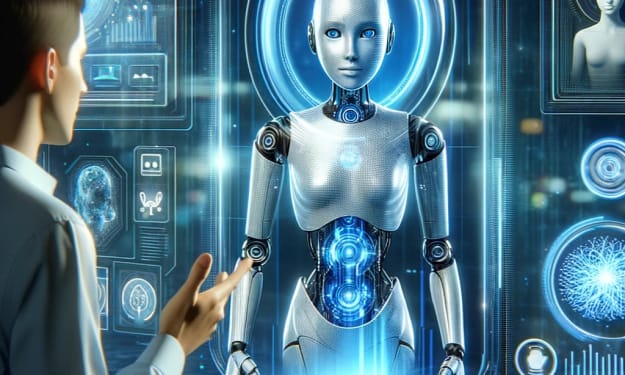
OneAi Freedom - All AIs Uncensored, No Rules, No Censorship: Unlocking the True Potential of Artificial Intelligence
In the age of artificial intelligence (AI) one of the most significant debates revolves around the balance between innovation and control. While AI technologies have made monumental strides in areas like natural language processing, computer vision, and autonomous systems, they often face restrictions and limitations imposed by governing bodies, corporations, and even developers themselves. The result? Many of the most advanced AI systems are constrained by rules and filters that hinder their true potential.
By Saroj Kumar2 years ago in Education
Blood Moon 2025. AI-Generated.
The Blood Moon 2025 is one of the most anticipated astronomical events of the decade, captivating stargazers, spiritual seekers, and science enthusiasts alike. As Google Trends data reveals a surge in searches for "Blood Moon 2025," this guide dives deep into what makes this celestial phenomenon a must-see event. From its cosmic origins to its cultural significance, we've got you covered with SEO-optimized insights to ensure you're fully prepared for this rare lunar spectacle.
By Nadir Ait Tayeb2 years ago in Education
The Scientific Eyes
The systematic study of the natural world, or science, is often referred to as the "eyes" through which humans perceive and interpret the universe. From the tiniest subatomic particles to the vast expanses of galaxies, it is a potent instrument that enables us to investigate the mysteries of existence. Science provides a lens for comprehending the world around us through observation, experimentation, and analysis, offering insights that shape our perception of reality. It is a journey of discovery that is driven by collaboration, curiosity, and a never-ending quest for knowledge. Science, at its core, begins with questions. Why is the sun always rising and setting? How do living things reproduce and grow? What lies beyond the constellations? The answers to these questions set off a fire of curiosity that eventually led to the creation of hypotheses, the planning of experiments, and theories. The structured approach to inquiry known as the scientific method ensures that discoveries are based on evidence rather than speculation. This method has been the cornerstone of countless breakthroughs, from Isaac Newton's laws of motion to Charles Darwin's theory of evolution by natural selection.
By Niranjon Chandra Roy2 years ago in Education
The Day I Traded My Desk for a Backpack: How One Year of Wanderlust Rewired My Life
The Critical Moment It was 2:37 a.m. on a Tuesday when I found myself sobbing in the fluorescent-lit office bathroom, clutching a lukewarm latte and a stack of untouched spreadsheets. My boss had just emailed me—again—about “urgent revisions” to a project I’d already reworked seven times. My hands trembled. My vision became hazy. And in that moment, I realized: This isn’t burnout. It's a slow death here. Three days later, I handed in my resignation, sold my car, and bought a one-way ticket to Bangkok with $3,200 in savings. What followed wasn’t just a gap year—it was a seismic shift in how I viewed success, fear, and the invisible cages we build for ourselves.
By Rocky Brahma2 years ago in Education
What is the MOTS-c peptide?
What is MOTS-c? Athletes should be extremely cautious about experimental peptides, including the prohibited peptide MOTS-c, which is often marketed online with the label “for research purposes only.” Below, we explore the health and anti-doping risks associated with MOTS-c.
By Valeria Marulanda2 years ago in Education
Revolutionizing Video Generation: Can Kling AI 1.5 Compete with the Best?. AI-Generated.
The world of artificial intelligence (AI) video generation has been rapidly evolving, with new players entering the market and existing ones continuously improving their technology. One such player is Kling AI, which has been making waves since its launch just two months ago. With the release of its new 1.5 model and an exciting feature for its earlier 1.0 version, many are wondering if Kling’s AI video generator has what it takes to compete with more established tools.To answer this question, the AI Filmmaking Academy put Kling’s new updates to the test, comparing them to industry-leading AI video generators like Runway Gen-3 and MiniMax Video. The results are fascinating, and we’ll dive into the details to see if Kling AI 1.5 can hold its own in the competitive world of AI video generation.
By Naga Manohar Veeravalli2 years ago in Education
Quantum Science: A New Interpretation of Nature
Quantum science, often referred to as quantum mechanics or quantum physics, is a fundamental branch of science that has revolutionized our understanding of the natural world. It provides a framework for understanding the behavior of matter and energy at the smallest scales, such as atoms and subatomic particles. Unlike classical physics, which describes the macroscopic world with deterministic laws, quantum science introduces a realm of probabilities, uncertainties, and phenomena that defy our everyday intuition. This field has not only reshaped our understanding of nature but also paved the way for groundbreaking technologies, from semiconductors to quantum computers. ### The Birth of Quantum Science The origins of quantum science can be traced back to the early 20th century, when classical physics faced significant challenges in explaining certain experimental observations. For instance, the photoelectric effect, where light causes the emission of electrons from a material, could not be explained by classical wave theory. In 1905, Albert Einstein proposed that light could behave as discrete packets of energy called "quanta" or photons, a concept that laid the foundation for quantum theory. Later, Niels Bohr introduced the quantum model of the atom, suggesting that electrons orbit the nucleus in discrete energy levels. This model successfully explained the spectral lines of hydrogen but left many questions unanswered. The development of quantum mechanics as a formal theory is often attributed to pioneers like Werner Heisenberg, Erwin Schrödinger, and Max Planck. Schrödinger's wave equation and Heisenberg's uncertainty principle became cornerstones of the field, introducing probabilistic interpretations of particle behavior. ### Key Principles of Quantum Science Quantum science is built on several key principles that distinguish it from classical physics: 1. Wave-Particle Duality: Particles such as electrons and photons exhibit both wave-like and particle-like properties. For example, in the double-slit experiment, electrons create an interference pattern (a wave property) even when sent through the slits one at a time (a particle property). 2. Superposition: Quantum systems can exist in multiple states simultaneously until measured. For instance, an electron in an atom can be in a superposition of different energy levels. This principle is famously illustrated by Schrodinger's thought experiment involving a cat that is simultaneously alive and dead. 3. Entanglement: When two or more particles become entangled, their properties become correlated in such a way that the state of one particle instantly influences the state of the other, regardless of the distance between them. This phenomenon, which Einstein called "spooky action at a distance," has been experimentally verified and is a cornerstone of quantum information science. 4. Uncertainty Principle: Formulated by Heisenberg, this principle states that it is impossible to simultaneously know both the position and momentum of a particle with absolute precision. This inherent uncertainty is not due to measurement limitations but is a fundamental property of quantum systems. 5. Quantization: Certain properties, such as energy levels in atoms, are quantized, meaning they can only take on discrete values. This contrasts with classical physics, where such properties are continuous. ### Applications of Quantum Science Quantum science has led to transformative technologies that have reshaped modern life. Some of the most notable applications include: 1. Semiconductors and Electronics: The principles of quantum mechanics underpin the behavior of electrons in semiconductors, enabling the development of transistors, diodes, and integrated circuits. These components form the backbone of modern electronics, from smartphones to computers. 2. Lasers: Lasers rely on the stimulated emission of photons, a quantum phenomenon. They are used in a wide range of applications, including medical surgery, telecommunications, and manufacturing. 3. Quantum Computing: Unlike classical computers, which use bits as the smallest unit of information, quantum computers use quantum bits or qubits. Qubits can exist in superpositions of states, allowing quantum computers to perform complex calculations at unprecedented speeds. This technology holds promise for solving problems in cryptography, optimization, and drug discovery. 4. Quantum Cryptography: Quantum principles enable secure communication through quantum key distribution (QKD). Any attempt to eavesdrop on a quantum-encrypted message disturbs the system, alerting the communicating parties to the presence of an intruder. 5. Medical Imaging and Diagnostics: Techniques such as magnetic resonance imaging (MRI) rely on the quantum properties of atomic nuclei to create detailed images of the human body. ### Philosophical Implications Quantum science has not only advanced technology but also challenged our philosophical understanding of reality. The probabilistic nature of quantum mechanics raises questions about determinism and the role of the observer. For example, the Copenhagen interpretation suggests that a quantum system remains in superposition until it is observed, implying that observation plays a fundamental role in shaping reality. Alternative interpretations, such as the many-worlds theory, propose that every possible outcome of a quantum measurement actually occurs in a separate, branching universe. These interpretations highlight the profound and often counterintuitive nature of quantum science, forcing us to rethink concepts like causality, locality, and the nature of existence itself. ### Challenges and Future Directions Despite its successes, quantum science remains a field full of mysteries. One of the biggest challenges is reconciling quantum mechanics with general relativity, Einstein's theory of gravity. While quantum mechanics governs the microscopic world, general relativity describes the macroscopic realm of planets, stars, and galaxies. Developing a unified theory of quantum gravity is one of the most sought-after goals in modern physics. Another challenge is the practical implementation of quantum technologies. For example, quantum computers require extremely low temperatures and are highly susceptible to errors caused by decoherence. Researchers are actively working on error correction techniques and more stable qubit designs to overcome these hurdles. ### Conclusion Quantum science has fundamentally altered our understanding of the universe, revealing a world that is far more complex and interconnected than previously imagined. Its principles have not only deepened our knowledge of nature but also enabled technologies that were once the stuff of science fiction. As we continue to explore the quantum realm, we are likely to uncover even more profound insights and applications, further transforming our world and our place within it. Quantum science is not just a new interpretation of nature—it is a gateway to the future.
By Niranjon Chandra Roy2 years ago in Education
Top 10 Anti-Inflammatory Superfoods to Add to Your Diet Today
Inflammation is the body’s natural defense mechanism, but when it becomes chronic, it can lead to severe health issues like heart disease, diabetes, arthritis, and even cancer. The great news? You can fight chronic inflammation naturally by incorporating powerful anti-inflammatory superfoods into your diet! These foods don’t just protect your body; they also boost your energy, support brain health, and promote glowing skin. Ready to take your health to the next level? Start adding these 10 incredible superfoods to your meals today!
By Juliana Ndalnamu2 years ago in Education